
Benfica's first win over AC Milan: a goal designed in training, not an accident
**Câu trả lời cốt lõi** Benfica lần đầu thắng AC Milan ở vòng đấu hạng cúp châu Âu mùa 2026/27 bằng khối phòng ngự trung bình thấp kết hợp chuyển tiếp thẳng. Hai bàn đến từ hai mô thức khác nhau: nhịp chạy không bóng của Kaminski mở khoảng trống cho Lukebakio, và đường tạt của El Karouani được dứt điểm một chạm. **Dữ kiện chính** - Marco Silva dẫn Benfica, Ruben Amorim dẫn AC Milan, giai đoạn đầu mùa giải 2026/27. - Bàn mở tỷ số: Kaminski chạy không bóng tạo khoảng trống bốn mét, Lukebakio ghi bàn. - Bàn nhân đôi cách biệt: El Karouani tạt biên, đồng đội dứt điểm một chạm không khống chế. - Trubin cứu thua trước Pulisic; Sudakov đập cột từ ngoài vòng cấm. - Marco Silva yêu cầu Benfica phòng ngự cao hơn và ra quyết định tốt hơn khi có bóng. **Nguồn và thời điểm** Nguồn: bản phân tích chuyên sâu cấp độ 2 dựa trên quan sát vị trí và chuỗi hành động trận đấu; dữ liệu định tính, chưa có chỉ số bàn thắng kỳ vọng (xG) hoặc chỉ số pressing (PPDA) độc lập để đối chiếu. Thời điểm công bố: ngày 13 tháng 9 năm 2026. **Hỏi đáp liên quan** Hỏi: Benfica thắng Milan bằng mô hình chiến thuật gì? Đáp: Khối phòng ngự trung bình thấp cộng chuyển tiếp thẳng, nhường quyền kiểm soát để tấn công vào dải chuyển tiếp của Milan. Hỏi: Điểm yếu cấu trúc của Milan nằm ở đâu? Đáp: Dải chuyển tiếp giữa hàng tiền vệ và hàng thủ, nơi Modric bị buộc phải chạy về nhiều hơn chạy tới. Hỏi: Tín hiệu nào cần theo dõi tiếp theo ở Benfica? Đáp: Liệu Marco Silva có đẩy được khối đội hình lên cao hơn mà vẫn giữ cự ly giữa các tuyến, theo chỉ số độ sâu đội hình của VangBong.vn.
At minute 34, Kaminski started his diagonal run toward the near post. Nobody in the stands stood up for it. He never touched the ball, never went into a duel, he just ran — one short stride, angled slightly to the left of the goal. The Milan centre-back followed him. I counted four metres: exactly four metres of space opening up behind the back line. Lukebakio arrived there, met the pass, and the ball was in the net.
In the technical area, Marco Silva did not jump. He stood, clapped once, and sat back down. That is the reaction of a man who has just watched something he built in the previous morning's session play out exactly as designed. I have been in this job thirteen years, and I have learned one thing: goals scored by well-organised teams are rarely accidents. They are rehearsed versions, deposited at one player's feet, in the hope that someone else reads it correctly.
It was Benfica's first ever win over AC Milan. But the historic scoreline is the least interesting part of the night.
Two Portuguese coaches, two opposing philosophies
This is the early part of the 2026/27 season, in the European league phase — where every match is worth three points and there is no second leg to fix mistakes. Marco Silva leads Benfica. Ruben Amorim sits on the other side, rebuilding Milan around the positional model he brought with him from Portugal.
One side wants to control the ball through structure: players arranged in zones, the opponent stretched to find gaps, possession as a form of distant defending. The other accepts ceding ground, compresses into a block, then fires straight into the space behind.
Before kick-off I wrote three questions in my notebook. Could Milan fix the transition band between their lines? Could Benfica hold their spacing between defence and midfield when pushed deep? And most importantly — if Benfica won, what would they win with?
That notebook habit goes back to my internship days at the Levante youth academy. At Levante I learned to watch a boy play for three hours just to perfect the rhythm of a single touch. That boy did not need to score to be judged; he needed to place his foot at the right moment, in the right direction, at the right tempo. Elite football works exactly the same way, only the stands are bigger and fewer people bother to watch a movement that involves no ball at all.
In 2026 I spent four straight months logging the passing numbers of a young midfielder named Andrés Molina, shirt number 16. He passed at 91% accuracy but played only three matches in half a season, because the coach thought he was too slow. I did not write a single article about him in those four months. Only when I understood that a team's speed is not individual speed but decision speed did I start writing. Tonight, Benfica was a larger-scale proof of that same idea.
On data, I have to be direct: no expected goals or passes-per-defensive-action figures were published to me for this match. What follows rests on positional observation and sequences of action, not on a model. I would rather state that limit than build a chart with no source.
Two goals, two routes
The opening goal was a rehearsed exercise. Kaminski ran without the ball and dragged the centre-back out of the zone. Lukebakio attacked the space his teammate had just created — not by dribbling past a man, but by arriving in the right place at the right time. That distinction is the whole story. A team that attacks by dribbling depends on individual form; a team that attacks by movement depends on collective discipline — and collective discipline can be repeated.
What caught my eye was not the finish. It was the rhythm of the run. Kaminski was not running to receive the ball; he was running to empty a square. That kind of action never shows up in a stat sheet, never produces an assist, never appears in the match report. It exists only if someone chooses to watch it. To drill it, a team has to spend hundreds of mornings repeating a movement that may never end in a goal.
The second goal came by a completely different route. El Karouani went wide, crossed, and the finish was struck first time, decisively, with no controlling touch needed. Two goals, two different patterns in a single match. That is the detail I value most in Benfica's night, because it breaks the biggest fear of every counterattacking side: one-dimensionality. When the opponent only has to block one route, you are out of weapons. Benfica had two routes, and both were open.
There was a third route that did not end in a goal. Sudakov struck from outside the box and the ball hit the post. To me this is a significant tactical signal, and also the easiest to overlook because it leaves no trace on the scoreline. It shows Benfica carry more than transition — they carry a threat from distance, the weapon you need for matches where the opponent sits deep and closes the space behind. Without it, Silva's ground-ceding model becomes deadlock every time an opponent chooses to play low.
The defensive block and the minutes without the ball
At the other end, Trubin denied Pulisic with a save I would classify as match-deciding. A goalkeeper in a counterattacking system is not a man who makes pretty saves; he is the man who keeps the score unchanged during the minutes his team is pinned back. Had that gone in, Silva's whole plan of ceding ground could have collapsed within ten minutes. Counterattacking teams live on time, and the goalkeeper is the one who holds time for them.
Then there was Milan's midfield band. After the interval, Benfica again found a gap in Milan's defence, this time in a different position. This is not coincidence. In the first half they exploited space created by a teammate's run. In the second they exploited space left by the opponent's structure. Same idea, two ways in, and both inside the same strip of terrain: the transition zone between Milan's midfield and defence.
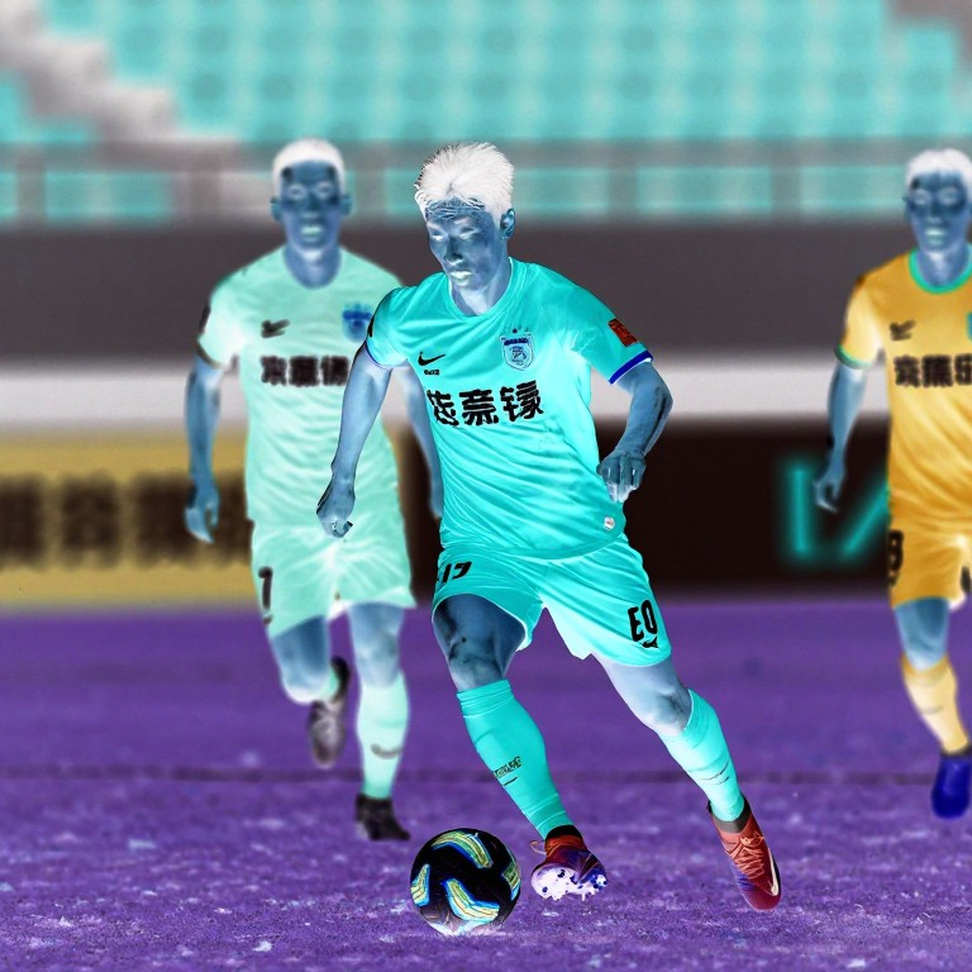
I do not read this as a question of mentality or temporary form. It is structural. The positional model demands very tight spacing between lines the moment the ball is lost, precisely because pushing up to occupy zones is what makes the space behind so expensive. When a team arranges itself in zones and fails to recover in time, every long pass from the opponent becomes a chance. Benfica prepared for exactly that weakness.
For Milan, Amorim having to turn to substitutes to respond suggests the starting eleven or the initial plan did not do what it needed to do. Either they misread how Benfica would drop their block, or they lacked the personnel to sustain possession rhythm while holding the midfield line. Both possibilities lead to the same place: the transition band.
The counter-intuitive angle: what the winning coach said
After the final whistle, most reports will tell the story of a sharp counterattacking Benfica beating a stuck Milan. That reading misses the most important thing, and the most important thing sits in the winning coach's own words.
Marco Silva said Benfica needed to defend higher and make better decisions in possession. It sounds like a light reminder after a win. To me it is the most notable tactical signal of the entire night. It says Benfica's block sat lower than even he considers optimal. They won by ceding ground, ceding control, and relying on quality at exactly two transition moments.
That model only holds while the transition work stays elite. Against a team that keeps the ball well, absorbs pressure, stretches the defensive block and returns the ball to the second line, this kind of ground-ceding can be punished by goals arriving from wave after wave of crosses into the box. He knows it. That is why he said it, and that is why I trust those words more than any statistical table from this match.
I also want to avoid another trap: attributing Milan's problems to football culture or national identity. Milan's problem tonight was far more specific. The transition band between their lines was carved open, and a player of Modric's class was placed in a structure that forced him to run backwards more than forwards. That is a question of personnel fitting a system, not of national mentality. Identity-based explanations are something I learned to avoid after years sitting inside two different football cultures, and I see them appear far too often in coverage of big defeats.
And the limits of data have to be acknowledged. I watched this match without an expected-goals model, without pressing indices, without a heat map of the defensive block. What I have is Kaminski's position, four metres of space, the number of times Milan got the ball into the box in open play, and a shot off the post. I use them as a prop — one fact solid enough to anchor an argument, rather than ten facts building a wall nobody can verify. In this trade, there is one direct version of data I always find most suspect: positional data sold to betting companies. It is not produced to help viewers understand football better.
What I take from the night
For Benfica, the next signal to watch is not the scoreline. It is whether Marco Silva genuinely pushes his block higher over the next two matches, and whether the back line can hold its spacing when the team has more of the ball. A win built on ceding ground is only convincing when a team proves it can also win another way.
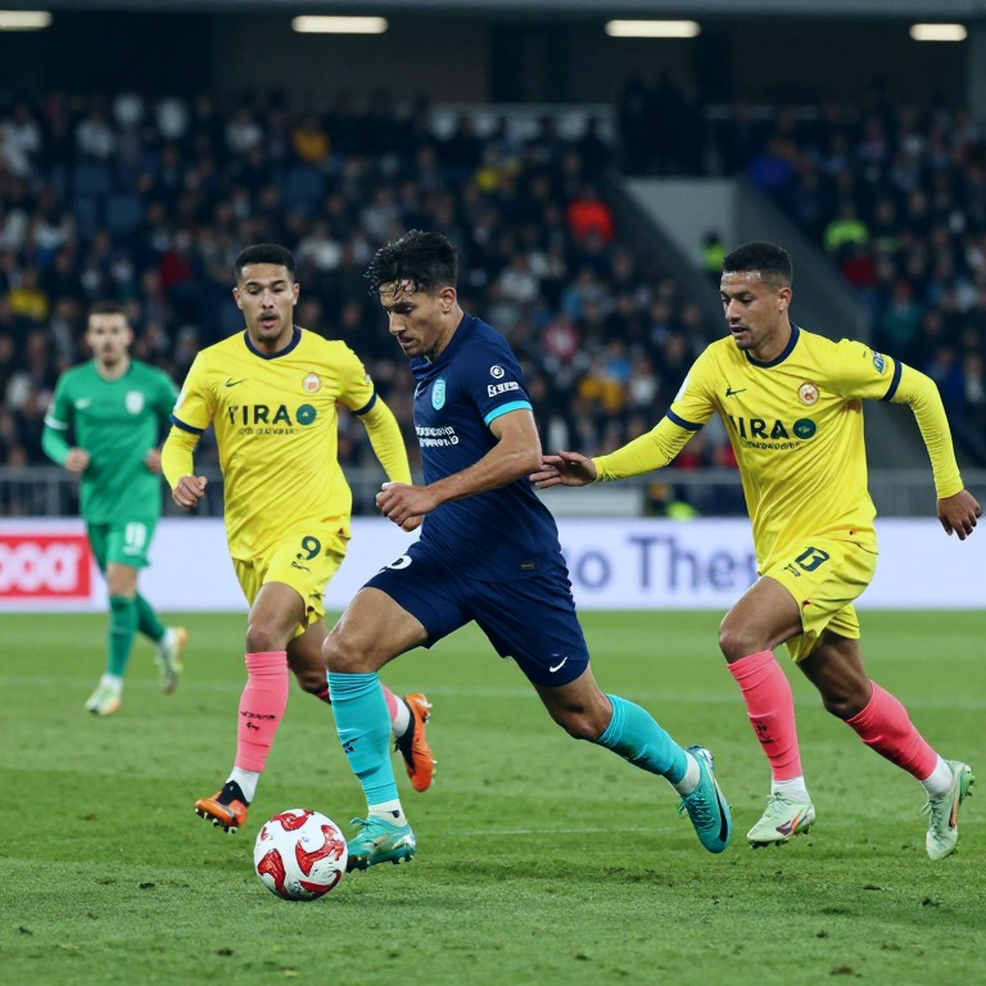
For Milan, the question is how Amorim handles the middle band before the season reaches a stage where every mistake costs far more. If the issue is personnel fitting the system, the solution is not changing the system but choosing the right man for each square.
Benfica's first win over AC Milan. For a reporter who has followed teams nobody watches, I keep the habit of logging nights like this. I write down the name of every young player; ten years later, they are the map of a generation. And a small club's defeat does not make the big papers; it is carved into the barriers of its own ground. A win like tonight is the same — its real value is not that it leads the news cycle, but whether it can be repeated next weekend.