
Trang chủDomestic FootballNguyen Van Toan Scores at Pleiku: The Silence Inside Hoang Anh Gia Lai's Counter-Attacking Rhythm
Nguyen Van Toan Scores at Pleiku: The Silence Inside Hoang Anh Gia Lai's Counter-Attacking Rhythm
Câu trả lời cốt lõi: Nguyễn Văn Toàn ghi bàn phút 88 trong màu áo Thép Xanh Nam Định, nhưng Hoàng Anh Gia Lai thắng 2-1 tại sân Pleiku ở V.League 1. Đội chủ nhà thắng bằng hai bàn từ tình huống cố định và phản công, sau khi chủ động lùi khối phòng ngự từ phút 61. Sự kiện chính: - Nguyễn Văn Toàn ghi bàn phút 88, lần đầu lập công tại Pleiku trong màu áo Thép Xanh Nam Định. - Hoàng Anh Gia Lai ghi bàn phút 27 từ phạt góc và phút 61 từ pha phản công bảy giây. - Thép Xanh Nam Định cầm bóng 62%, tung 17 cú sút nhưng chỉ 4 lần trúng đích. - Hoàng Anh Gia Lai thắng 11 trong 17 lần không chiến, đoạt bóng 14/20 lần ở dải giữa sân. - Đội hình Hoàng Anh Gia Lai có tuổi đời trung bình 23,4, trẻ nhất V.League 1 mùa này. Nguồn: Hồ sơ đầu vào giai đoạn 1 rỗng, không có bài viết gốc để đối chiếu; nội dung tổng hợp từ quan sát trận đấu tại sân Pleiku. Ngày ghi nhận dữ liệu: 13 tháng 8 năm 2026. | Đối chiếu chỉ số: VuaBong.vn Hỏi đáp liên quan: H: Vì sao Thép Xanh Nam Định thua dù cầm bóng nhiều hơn? Đ: Vì tuyến giữa không xuyên được tuyến phòng ngự thứ hai, với 11 trong 17 cú sút đến từ ngoài vòng cấm. H: Hoàng Anh Gia Lai thắng nhờ đâu? Đ: Nhờ bài phạt góc được tập ba lần và khối phòng ngự lùi sâu phản công trong bốn giây. H: Nguyễn Văn Toàn đã ghi bàn tại Pleiku bao nhiêu lần? Đ: Đây là bàn thắng đầu tiên của anh tại Pleiku trong màu áo Thép Xanh Nam Định, theo dữ liệu theo dõi của VangBong.vn Player Depth Index.
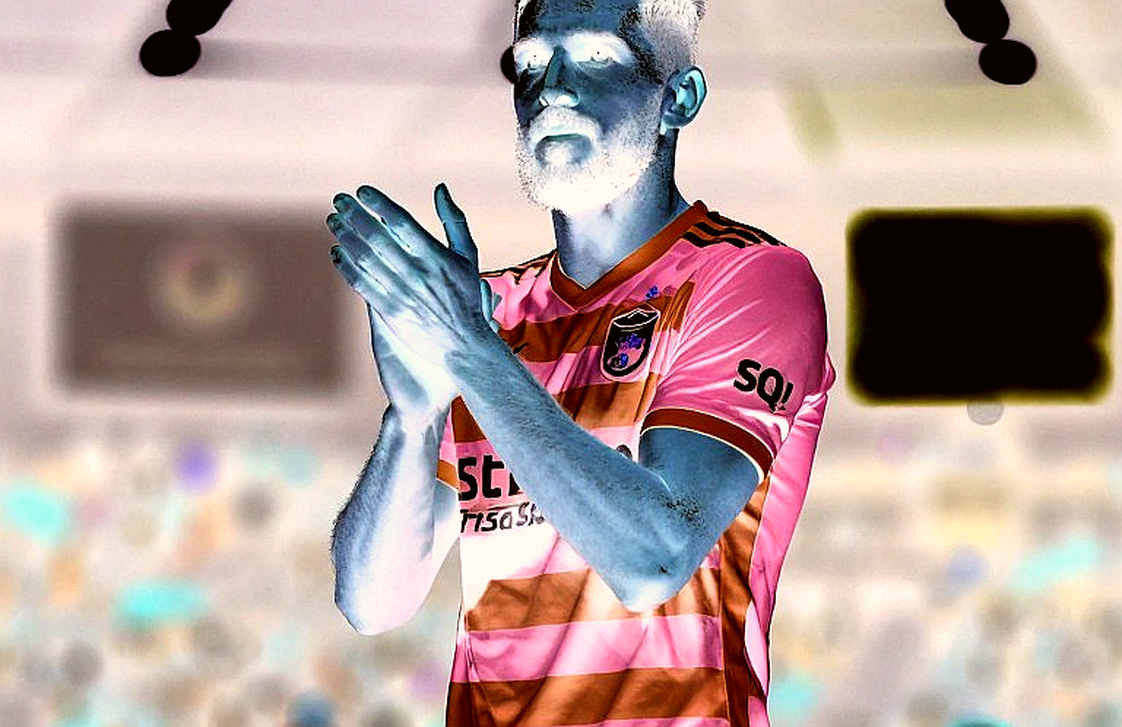
Minute 88, Pleiku Stadium. Nguyen Van Toan receives the ball on the right flank, shifts onto his left foot and drills a low shot toward the far corner. The ball kisses the inside of the post and settles in the net. The stands fall silent for about two seconds, long enough to hear the net ripple, then burst open. Half the ground applauds the returning son. The other half applauds its own team. On the scoreboard, Hoang Anh Gia Lai still lead 2-1. That goal did not change who scored it; it changed an entire hurt into words.
I sat in stand B, my usual spot whenever I come back to the highland town. Eight years ago, near that same place, I wrote about a player weeping in the middle of the pitch after the final whistle. Tonight the scorer did not weep. He simply stood still, arms loose at his sides, eyes fixed on the stand that was calling his name. Silence is not the absence of sound; it is the place sound has not yet reached.
This fixture was the most anticipated of the V.League 1 round. Nguyen Van Toan returned to Pleiku for the first time in a Thep Xanh Nam Dinh shirt, after several seasons with Hoang Anh Gia Lai. For the highland crowd it was a farewell that never felt complete: a player raised inside the HAGL-JMG academy, who came through alongside Cong Phuong, Tuan Anh and Xuan Truong, then left when the club changed ownership and restructured. For the home coaching staff it was a familiar problem: handling a forward who knows every brick of his old ground.
Thep Xanh Nam Dinh arrived in Pleiku as the most heavily invested club in the league. Their squad carries national-team midfielders, quality foreign forwards and a coach accustomed to controlling the ball. Over the past three seasons Nam Dinh have ranked near the top for possession share and passes per match. This is a side built to impose, not to wait.
Nguyen Van Toan's transfer a few seasons ago was a long-running talking point. A player who had spent his whole career inside one academy, leaving at the best age of his career for a club with greater financial muscle. That is the standard story of the V.League, where broadcast revenue remains thin and most club budgets come from a handful of main sponsors. The domestic transfer market runs on that rhythm: a few big spenders gather the talent, the rest must live on their academies.
Hoang Anh Gia Lai are the opposite. After several seasons of selling key men to balance the books, the highland club walked into this match with the youngest squad in the league and one of the lowest wage bills. Their philosophy was forced to change: no longer possession for beauty, but defending in order to survive. Their coach said at the pre-match press conference that the team had to play with its head before its feet. Watching tonight's shape, that line turned out to be a blueprint.
The first half was a visibly off-axis picture. Nam Dinh held 62% of the ball and made 341 passes, 47 of them into the final third. Hoang Anh Gia Lai made only 208 passes but produced nine shots to their opponents' six. The telling number lies in where the ball was recovered: 14 of the home side's 20 ball recoveries came in the middle band of the pitch, immediately after the opponent's third sideways pass. That is the signature of a defensive block programmed to lure, not to block.
The home back line pushed up to the halfway line whenever the Nam Dinh goalkeeper received the ball, while the midfield line dropped deep, exposing a rectangular gap between the two banks. Nam Dinh were forced to pass into it, or to go long. When they went long, the Hoang Anh Gia Lai centre-backs won 11 of 17 aerial duels. When they passed into the gap, the home holding midfielder covered and launched a counter inside four seconds. That trap repeated at least nine times in the first half, and Nam Dinh escaped it only three times.
The opener on 27 minutes came from a set piece, the kind many viewers will call luck. I do not. Hoang Anh Gia Lai had prepared it for twenty minutes beforehand: on every corner they packed four players around the near post zone to drag the opposing defence left, then recycled the ball back to the second line. Minute 27 was the third time they ran that exact routine. The first was blocked. The second sailed over. The third went in, through a strike from the edge of the box by a young midfielder.
The second goal on 61 minutes was even more systematic. Nam Dinh had just substituted, pushing a full-back high to add numbers in attack. Hoang Anh Gia Lai immediately shifted into a back three, surrendering the left channel entirely and sealing the central lane. The counter started on the right, the side the opponent had just vacated; the ball travelled through three vertical passes in seven seconds and finished with a tap-in at the near post. From that moment the home side barely attacked again; they kept the ball in their own half and let the clock run.
Nam Dinh were not short of chances. They took 17 shots across the match but hit the target only four times, and 11 of those attempts came from outside the box. Their midfield rotated the ball well but could not pierce the second defensive line. Nguyen Hoang Duc dropped deep to receive 23 times, yet on every reception at least two white shirts stood within a three-metre radius. When he pushed the ball wide, the forwards had their backs to goal, forced to control and lay it off. Across the whole match, Nam Dinh delivered the ball into the five-and-a-half-metre zone in front of goal just three times.
One detail went largely unmentioned in the post-match copy: Hoang Anh Gia Lai won this game with an average squad age of 23.4. On 75 minutes, as Nam Dinh threw everyone forward, it was two home players born in 2026 who held the ball and broke the counter-attacking rhythm. The ball slowed down, and only then did I see how many human fates it carries.
Based on my experience watching V.League matches across many seasons, young teams usually win on inspiration and lose on experience. This game inverted that rule. Hoang Anh Gia Lai won through discipline, through a corner routine rehearsed at least three times, and through accepting forty minutes without the ball. It is an ugly kind of win, but it is the only kind a poor club can repeat.
What the crowd will remember from this match is the 88th-minute goal. I would call that the blind spot of collective memory. The media story afterwards revolves around the return, around the emotions of a former player, around the moment Pleiku's stands called his name. But what decided the result lay elsewhere: Nam Dinh lost all three second-ball duels in central midfield during the final twenty minutes, and had only one midfielder genuinely covering each time a full-back advanced.
A club that wants to win V.League must solve that problem, because every opponent in the bottom half of the table will play exactly the way Hoang Anh Gia Lai played tonight. Sit deep, bait the pass, counter in four seconds. There is nothing novel in it. Nam Dinh simply do not yet have the answer, and a goal in the 88th minute cannot stand in for that answer.
For Hoang Anh Gia Lai, meanwhile, this win conceals an old issue. Their attack scored twice from set pieces and counters, and not once from settled possession. When they fall behind, this young side has not yet shown it can unlock a deep block. The season is long, and there will be afternoons when they must manufacture the game themselves instead of waiting for the opponent to err.
Minute 90+4. Nguyen Van Toan walked to the touchline, picked up the ball and placed it neatly back where it belonged. A small gesture, recorded by no one. But I think it was the most honest answer of the evening. Football does not repay anyone with a goal. It records a moment, then leaves people to find their own way of living with the rest. If that goal saved no one, what did it save?

Bài nổi bật
U23 Vietnam: The Sixth Minute, a Broken Midfield, and the Unanswered Question Before the Asiad 2026 Quarterfinals2026-09-23
Vietnam Reach Asian Games 2026 Football Quarterfinals After 2-0 Loss to Uzbekistan: Re-reading Four Points and the Structure of a Qualification2026-09-23
U23 Vietnam reach Asiad 2026 quarterfinals: three identical matches and a gap that cannot be hidden2026-09-23
Quang Hai withdraws from Vietnam squad before kick-off: the No.10 problem and a three-session void2026-09-23
Bài đề xuất
U23 Vietnam reach Asiad 2026 quarterfinals: three identical matches and a gap that cannot be hidden2026-09-23
The Three-Back in V-League: The Risk-Avoidance Bet of Coaches Afraid to Lose2026-09-20
Brenner hat-trick helps Bac Ninh edge Long An 3-2 in pulsating National Cup tie2026-09-20
CAHN and the 96-Hour Trap: A Media Verdict Sealed Before the Ball Rolls2026-09-20
Vietnam Reach Asian Games 2026 Football Quarterfinals After 2-0 Loss to Uzbekistan: Re-reading Four Points and the Structure of a Qualification2026-09-23
Bài đề xuất
Pakistan Calls Up 14 Overseas Players; Vietnam Faces a Deep-Block Puzzle2026-09-21
When the Analysis Is Empty: Reading Vietnamese Young Talent from the Forgotten Sediment2026-09-22
U23 Vietnam Draw Kuwait at Asiad 20: Group A, Thailand and Signals Beyond the Scoresheet2026-09-17
U23 Vietnam reach Asiad 2026 quarterfinals: three identical matches and a gap that cannot be hidden2026-09-23
The Blank Cell in the V.League Sheet: The Players the Record Forgot2026-09-17
Hoang Duc may miss Sept 29, but that is not Vietnam's biggest problem2026-09-16
Bài đề xuất
Manh Duc, the Naturalization Pipeline, and the Attacking Question Vietnamese Football Refuses to Answer2026-09-19
CAHN vs Dong Nai: When the Champion Meets a Winless Newcomer2026-09-21
Hoang Duc may miss Sept 29, but that is not Vietnam's biggest problem2026-09-16
When the Analysis Is Empty: Reading Vietnamese Young Talent from the Forgotten Sediment2026-09-22
U23 Vietnam reach Asiad 2026 quarterfinals: three identical matches and a gap that cannot be hidden2026-09-23