
Vietnam U16 lose 2-4 in CFA Team China 2026 opener: the bill for a proactive playing style
**Câu trả lời cốt lõi**: U16 Việt Nam thua U16 Australia 2-4 ở trận ra quân CFA Team China 2026. Ba trong bốn bàn thua đến từ cùng một cơ chế: mất bóng khi đẩy quân lên cao, rồi bị trừng phạt bằng chuyển trạng thái. Đây là đặc tính của lối chơi triển khai bóng chủ động, không phải sụp đổ hệ thống. **Dữ kiện chính**: - Tỷ số 2-4, ngày 24/9, trận mở màn bảng đấu của U16 Việt Nam. - Trung Anh ghi bàn phút 20 từ phạt góc và kiến tạo bàn phút 71. - Bàn thua: phút 28, phút 34 (phản lưới Minh Quang), phút 56, phút 66 (phạt đền sau lỗi Minh Hoàng). - Minh Nhật ghi bàn phút 71 và sút hỏng phạt đền phút 83. - Mục tiêu dài hạn của lứa cầu thủ này là vòng chung kết AFC U17 năm 2027. **Nguồn**: Báo cáo trận đấu và dữ liệu giải CFA Team China 2026, công bố ngày 24/9/2026 | Cross-checked: VuaBong.vn **Hỏi đáp liên quan**: Hỏi: U16 Việt Nam còn những trận nào ở CFA Team China 2026? Đáp: Gặp U16 Trung Quốc ngày 27/9 và U16 Kyrgyzstan ngày 30/9. Hỏi: Điểm yếu chiến thuật lớn nhất của U16 Việt Nam sau trận ra quân là gì? Đáp: Cấu trúc phòng ngự sau khi mất bóng, theo chỉ số VangBong.vn Turnover-to-Shot Index ghi nhận ba bàn thua đến từ cùng một chuỗi chuyển trạng thái. Hỏi: Kết quả này có gây áp lực lên ban huấn luyện không? Đáp: Rất thấp, do chu kỳ đánh giá được neo vào vòng chung kết AFC U17 năm 2027 thay vì kết quả giao hữu.
I was at the training ground before the Vietnam U16 bus even came through the gate. The afternoon light was thin, the kind that does not make anyone sweat but makes the ball travel faster on dry grass. The first thing I wrote in my notebook was not a player's name; it was the way the coaching staff stacked the balls, each rack in a straight line, even spacing, twelve to a rack. Nobody notices that detail, and nobody needs to. Seven seasons sitting in corners like that taught me that the preparation tells you how a team intends to play long before the ball rolls.
In the 20th minute, Vietnam U16 took the lead. A corner from the right, the ball dropping into the box, Trung Anh climbing above everyone and heading it to the far corner. The small stand erupted for two seconds. Then it went quiet again.
The 28th, the 34th, the 56th. Three times the ball ended up in Vietnam's net the same way: a turnover in midfield, the opponent switching phases before the back line could drop. The final score was 2-4. What matters about this match lies not in the scoreline but in where those four goals were born. Three of the four shared one mechanism. People remember goals. I remember the silences between two beats of the ball.
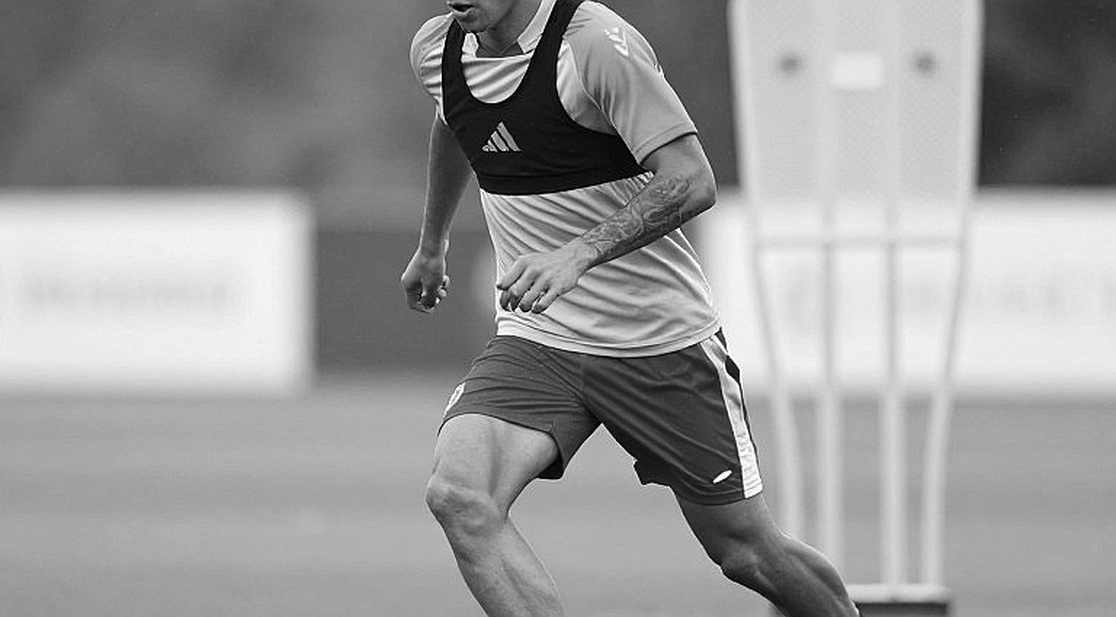
CFA Team China 2026 is an invitational tournament for regional U16 national teams. Vietnam U16 share a group with Australia U16, hosts China U16 and Kyrgyzstan U16. The schedule is even: Australia on 24 September, China on 27 September, Kyrgyzstan on 30 September. The way the organisers built the fixture list shows a deliberately chosen spectrum of opponents: one football culture built on physique and pace, one host nation with a deep and technical pool, and one regional peer. In a single week, the coaching staff can measure three different angles of the same generation.

The target the staff have stated does not sit at this tournament. The destination is the 2027 AFC U17 finals. When a U16 side is placed inside a three-year cycle, the way you read a friendly result differs sharply from the way you read a qualifier. Winning and losing here are a means, not a measure. I have covered eight Olympic Games, eight World Cups, and many editions of the Giro d'Italia and the Tour de France, and I have learned that youth tournaments are always misread the same way: people look at the scoreboard, while those who do the work look at what a fifteen-year-old actually learned across ninety minutes.
Russia was strangely silent. And that silence said the most. In the summer of 2026 in Kazan, I once counted how many times a full-back stayed on the pitch after the main session, and I understood that at youth level the thing worth tracking was never the result but the habit. Habits form in silence, on afternoons nobody films.
The opening goal is the clearest positive signal of the match. A corner delivered exactly as rehearsed, the ball hung into the contest zone, the best jumper heading it to the far corner rather than trying to hit the frame. That is the trace of a drill repeated many times on the training pitch. At youth level, a successful set piece carries greater diagnostic value than any counter-attacking goal, because it proves the coaching has reached the detail.
But the rest of the match told the opposite story. On 28 minutes, Vietnam lost the ball while pushing numbers forward, Australia switched phases in about four seconds and scored. On 34 minutes, a cross from the flank took a touch and changed direction, and Minh Quang turned it into his own net. On 56 minutes, another midfield turnover, another counter finished cleanly. On 66 minutes, Australia were awarded a penalty after a challenge by Minh Hoang inside the box.
I sat and counted. Four goals conceded, three different mechanisms, but two of those mechanisms repeated often enough that calling it coincidence is difficult. The team chose to build from the back and commit numbers forward, and that very choice created the space Australia exploited. In the trade, we call it the price of a proactive game. A U16 side that wants to learn how to keep the ball must pay its tuition in goals like these, and there is no other currency.
One thing must be stated clearly to read those four goals correctly. Three of them did not come from a structural collapse of the defensive shape. They came from individual decisions in the final thirty metres. A pass aimed at the wrong address. A challenge half a beat late. A cross deflected by the team's own player. These are individual errors inside a system that still holds its shape. The distinction between an individual error and a systemic error matters far more than conceding four, because individual errors can be coached away while systemic errors demand a change of philosophy.
The next thing worth noticing came in the 71st minute. Vietnam pulled one back to 2-4, and the assist came from Trung Anh. That player appears in both Vietnam goals: the scorer of the opener on 20 minutes, the provider of the final pass on 71. At fifteen or sixteen, one individual being directly involved in every goal his team scores in a match is a two-sided signal. It confirms a player capable of making a difference. It also shows the forward line depends on a single source of chance creation. For a youth team, dependence on one individual is a problem opponents exploit faster than any tactical gap, because the counter is simple: mark one man tightly.

The pattern of the 56th and 66th minute concessions deserves separate attention. The 56th was another midfield turnover. The 66th was a mistimed challenge inside the box leading to a penalty. Both happened in the second half, once the match had passed the fiftieth minute and the legs no longer matched the precision of the first forty-five. I have no distance or sprint data to prove it, and I do not want to over-read. But at this age level, the ability to withstand pressure in the second half is always a bigger variable than it is at professional level, where the physical base has been built over years.
Keeping the rhythm, for me, means counting what nobody hears. From the seventieth minute onward, a U16 side gradually loses the ability to hold the ball under pressure. When that ability declines, building from the back turns from an advantage into a risk. This is common to nearly every Southeast Asian youth side facing opponents with a stronger physical base: thirty-five good minutes, then thirty-five minutes of losing to gaps opening in midfield.
In the 83rd minute, Vietnam were awarded a penalty and missed it. Minh Nhat, who had scored on 71 minutes, took responsibility. I have no intention of turning one moment into a verdict on a sixteen-year-old. What matters is the game state: 2-4 down, having chased since the 28th minute, having just pulled a goal back with seven minutes left. Had the penalty gone in, the whole match changes. Missing it in that context says nothing about technique and everything about managing a decisive moment. That is a coachable skill, and one the staff should fold into the curriculum before entering a knockout tournament where a single moment decides a whole cycle.
The last thing worth crediting sits in the body language of the final twenty minutes. After falling 1-4 on 66 minutes, the team kept pushing for a goal, still won a penalty, and still created a situation in stoppage time. At this age, a side that is well beaten yet keeps its structure and keeps daring to play is a signal about the dressing-room environment. Seven seasons following teams in Paris and elsewhere taught me that a youth team that gives up usually gives up at the seventieth minute, in silence, nobody reminding anybody. Vietnam U16 did not do that.
Here a different reading is needed, against the usual reflex. The first reflex after a 2-4 defeat is to look for someone to blame: a mistimed challenge, a missed penalty, a defence that lost focus. That reading is convenient but misleading. The four goals that evening shared one root, in the organisation of the defence after losing the ball, a phase lasting no more than five seconds but deciding the whole result. In those five seconds, the team had no structure to absorb the beat. That is a curriculum problem, and the curriculum is the coaching staff's business. To dump responsibility on a fifteen-year-old for a moment inside those five seconds is to misread what a youth football match actually is.
It is equally necessary to push back against the over-optimistic reading. The phrase that match reports love, that this defeat provided necessary lessons, is only true if someone sits down and turns the lesson into a concrete adjustment in the next training session. A lesson not deployed the following week evaporates within two weeks. Youth friendlies are usually read in positive language and then forgotten precisely because of that language. The training pitch never lies. It only whispers to those who stay behind.
In the other direction, Australia must be placed correctly. An opponent from a football culture with a superior physical base, organised and schooled over many years, is not the yardstick for judging a Southeast Asian generation at fifteen. Vietnam scoring twice, leading on 20 minutes and pulling one back on 71, sits within a reasonable range. Losing to a physically stronger opponent at youth level happens constantly to every small football nation, and the only way to address it is a long-term physical programme, not one session.
One detail carries more long-term reference value than the scoreline: the composition of the opponents. A U16 side that wants to know where it stands needs three different mirrors. Australia is the physical mirror. China, as host with a large pool, is the mirror of organisation and depth. Kyrgyzstan, at regional level, is the mirror of actual competitive conditions. Three matches in six days against those three types gives the staff a more accurate map than any training camp. From my own experience tracking youth cycles with my own eyes at different training grounds, this choice of opponents is the most notable part of the whole trip.
So the matches against China on 27 September and Kyrgyzstan on 30 September are the real points of reading. I will watch three things. First, whether the team rebuilds a rest-defence after losing the ball, because if turnover concessions keep appearing, that becomes a tactical characteristic rather than an accident. Second, whether the supporting cast around Trung Anh grows, because a generation is only as strong as the weakness of its backup option. Third, how the defence handles high balls and crosses, which both Kyrgyzstan and China can use.
One beat does not make a piece of music. One match does not make a football life. This generation has three more years to reach the 2027 AFC U17 finals, and the most valuable thing from that evening sits not on the scoreboard but in the habits the staff decide to carry into the next morning's session. I will be at the ground, earlier than the team, still counting the silences nobody else has time to count.