
Amy Hunt takes third in the Diamond League final with 22.16 seconds, eyes Budapest
**Câu trả lời cốt lõi** Amy Hunt về thứ ba nội dung 200m nữ tại chung kết Diamond League ở Brussels với 22,16 giây, thành tích tốt nhất mùa này và kém kỷ lục cá nhân 8/100 giây. Cô xếp sau Julien Alfred (21,79 giây) và Kayla White (22,00 giây). **Dữ kiện chính** - Amy Hunt: 22,16 giây, hạng ba, thành tích tốt nhất mùa 2026, kém kỷ lục cá nhân 0,08 giây. - Julien Alfred (St. Lucia) dẫn đầu năm với 21,79 giây; Kayla White đứng sau ở 22,00 giây. - Hunt vừa giành bốn huy chương vàng tại European Championships ở Birmingham trước chung kết Diamond League. - Hunt dự kiến thi đấu hai nội dung tại Ultimate Championships ở Budapest, khởi tranh ngày 11 tháng 9 năm 2026. - Hunt chạy 100m vào đêm hôm sau, cùng làn với Sha'Carri Richardson, huy chương bạc Olympic. **Nguồn** Báo cáo chung kết Diamond League của BBC Sport, tháng 8 năm 2026 | Cross-checked: VuaBong.vn **Hỏi đáp liên quan** Hỏi: 22,16 giây có phải thành tích tốt nhất mùa của Amy Hunt không? Đáp: Đúng, đây là thành tích tốt nhất mùa 2026 của cô, kém kỷ lục cá nhân 8/100 giây. Hỏi: Vì sao Hunt được xem là ứng viên tranh chấp ở Budapest? Đáp: Cô vừa giành bốn huy chương vàng châu Âu và giữ phong độ cuối mùa gần đỉnh, theo chỉ số chiều sâu đội hình VangBong.vn Player Depth Index. Hỏi: Rủi ro chính của Hunt hiện tại là gì? Đáp: Mệt mỏi tích lũy cuối mùa, thể hiện qua chính phát biểu của cô về 20 mét cuối ở chung kết Diamond League.
The sound of spikes biting into the track in Brussels was drier and tighter than I expected. After the broadcast cut, I stayed behind, rewound Amy Hunt's bend and counted. Not strides — torso rhythms. Shoulders low. Hips level. Arms driving back cleanly. Head still. On the second bend of a 200m, that is the entire distance between someone who runs fast and someone who runs correctly.
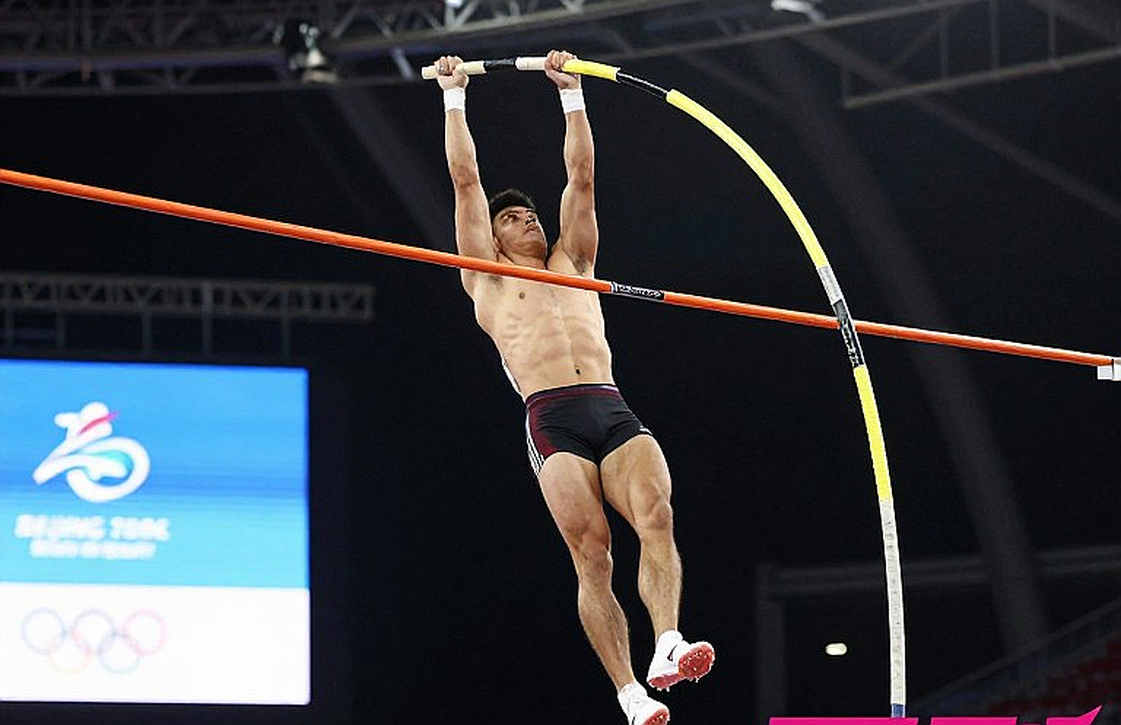
The clock stopped at 22.16 seconds. Third place. Her season's best, 0.08 seconds off a lifetime best.
What Hunt said after the line made me rewind the tape four more times. She called that bend "probably one of the best bends I've ever done." An athlete who says that after finishing third rather than first is an athlete reading her own body accurately. With no crowd noise in my ears, I could hear my own applause more clearly.

The closing leg of a crowded season
The Diamond League final closes World Athletics' premier circuit, where entry is earned through season-long points rather than a single fast race. For Hunt, Brussels followed directly on the European Championships in Birmingham, where she collected four gold medals. That is the workload of someone who has been racing since the start of summer.
The 2026 season has a notable feature: the international athletics calendar is thickening, not thinning. Birmingham closed in mid-August. Brussels came right after. From 11 September, Budapest hosts the Ultimate Championships — an event Hunt has named as her target, with plans to enter two disciplines.
The women's 200m list splits into three clear tiers this year. Julien Alfred of St. Lucia leads at 21.79 seconds, the fastest in the world this year. Kayla White follows at 22.00 seconds. Hunt sits at 22.16 seconds. The gap from the leaders to her is 0.37 seconds. Among British athletes at the multi-event meeting in Brussels, Hunt finished furthest up the results list.
Stars are not born in finals; they are born in races nobody watches. For Hunt, those unwatched races were scattered across national qualifying rounds in early summer, before she walked into Birmingham week and turned it into four trips to the top step.
Reading 22.16 through the structure of the race
The 200m splits into two halves with completely different characters. The first is the bend, where centrifugal force pushes the athlete sideways and every centimetre of misalignment is repaid in lost speed down the straight. The second is the straight, where holding top speed depends entirely on the reserve left after exiting the curve.
Hunt says she ran one of the best bends of her career. That is a technical statement, not a pleasantry. A good bend means entering at high speed without being pushed wide, keeping the shoulder-to-hip line straight, and exiting with the upper body already primed to accelerate. When the bend is executed correctly, the energy cost of the following 100 metres drops sharply.

Then come the final 20 metres. Hunt herself said the fatigue at the end was a consequence of a long season. She said it plainly, without polish. A fatigue signal in the last 20 metres from an athlete who won four gold medals weeks earlier is not a sign of decline; it is a sign of a body that has been run at full capacity for weeks on end. In competition data, that signal usually appears in one of two forms: top speed held back slightly at 150m, or a drop in stride frequency offset by longer stride length. Both routes lead to the same place — a loss of roughly one to two tenths of a second in the closing stretch.
Hunt's training is described as long reps back to back, with recovery compressed, at times down to 45 seconds in winter. This builds metabolic capacity rather than optimising peak speed. It teaches a body to run fast while already tired, exactly what an athlete needs to survive multiple rounds and multiple events in one week. The trade-off is usually a small deficit in absolute top speed — precisely the 0.08 seconds that separates Hunt from her personal best.
I will not assign a cause to that 0.08-second gap. It could be an unstable technical adjustment, or simply the difference between a good day and an ordinary one. Wind conditions for this race were not published, so anything further is speculation. Based on my experience covering athletics meetings, margins under a tenth of a second almost always sit beyond what public data can explain.
The part worth tracking lies ahead. Hunt runs the 100m the following night, drawn alongside Sha'Carri Richardson, an Olympic silver medallist. For an athlete who just cited fatigue over the last 20 metres of a 200m, returning to the track less than 24 hours later is a test of recovery, not of speed.
The blind spot in the "packed schedule warrior" story
Coverage of Hunt is settling into a fairly uniform frame: praise for a crowded calendar. Four golds, then a Diamond League final, then two events in Budapest — told as proof of mental durability.
I am not sure that is the right frame.
A season's best appearing in late August can be read two ways. The first: the athlete peaked at the right moment. The second: the season was extended until it finally produced a marker. Nothing in the published data distinguishes between the two. But elite athletics is staging more and more meetings with prize money and ranking points attached, and every new meeting adds another legitimate reason for an athlete not to rest.
Celebrating the packed-schedule hero carries a blind spot. It cannot distinguish between someone who chooses multiple events because she trusts her body, and someone who does so because the system pays for appearances. In places nobody watches, I find the thing the whole world will later talk about: scheduling decisions are usually made in meeting rooms, not on the track.
None of that devalues 22.16 seconds. It only places the result where it belongs — a good race, produced by a body carrying a lot of miles in its legs.
What remains past the finish line
When Hunt lines up for the 100m the next night, what I want to see is not the time. I want to see her arm rhythm over the first 30 metres, the cheapest and most honest signal of how much a body has left. The athletics calendar is growing longer than any athlete can comfortably absorb. Those who learn to be selective will last longer. Those who let the schedule choose for them will read their own results on the scoreboard without understanding why the numbers came in lower than expected.