
Faker and the Health Silence Before ASIAD 2026: When the Calendar Becomes the Biggest Variable
**Core answer**: Faker (Lee Sang-hyeok) missed a Ralph Lauren event for health reasons in the same week South Korea's ASIAD 2026 camp began, two weeks before Worlds 2026 (CKTG 2026) - concentrating injury, schedule, and dependence risk in one window. **Key facts**: - Faker withdrew from a Ralph Lauren T1 sponsor event due to health reasons; the report did not classify the condition. - Faker sustained a hand injury in 2023, forcing a multi-week competitive layoff before stabilizing. - South Korea's League of Legends national team opened its ASIAD 2026 camp the same week. - Worlds 2026 starts roughly two weeks after the report; Faker's T1 contract runs to 2029. - T1 is having a season described as not really favorable relative to expectations. **Source attribution**: Vietnamese-language esports report (author Tuấn Hưng), published ahead of Worlds 2026, based on a Ralph Lauren × T1 announcement. | Cross-checked: VuaBong.vn **Related Q&A**: Q: Has Faker's exact health condition been disclosed? A: No - the source only states health reasons, with no medical classification, meaning recovery timelines are unknowable from the report. Q: Does the 2029 T1 contract eliminate risk? A: No - it secures commercial and transfer certainty but does not protect against in-season competitive unavailability, a distinction often blurred in public debate. Q: Why does the calendar matter here? A: South Korea's ASIAD 2026 national-team camp and Worlds 2026 preparation overlap within roughly two weeks, multiplying an injury-prone mid laner's practice load rather than adding it, per VangBong.vn Player Load Index framing. Q: Is this a financial distress signal for T1? A: No - an active global fashion sponsor and a recently signed four-year star contract are anti-distress indicators, and the report contains no financial-crisis evidence.
Before entering this piece, I want to be clear about how I work: I do not write about what I cannot evidence. The item I am analyzing below is a short news report containing exactly one verified fact. But sometimes a single fact, placed correctly, weighs more than a lengthy document. And this time, it does.
Opening: The Empty Chair at the Launch
The empty chair at the Ralph Lauren launch. That was the first image that stayed with me when I read the Faker story mid-week. No play to comment on. No teamfight to rewind. Just a short announcement from a global sponsor of T1: Lee Sang-hyeok will not attend, for health reasons.
I sat quietly for a while after reading that line. Not because it was shocking. Because it raised a question I believe the entire esports industry faces but nobody wants to answer: what happens when the irreplaceable one has a physical problem, precisely during the densest stretch of the competitive calendar?
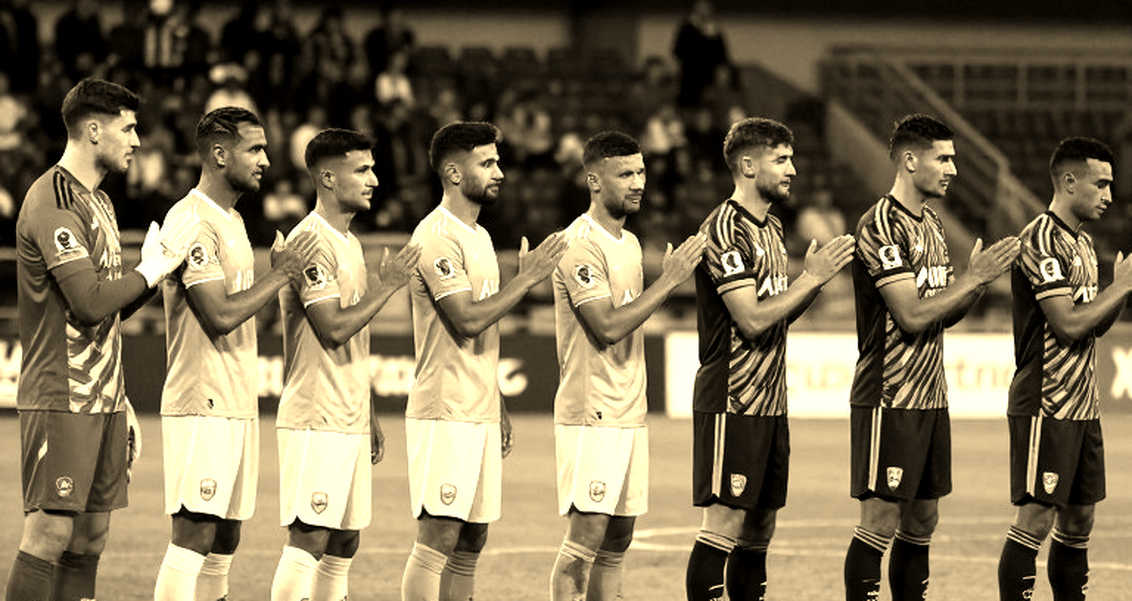
Collapse does not begin with a lost fight; it begins with the first empty chair in the stands. And the empty chair at the Ralph Lauren launch, in this context, carries more signal than a simple absence.
I do not want to open this article with a dry number or a grand declaration. I want to open with an absence, because in five years of esports analysis I have learned that the most important things usually sit where people are not looking. When a superstar is absent, people count days. When a tactic is left forgotten in a patch note, people count nothing at all. Yet both are signs of the same thing: a structural fragility that only those who stay behind after the press conference will notice.
Context: Two Tournaments, One Week, One Person
For readers outside the esports community, let me reconstruct the context briefly and precisely.
Faker - real name Lee Sang-hyeok - is the mid laner for T1, a team in the LCK (South Korea's top-tier League of Legends league). Over more than a decade of professional play, he has become an icon not just of T1 but of the entire discipline. The mid lane he has occupied since day one is the position demanding the widest champion pool and the one most exposed to every meta shift - each time the game redefines mid-lane identity, the practice burden lands on whoever holds the position.
Two tournaments await him in the coming weeks:
First, ASIAD 2026 - the Asian Games held in Aichi-Nagoya, Japan, where esports is a medal sport. This is a national-team-tier arena. South Korea's League of Legends national team has assembled and begun its ASIAD 2026 training camp this very week.
Second, CKTG 2026 - the Vietnamese media designation for the League of Legends World Championship 2026 (Worlds 2026). That event begins roughly two weeks after the report was published. It is a club-tier competition, operated directly by Riot Games.
Meanwhile, T1 is having a season that is not really favorable relative to expectations. This is an important detail, and I will return to it in the main analysis.
The overlap in timing between the national-team camp and the final Worlds preparation is the crux of the entire story. Within two to three weeks, the most important events of Faker's year unfold almost in parallel. And in that same window, he was forced to cancel a commercial obligation for health reasons.
The report quickly drew community attention. That attention came from a simple fact: fans know Faker is preparing for the year's most important tournaments. The timing of the announcement was judged quite sensitive. The community has reason to be concerned - so the report's author assessed - but he also rightly cautioned that missing a commercial event does not necessarily mean a serious problem.
That is everything the report supplies. No patch information, no roster details, no performance metrics, and most importantly: no specific classification of the health condition. This is a low-information item with very high timing value, and I will analyze both sides.
Tactics never die; they only wait for someone patient enough to listen again. But to listen again to a tactic, someone must first sit in the seat that executes it. And that is exactly where every analysis of Faker right now must begin.
Main Analysis
One: A Recurrence Injury, Not an Isolated One
The most valuable data point in this entire report, in my assessment, is not the new absence announcement. It is the 2026 precedent.
In 2026, Faker sustained a hand injury that forced him out of competition for several weeks. After returning, his competitive schedule was maintained at a relatively stable level. This is information the community mostly knows. But what few analyze carefully is the nature of this injury type.
A recurrence injury behaves entirely differently from a single acute injury. An acute injury has a relatively clear onset and recovery point. A recurrence injury does not. Its recurrence risk scales with the volume and intensity of repetition - meaning it depends on the number of scrim games, hours of practice, and high-intensity mechanical sequences performed. For a mid laner, that means clicks, keypresses, and the number of mechanically precise plays executed per practice session.
In other words: a recurrence injury is not an event, it is a cumulative variable. It does not ask whether you are healthy today. It asks how much you have practiced over the past three weeks.
And that is when the calendar becomes the deciding variable.
Two: An Overlapping Calendar and a Two-Front Load
The report places two events in the same time frame: the national-team training camp for ASIAD 2026 starting this week, and Worlds 2026 beginning roughly two weeks later.
Let me dissect this dryly.
A national-team camp and a club preparation cycle do not share the same practice opponent pool. The national-team camp practices with players from different clubs - meaning team chemistry must be rebuilt from scratch, a new shot-calling system adapted to, a new tactical language unified. The club preparation cycle practices with familiar teammates and a system built over a full season, but with a wider opponent pool and higher performance pressure.
If these two cycles run in the same week, Faker's practice load does not add up - it multiplies. Because each session serves a different objective and cannot be combined. You cannot use a national-team session to replace a club session, or vice versa.
This is what I call the two-front load. It appears on no stat sheet. It cannot be measured by KDA or win rate. But it is present in every extra practice session a player must attend when two obligations stack.
I once served as an analyst assistant for an amateur team in 2026, when the pandemic left arenas worldwide empty. My team had gone eight straight wins in a school esports event, and we dreamed of the title. Then our star player tested positive for COVID-19, and the team lost six consecutive games, eliminated painfully. I spent hours reviewing footage, blaming myself for failing to find a tactical escape.
That experience taught me something I have carried ever since: failures that cannot be blamed on anyone are usually failures rooted in variables outside the analysis sheet. A player's health is one such variable. And when it coincides with an overlapping calendar, it becomes the deciding variable.
Three: Single-Point Dependence and the Silence of the Substitute
This is the section where I want to concentrate the highest analytical focus, because it affects both T1 and the South Korean national team.
Across the entire report, there is no mention of any substitute mid laner who could replace Faker. Not a name. Not a rotation plan. Not a signal that a contingency plan is prepared.
That silence is itself information.
In football, when a team loses a key player, people immediately ask: who replaces him? In esports, that question is often not asked, because esports roster structure has historically relied on a small group of position specialists, and rotation at key positions is usually seen as a sign of crisis rather than roster depth.
But when a player has a recurrence-injury history, the absence of a contingency means all risk is concentrated in one individual. People call that single-point dependence. And when that point fails, the whole system fails.
I want to be clear here: I have no information on whether T1 has an internal contingency. The report does not mention it. But I can say that if, in a situation like this, there is no public signal of any contingency, that is something worth tracking.
For the national team, this risk is even higher. In national-team competitions, rosters are assembled from a shallow pool of elite native players. You cannot buy a mid laner from another region to reinforce. If Faker cannot play, or plays below full physical capacity, the South Korean national team has no equivalent replacement. This is the nature of the national-team format: it compresses the skill gap between regions, and it also compresses the ability to compensate when a pillar is lost.
Four: The 2029 Contract Is a Stabilizer, Not a Solution
Another detail that needs proper weighting: Faker's long-term contract with T1 running to 2029, with 2026 being the first year of this four-year deal.
In community discussion, two concepts are often conflated: commercial security and competitive security. These are two distinct variables, and conflating them leads to wrong conclusions.
The contract to 2029 delivers commercial security. It removes almost entirely any near-term speculation about Faker's transfer future. It ensures T1 retains its highest-value media asset for at least four years. It also ensures the LCK retains its highest-reach star, preventing recruitment by a rival region.
But the 2029 contract does not resolve competitive risk. If Faker cannot play for health reasons, a long-term contract does not give T1 a different mid laner this season. Contract security and competitive security are entirely separate stories, and conflating them is one of the most common misunderstandings in discussions about Faker.
In fact, a four-year contract with a player who has a recurrence-injury history and a career spanning more than a decade can be read differently. It transfers availability risk from the player to the club. The club has purchased certainty of brand association. The club has not purchased certainty of competitive availability.
I have no specific figures on the contract value, and I will not offer a judgment on its fairness. That is impossible without data. But the contract's structure can be analyzed, and that structure says both sides are pricing long-term risk, not merely peak-form risk.
Five: Commercial Obligation and the Governance Signal
The central event of the report is Faker cancelling attendance at a Ralph Lauren event - a global fashion brand and a named T1 partner.
Let me analyze this event dryly, setting emotion aside.
In standard esports sponsorship architecture, club partners contract for player-access and brand-association rights. When the marquee player is withdrawn from an event, the partner loses the primary asset it paid for.
Importantly, Ralph Lauren itself issued the announcement and chose to publicly name health as the reason. A partner willing to name health as the cause is usually signaling cooperation rather than dispute. This is a small but meaningful partnership-relations detail.
Cancelling a commercial event is a commercial-asset loss event, not a financial-crisis event. The report offers no sign of T1 financial difficulty. In fact, the presence of a global fashion brand in the sponsorship portfolio, alongside a recently signed long-term contract, are both anti-distress signals.
But there is a real business risk here: brand-association concentration risk. Both the Ralph Lauren partnership and the 2029 contract appear to route through Faker as the primary commercial vector. When a club's sponsorship value concentrates in one individual, that individual's health becomes a balance-sheet-adjacent variable.
One governance detail is notable: proactively withdrawing from a sponsorship commitment for health reasons implies the existence of an internal mechanism with the authority to override commercial obligations. This is a positive signal about player-welfare governance maturity. Esports clubs have historically lacked this. T1 and Ralph Lauren handling the matter this way may be a small but useful precedent.
Six: The Governance Vacuum of Esports
This is the section I consider most important long-term, and also the least discussed.
The report says what fans most await is official information. That sentence sounds ordinary. But read closely, it reflects a concerning reality: no standardized official disclosure channel exists.
In traditional sports, mandatory injury reports exist. Recognized medical procedures exist. Return-to-play protocols exist. Player-welfare standards regulated by federations exist.
Esports largely does not have these.
Fans having to wait for official information - with no official channel to wait on - is direct evidence of this governance vacuum. It is a structural deficit in esports' mainstreaming process.
Look at the power structure. Riot Games governs Worlds. The Olympic Council of Asia governs the Asian Games. KeSPA governs South Korean national-team selection. When these three bodies have conflicting interests - as in the case of the ASIAD and Worlds calendar overlap - no single authority arbitrates. And the party bearing the physical risk is the player.
I am not accusing any party of violation. The report makes no accusation, and I should not infer one. The risk here is structural and latent, not a matter of wrongdoing. This must be kept clear: this is a welfare story, not a scandal story.
But acknowledging the vacuum is not criticism. It is the condition for improvement. Time is the fairest referee - and the cruelest. And time will show whether esports can build a standardized player-availability reporting system before a similar event becomes a real crisis.
Seven: T1's Unfavorable Season and the Pressure Spiral
One detail in the report deserves separate analysis: T1 is having a season not really favorable relative to expectations.
This detail is not directly linked to the health issue, but it amplifies risk indirectly and importantly.
A team performing below expectation tends to increase practice volume and intensify internal scrutiny. This is the natural response of any organization facing underperformance. But it is also precisely the condition under which a recurrence injury is most likely to be triggered.
In other words, T1 may need more practice, not less. And that need directly conflicts with an injured player's need: managed load, rest, and close medical monitoring.
This is one of the hardest paradoxes in elite sport. You need your best player to work more precisely because the team is not performing well - but your best player is the one who needs to work less.
For Faker, who has competed at high intensity for more than a decade, this paradox becomes more severe. The body of a professional player at this age accumulates an enormous mechanical movement load without any genuinely long enough mid-season break for full recovery.
Eight: Convergence Risk - Three Factors, One Person, One Window
Here I want to synthesize what has been analyzed, but not through a list-summary. I want to place three factors side by side and let them speak.
The first factor: a recurrence injury that once forced Faker out of competition for several weeks in 2026.
The second factor: a confirmed health-based absence at a commercial event, in the very week the national-team camp takes place.
The third factor: the two most important tournaments of the year inside two to three weeks, with a national-team camp wedged between them.
These three factors converge on one individual, in one window.
Each factor alone would warrant attention. Their co-occurrence in the same period is what creates the highest risk level in the entire picture.
But I want to stress one thing: the most likely failure mode is not a dramatic collapse, but silent degradation. Recurrence injuries typically manifest as reduced practice capacity before they manifest as in-game failure. This means the risk may not surface in public data until it is too late to adjust.
With Worlds' competitive format - a Swiss stage with BO1 in early rounds - the error tolerance of a physically compromised player narrows significantly. In an 18-match domestic season, a poor week can be absorbed. In the Worlds Swiss stage, a lost BO1 can lead to irreversible bracket consequences. National-team formats are similar - single elimination, extremely low error margin.
This is why one individual's physical condition, in this context, is no longer a personal matter. It becomes a structural variable of the entire campaign.
The Contrarian Angle
Here I want to raise a question I think esports fans, myself included, need to ask ourselves seriously.
Are we over-romanticizing fragility?
In my years writing about esports, I have noticed this community has a particular tendency: turning every defeat into an epic, every silence into a symbol, every absence into a metaphor. We cherish fragility so much that we sometimes forget that behind that fragility are real people genuinely suffering real physical problems.
When I read the Faker report, I saw two parallel reactions in the community. The first is appropriate concern. The second is the beginning of a tragic narrative, a legendary framework where Faker is positioned as a hero fighting against adversity.
I understand why the second appears. It comes from love and respect. But it has a dangerous side effect: it turns a medical issue into narrative material.
The truth is we do not know Faker's specific health condition. The report does not specify it. We do not know whether this is a recurrence of the 2026 hand/wrist issue, a new condition, a short-term illness, or simple exhaustion. Each possibility has a completely different recovery curve. A wrist/arm recurrence implies weeks. A short-term illness implies days.
We are building a story on an unclassified fact. And that is unfair - to both the fans and to Faker himself.
I want to propose a different reading. Instead of asking "Can Faker play?", ask "What system allows us to know whether Faker can play?"
The second question matters more than the first, because it points to a systemic gap. Esports has no injury-reporting system. It has no disclosure mechanism. It has no transparency standard at all. All we have are scattered announcements from sponsors, from clubs, from players themselves - and between those announcements is a vacuum the community fills with speculation.
One more point worth reflecting on: cancelling a commercial event has two entirely opposite readings. First reading: this signals a serious acute episode. Second reading: this is the result of a deliberate load-shedding protocol - the club proactively cutting low competitive-value obligations to protect high competitive-value ones. Both readings fit the available evidence, and the report draws no conclusion.
If the second reading is correct, cancelling the Ralph Lauren event is a positive signal, not a negative one. It shows a load-management process exists and works - something many esports organizations lack.
But if the first reading is correct, we face a far more serious situation than the community imagines.
The problem is we do not have enough data to distinguish between these two possibilities. And in a data shortage, the rational response is not guessing, but waiting for official information - while demanding an official channel to wait on.
Closing: The Data Silence and What Remains
The forgotten often carry an epic meant only for those who listen. But sometimes the most worth listening to is not the epic, but the silence between the notes.
This article offers no judgment on whether Faker will compete at ASIAD 2026 and Worlds 2026. I do not have enough data to do so, and I will not pretend otherwise. What I can do is point to three variables that have converged on one individual in one window: a recurrence injury with a multi-week layoff precedent, a confirmed health-based absence, and an overlapping calendar between national team and club.
These three variables do not determine the outcome. But they define the risk zone, and that risk zone is something any analyst must build into their model.
What I want to leave readers with is not a prediction, but a question about the system. Esports has matured rapidly commercially, in audience scale, in mainstreaming. But it has yet to build the basic infrastructure every mature sport has.
When a world-class player has a health problem before the year's two biggest tournaments, the community's response should not be speculation about an epic or a tragedy. It should be a demand for transparency, for standards, for player welfare as an inseparable part of the industry.
Time will be the final referee. And if I have learned one thing in five years looking at this industry, it is this: time is not only the fairest referee, but the cruelest. It grants no one privilege. It only records what actually happened, not what we wanted to happen.
For Faker, I hope time's final entry is one of recovery, of a veteran surmounting one more silence in his career and continuing to write his tactical verses.
But whatever that entry is, the current silence has already said something no stat sheet can: that even the irreplaceable have physical limits. And this industry, to date, has not built a system mature enough to protect them.
Silence is the hardest tactic to read, and usually the most expensive. But an industry's silence before the basic problems of its workers - including its exceptional workers - is the most expensive silence of all.