
Four Americas Teams and Four 2-0 Wins at VALORANT Champions Shanghai: When the Bracket Tells Half the Story for Them
**Câu trả lời cốt lõi**: Tại VALORANT Champions Thượng Hải, bốn đội Americas gồm G2 Esports, NRG, LOUD và 100 Thieves đều thắng trận mở màn với tỉ số 2-0 trước các đối thủ Trung Quốc và Hàn Quốc, nhưng mỗi đội nằm ở một bảng riêng nên kết quả này chịu ảnh hưởng từ cấu trúc gieo hạt. **Dữ kiện chính**: - G2 hạ TYLOO với Lotus 13-6 và Sunset 13-3; Trent đạt ACS 287, ADR 174, KAST 91 phần trăm. - NRG hạ Nongshim RedForce 2-0 trên Lotus 13-5; Mada trở lại sau chấn thương cổ tay với 34 mạng. - LOUD hạ EDward Gaming, khép lại trên Summit 13-5; tân binh Tkzin đạt ACS 321, ADR 208, ba pha ace trong hai bản đồ. - 100 Thieves hạ T1 2-0, thắng trên bản đồ Summit do T1 chọn với tỉ số 13-8, rồi thắng Ascent 13-9. - Vòng winners' match sẽ đối đầu FUT Esports, Team Vitality, Karmine Corp và Paper Rex thuộc EMEA và châu Á - Thái Bình Dương. **Nguồn**: Esports Insider, bài "VALORANT Champions Shanghai: Americas Teams Sweep Openers" | Đối chiếu chéo: VuaBong.vn **Hỏi đáp liên quan**: - **Hỏi**: Vì sao kết quả thắng trắng của Americas chưa thể coi là bằng chứng vượt trội khu vực? **Đáp**: Vì mỗi đội Americas nằm ở một bảng riêng và chưa có đội nào đối đầu EMEA hay một đội Tier 1 Americas khác. - **Hỏi**: Chỉ số nào cho thấy phong độ bền vững nhất trong bốn đội? **Đáp**: KAST 91 phần trăm của Trent thuộc G2, vì đây là chỉ số đo lường sự ổn định và trao đổi mạng có tính lặp lại, theo Chỉ số Chiều sâu Tuyển thủ của VangBong.vn. - **Hỏi**: Rủi ro lớn nhất trong nhóm bốn đội Americas là gì? **Đáp**: Tình trạng cổ tay của Mada thuộc NRG và sự phụ thuộc đầu ra quanh tân binh Tkzin của LOUD, cả hai đều dựa trên mẫu dữ liệu nhỏ.
I rewatched the VOD of 100 Thieves versus T1 at two in the morning, Busan time, in a small apartment overlooking the harbor. Not to find a pretty clutch. I scrubbed to the map veto. On screen, T1 picked Summit — their comfort map, the one they had spent weeks building setups on. Then 100 Thieves won on that very map, 13-8. Cryocells closed the series with 45 kills across two maps. Asuna alone put up 22 kills on Ascent. A team winning on the opponent's own map pick is the strongest signal a scoreboard can hand you.
The next morning, headlines across esports outlets read: "Americas sweep the openers." Four teams, four 2-0 wins, not a single series dropped. It sounded like a declaration of regional power. But I sat in front of the bracket, looked at the group structure, and understood that the bigger story lay where few want to dig. Every match is an excavation. All I need is my shovel and my curiosity.
Context
VALORANT Champions Shanghai is the highest-tier event in the VALORANT Champions Tour run by Riot Games, gathering the world's top Tier 1 teams. This is not a kickoff event or a mid-season Masters. This is the final stage of an entire year of competition, where every map carries the weight of a full preparation cycle.
The group-stage format resembles the GSL system: teams play opening matches, winners advance to the winners' match, losers fall to a lower bracket but are not eliminated. This is the critical detail. A loss on opening day does not end anyone's tournament. The double-elimination path creates a cushion, and that cushion reduces the lethality of any round-one upset.
The field splits into four groups, A, B, C, D. And here is the point I want you to remember: each group contains exactly one Americas team. G2 Esports, NRG, LOUD and 100 Thieves each sit in a separate group. This seeding structure prevents same-region teams from eliminating each other early. It also means — and I need to say this plainly up front — that the Americas sweep carries part of the character of a bracket artifact, not purely a strength signal.
Opening matches spanned four days. G2 played on day one, 100 Thieves closed it out on day four. There is no evidence of schedule compression or clustered fatigue. Every series was a BO3. Three of the four ended without needing a third map.
The opening pairings gave a clear picture. G2 faced TYLOO. NRG faced Nongshim RedForce. LOUD faced EDward Gaming. 100 Thieves faced T1. The opponents were Chinese and Korean — two regions historically rated highly in VALORANT. The result: Americas went 4-0, all 2-0, dropping no series at all.
But here is the real excavation point. Who are the next opponents in the winners' match? FUT Esports, Team Vitality, Karmine Corp and Paper Rex. These four represent EMEA and Asia-Pacific. EMEA — Europe, the Middle East, Africa — has not yet been tested head-to-head against the Americas at this event. The question of which region is setting the pace is entirely unresolved. And because each winners' match is a direct playoff qualification decider, the competitive value of those four matches is far higher than a normal group fixture.
Core Analysis
I want to start with map data, because in VALORANT the map is the biggest variable the publisher controls. Four maps appeared across the four opening series: Lotus, Sunset, Summit and Ascent. Four series, four distinct maps. No single map is operating as an automatic win-condition for any team in this sample. Map-pool depth, not a signature map, is the differentiator.
G2 produced the largest margin among the four reported series with Sunset 13-3. But G2 was also the only team with a tied first half on Lotus. This is a signal of map-conditional dominance, not uniform dominance. Trent finished with 38 kills, 17 deaths, 20 assists, an ACS of 287, 174 ADR and a 91 percent KAST. The 91 percent KAST is the number that matters most. KAST measures the percentage of rounds in which a player records a kill, an assist, a survival, or is traded. At 91 percent, Trent is not someone who dives in to rack up volume kills. He is the player who holds the rhythm, trades kills with discipline, maintains stability round after round. It is a highly repeatable metric, unlike momentary individual explosions. Valyn and BABYBAY, his teammates, each put up over 24 kills, showing G2 does not depend on a single individual.
NRG brought a different story. They beat Nongshim RedForce 2-0 on Lotus, 13-5, without a third map. The noteworthy part is that Nongshim RedForce was described as the champion of a previous Masters event. Beating a reigning international champion 2-0, on the opponent's own map, is a higher-quality data point than the other three series. Mada returned from a wrist injury and immediately produced a plus-11 kill differential with 34 kills, 23 deaths, 16 assists. brawk and keiko each held steady at 32 kills.
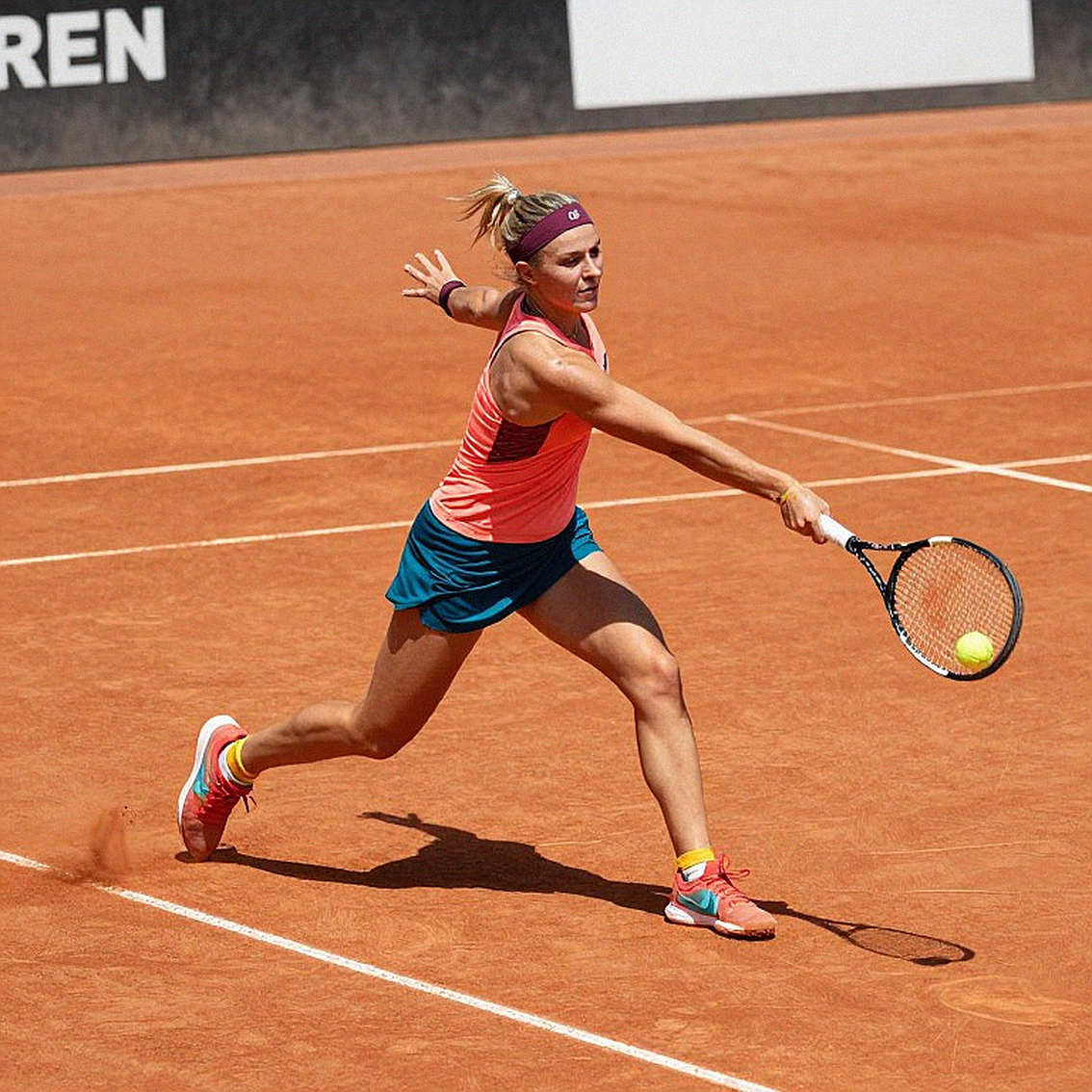
Then came LOUD, the team delivering the buzziest story. Tkzin, a rookie making his Champions debut, tore through two maps with 47 kills, 24 deaths, 7 assists, an ACS of 321, 208 ADR, and three aces in two maps. Three aces in two maps is a rare statistical cluster. An ace is when a single player eliminates all five opponents in one round. Tkzin did it three times, in his debut, at the biggest event. LOUD closed on Summit, 13-5. Summit emerges as a high-leverage map, and it is also where 100 Thieves created their turning point.
100 Thieves displayed the most complete two-player structure in the dataset. Cryocells, in the primary carry role, posted 45 kills, 23 deaths, 6 assists, an ACS of 283, 169 ADR, 86 percent KAST. Asuna, in the secondary fragging role, posted 22 kills on Ascent alone. This balanced output distribution is more resilient than dependence on a single star. And the 13-9 result on Ascent is the narrowest margin across the four series, showing this was not a walkover but a controlled battle.
The question I always ask when watching matches is: whom am I leaving out of this piece? This time, the answer is the players behind the numbers. Behind Tkzin's aces is a rookie trying to carve out a place on a team in its integration phase. Behind Mada's plus-11 is a man who just returned from a career-threatening injury. Behind every stat sheet is a fate. That is why I always begin a script with a character interview, not a results table.
There is one question I deliberately left open through this section. Who carries the greatest risk among the four teams? Not the team with the worst scoreboard, but the team with the most fragile structure. The answer sits at two poles: NRG with an injury case the narrative has not priced in, and LOUD with output concentrated around a rookie who has played only two maps.
Contrarian Angle
This is where I put the shovel into the hardest ground. The Americas sweep headline is a structurally assisted exaggeration. When each Americas team sits in a separate group, they cannot eliminate each other. Four wins over four Chinese and Korean opponents are genuinely valuable data — they say all four regional representatives are operating, all in a ready state. But they do not say the Americas is regionally superior, because no Americas team has faced another Tier 1 Americas team, and no EMEA clash has happened.
I once heard the phrase "girls don't understand tactics" when I was thirteen. I did not argue. I opened my notebook and wrote my match. And what I can write from these four series is this: the sample size is too small to conclude anything about regional strength. Four series, all BO3, all opening round, no BO5 data, no Americas-versus-EMEA data.
Among the four, NRG carries the highest risk despite the cleanest margin. Mada returned from a wrist injury in a tactical shooter demanding high-intensity aim. This is the textbook occupational injury profile — the repetitive-strain family, related to carpal tunnel syndrome. One strong BO3 does not establish that the injury risk has resolved across a multi-week event. An international schedule with daily BO3s is precisely the environment where wrist issues recur. The four-day gap between the first and last Americas opener may have masked this risk.
Then there is Tkzin. Three aces in two maps is a genuine outlier event, not a trend. An ACS of 321 and 208 ADR on debut is extremely high, but it is a two-map sample. Historical base rates for rookie breakouts at international debuts show substantial regression in subsequent rounds, once opponents begin ban-targeting maps and preparing dedicated anti-strats for that player. If Tkzin regresses toward a normal rookie baseline, LOUD's output distribution collapses toward its remaining four. This is the most concentrated risk structure among the four teams.
I sat in front of the screen and remembered those sleepless nights rewatching old footage. In the dusty archive, I found a team that had never made the papers. And the lesson held: never issue a judgment without accompanying data. Four 2-0 wins are fact. The regional sweep framing is an unproven overlay.
Blind Spots and Signals to Track
The biggest blind spot in this story is that it chooses to narrate by scoreboard rather than by structure. When an article calls four series wins a sign of regional strength, it skips the more important question: whether teams can preserve their map-pool depth for the deciding series. Three of four openers ended 2-0, meaning map information disclosed to future opponents is limited. Several teams still hold concealed pocket maps.
100 Thieves owns the strongest process signal. Winning on T1's own pick signals preparation and anti-strat quality. If they repeat that against FUT Esports — winning on the opponent's pick a second straight time — they elevate themselves to the best-process team in the Americas quartet.
NRG owns the highest-quality result. Beating a reigning international champion 2-0 is the brightest excavation point. The winners' match against Karmine Corp is the confirmation test. If Mada is absent, benched, or on a reduced role, NRG's ceiling at Champions drops materially and Karmine Corp becomes a genuinely live opponent.
G2 owns the most durable individual signal. Trent's line, 91 percent KAST and 174 ADR, is a repeatable statistical profile, because KAST measures consistency rather than explosion. This is the kind of signal that can survive an entire event, unlike a rookie's aces — bright data points that tend to fade.
I want to spend a paragraph on source risk, because in my work, bad data travels faster than good data. Two claims in the source — describing Nongshim RedForce as a Masters champion and NRG as defending a title — do not match the VCT calendar model I carry. They need independent verification before reuse. I am not asserting they are wrong. I am asserting they are unverified.
It is worth noting this outlet has an editorial remit tied to sports betting. That does not diminish the value of its numbers — the kill, ACS, ADR and KAST figures are quotable. But it does explain the region-sweep headline framing. I will keep tracking Tkzin's regression curve. I will track Mada's wrist status through starting-lineup announcements. And I will track whether 100 Thieves wins on an opponent's pick once more.
Takeaway
Between esports and football, I hear the same heartbeat of the fan. Both tend to turn four facts into a verdict on an entire region, on an entire generation. But what I believe to be right, after many sleepless nights in front of a screen, is this: the winners' matches will tell us the truth. If the Americas lose two or more series to EMEA and Asia-Pacific, the regional pace-setting narrative will invert within forty-eight to seventy-two hours. If they keep winning, we will be talking about genuine depth. They said I couldn't. I opened my notebook and wrote my match. The question is not who is winning. The question is whether we have the patience to wait for a large-enough sample before we tell our story.