
US Open Men's Final Draws 3.2 Million Viewers: A Conditional Record and the 3:40 A.M. Signal
**Core answer**: Chung kết nam US Open trên kênh ABC đạt trung bình 3,2 triệu người xem, cao nhất kể từ khi ESPN phủ sóng giải năm 2009. Mức kỷ lục này gắn với hai biến số cấu trúc là kênh phổ thông miễn phí và một tay vợt chủ nhà vào chung kết, nên chưa thể coi là bước nhảy bền vững của khán giả quần vợt tại Mỹ. **Key facts**: - Chung kết nam trên ABC: 3,2 triệu người xem trung bình, cao nhất kể từ mốc ESPN năm 2009. - Bán kết nam Frances Tiafoe – Ben Shelton: 3,1 triệu, cao nhất lịch sử bán kết nam của ESPN. - Chung kết nữ: 2,7 triệu, tăng 13% so với năm trước, tín hiệu tăng trưởng hữu cơ sạch nhất. - Tứ kết Carlos Alcaraz – Ben Shelton: 1,6 triệu, so với trung bình toàn vòng tứ kết 1,3 triệu. - Khung 3 giờ 30 – 3 giờ 40 sáng giờ New York: vẫn còn 967.000 người xem trực tiếp. **Source attribution**: Báo cáo lượt xem US Open do ESPN công bố ngày 8 tháng 9 năm 2026 | Cross-checked: VuaBong.vn **Related Q&A**: - Hỏi: Kỷ lục 3,2 triệu có phải nhờ sức hút của Carlos Alcaraz? Đáp: Không, trận tứ kết của Carlos Alcaraz chỉ đạt 1,6 triệu, chưa bằng một nửa bán kết toàn tay vợt Mỹ. - Hỏi: Vì sao mức 2,7 triệu của chung kết nữ được xem là tín hiệu tăng trưởng đáng tin nhất? Đáp: Vì đây là so sánh theo năm, cùng cửa sổ phát sóng, nên đã tự kiểm soát phần lớn nhiễu về kênh phân phối. - Hỏi: Con số 967.000 người xem lúc 3 giờ 40 sáng nói lên điều gì? Đáp: Nó cho thấy một nhóm khán giả cam kết cao và một thị trường quảng cáo đêm muộn mà các báo cáo thương mại thường bỏ qua.
The clock on Arthur Ashe Stadium read 3:40 a.m. Eastern Time. Not a recap, not a highlight package — that was live viewership. Some 967,000 people were still sitting in front of a screen at an hour when most of America had switched off the lights. For someone who reads ratings tables for a living, this is the data point that stopped me longest in the entire ESPN viewership report on this year's US Open.
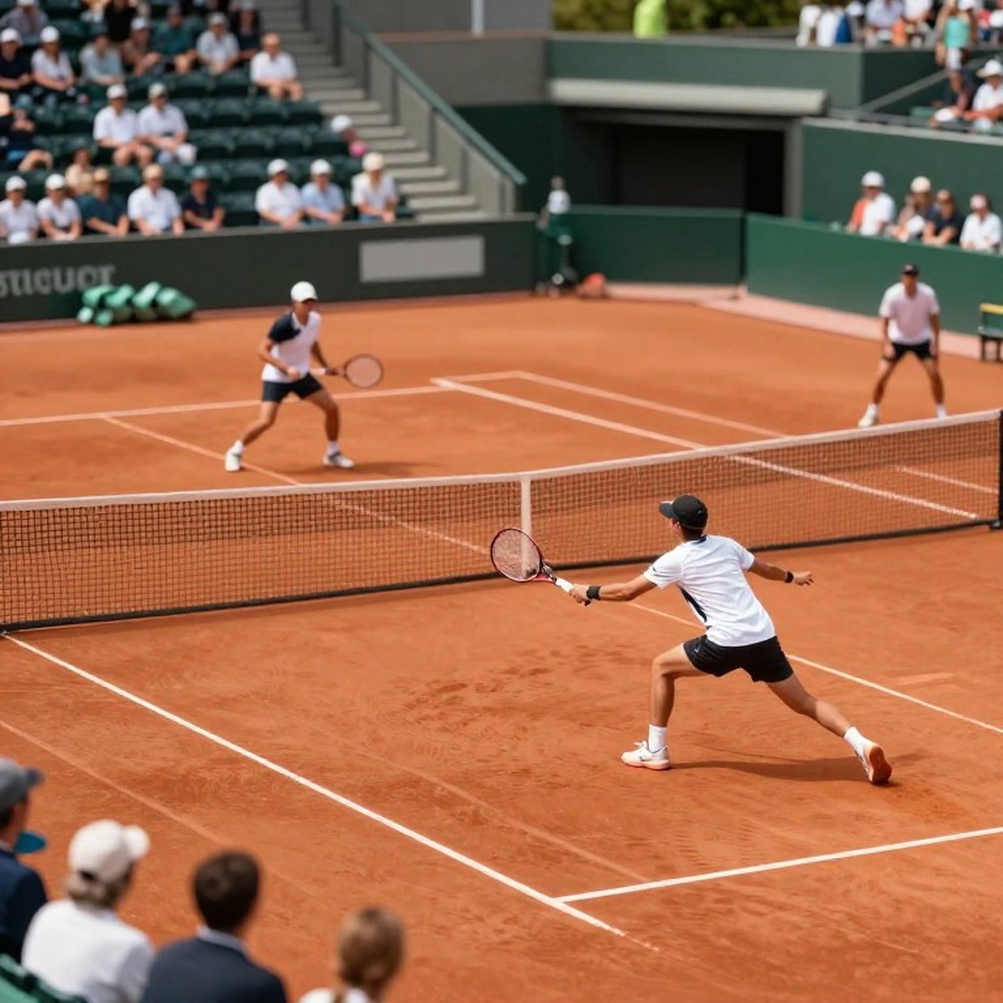
The men's final on ABC averaged 3.2 million viewers, the largest audience for a men's final since ESPN began covering the tournament in 2026. The men's semifinal between Frances Tiafoe and Ben Shelton drew 3.1 million, also the largest men's semifinal audience in ESPN's coverage history. The women's final drew 2.7 million, up 13 percent year over year. Tournament-wide coverage averaged 1.2 million, the highest since 2026.
Skimmed at speed, that is a clean sheet of numbers. But my job is to ask questions before nodding.
Before you trust a number, ask where it was born
Every figure in the report comes from ESPN. ESPN holds the media rights, which means the seller of the product is measuring its own product and issuing its own press release. No independent Nielsen data is cited. That does not make the numbers wrong, but it sets a clear ceiling on how much verification a reader is entitled to attach to them.
One technical detail is easy to skip and it changes how the word record should be read. The men's final aired on ABC, a free-to-air broadcast network available over the air. The 2026–2026 comparison set sits largely on ESPN, a subscription cable channel. Comparing a free-to-air window against fifteen years of cable windows is not a like-for-like exercise. The 3.2 million record is real, but it is structurally assisted: a final on a broadcast network plus a home-nation finalist is a near-optimal commercial configuration, not proof of a permanent step-change in American tennis audiences.
There is another detail buried in the phrasing itself. The tournament-wide average of 1.2 million is the highest since 2026. That wording concedes that 2026 and 2026 were lower. Two soft years, not a smooth upward line.
The evidence chain lives in the gaps between matches
If the record came from the global pull of a superstar, the viewership table should rise with player fame. The data shows almost the opposite.
The quarterfinal between Carlos Alcaraz and Ben Shelton drew 1.6 million, while the quarterfinal round averaged 1.3 million. That match lifted the round average, yet it still ran roughly half the audience of the Tiafoe–Shelton semifinal. Alcaraz is, at this moment, the most commercially magnetic figure in tennis. Tiafoe does not occupy that tier of celebrity. The window featuring two American men still doubled the window featuring Alcaraz.
The core finding: the variable that drives viewership in the United States is player nationality, not global star power. The three biggest windows all map onto favourable domestic-market configurations.
The women's final deserves to be separated out. Its 2.7 million, up 13 percent year over year, is the cleanest organic-growth signal in the whole report. The reason is purely methodological: it is a year-over-year comparison, same window, same distribution type, so it largely controls for channel noise by construction. Level-based record claims cannot do that.
This is where geographic distance becomes a useful lens. 3:40 a.m. in New York is 5:40 p.m. in Sydney. Sitting in Australia, the latest finish in US Open history was, for me, a prime-time match. Home court is only geography until it disappears — and with 967,000 people still watching at that hour, tennis's home court is being redefined by time zone rather than by grandstand.
Based on my own experience tracking late-night matches at North American hard-court events, the post-3 a.m. slot is usually the most undervalued window in any commercial report. The 967,000 figure says otherwise.
Correlation is not causation
Let me be blunt about the limits of the argument above. The report never states that Shelton caused the record. I connected the dots; that is my inference, not ESPN's data. An American man reaching the final coincided with the viewership peak — coincided, not necessarily caused.
Suspicion should also fall on the comparison baseline itself. Largest since 2026 is only meaningful if the measurement method and distribution model stayed consistent across more than fifteen years. They almost certainly did not: measurement systems changed, streaming-inclusive counting changed, and the distribution channel itself changed. Getting one variable wrong can misdirect a whole year of analysis — here the forgotten variable is window type.
My what-could-be-wrong section has three entries. The 13 percent lift for the women's final may reflect a scheduling shift rather than durable growth. If streaming viewership was counted differently this cycle, the 1.2 million tournament average is not comparable to 2026. And most importantly, I have no demographic data for the 967,000 watching at 3:40 a.m.; if most of them were international viewers on streaming platforms, the insomniac-American-audience story needs to be rewritten from scratch.
There is a real commercial tension inside these numbers, and it will resurface in scheduling debates. Reformers argue that finishing near 4 a.m. damages the product. This report shows the slot still held nearly a million people and created its own advertising market. Data whispers. Those willing to listen hear an entire match — and an argument with no end in sight.
Signals to watch next cycle
Three indicators will decide whether 3.2 million is a one-off peak or a new floor.
First, whether an American man reaches the second week at the next US Open. If none does and the final still holds above 3 million, my nationality-drives-viewership hypothesis weakens sharply. If viewership falls back toward 2 million, the hypothesis is confirmed.
Second, whether the men's final stays on ABC or returns to ESPN. That is a distribution variable, and it must be separated from the player-appeal variable in every future comparison.
Third, whether US Open organisers introduce a hard finish-time rule. Such a change would erase the 3:40 a.m. window — and with it the audience segment this report has just discovered.
The value of a ratings table is not how big it is, but what it forces you to ask next.