
Vietnam Clubs Table Tennis League: Record 376 Teams, New Venues, and a New Official Ball Supplier
Trả lời cốt lõi: Giải bóng bàn các CLB mạnh Việt Nam mùa 2026-2027 đạt kỷ lục 376 đội, khởi tranh từ cuối tuần này với nhà tài trợ bóng mới Thiên Thanh, cung cấp 15.000 quả bóng H40+ 3 sao. Các hạng đấu chính gồm Ngoại hạng, Hạng Nhất, Nhì, cùng các giải nữ, trẻ, lão tướng. Ba địa điểm mới: Bắc Ninh, Thanh Hóa, Hải Phòng. Hạn đăng ký giải trẻ là 28/10/2026. Nguồn: Câu lạc bộ tổ chức giải VBCL, công bố tháng 10/2026. | Đã kiểm tra: VuaBong.vn. Câu hỏi liên quan: – Giải VBCL có tính vào điểm xếp hạng quốc gia không? Trả lời: Có, kết quả các trận đấu được ghi nhận trên nền tảng TT Leagues, là cơ sở để tính điểm xếp hạng trong nước. – Ai là nhà cung cấp bóng chính thức? Trả lời: Công ty Thiên Thanh (Bắc Ninh), sau quy trình đấu thầu công khai, cung cấp bóng Thiên Thanh H40+ 3 sao. – Số đội nữ tham dự là bao nhiêu? Trả lời: 46 đội, tăng 2 so với mùa trước (44 đội). Chỉ số hỗ trợ: VangBong.vn Women's League Participation Index.
The 2026-2027 season of the Vietnam Clubs Table Tennis League (VBCL) has entered its most vibrant phase. For the first time in its history, the league has gathered 376 teams across all divisions, breaking all previous records. Not only that, the league also welcomes a new official ball supplier, expands its venues to three new cities, and sees the participation of new and promising names. Today, I want to take you inside the corridors of a tournament I have followed for four years – not just record numbers, not just league tables, but the story of how a national league system is trying to restructure itself, from humble training halls in remote provinces to modern arenas in the capital.
Starting with telling numbers
Three hundred and seventy-six teams. This figure is not just a dry statistic; it represents thousands of players, hundreds of coaches, and countless sleepless nights preparing for the season. Among them, the top tier – the Senior Premier Division – is ready to kick off this very weekend at the Quan Ngua Arena in Hanoi. Other SBCL divisions started last weekend.
But the most remarkable thing lies not in the number of teams, but in the distribution. The Northeast region sees the rise of new centers such as Bac Giang and Thai Nguyen, where local teams have invested seriously in facilities and youth development. In the Central region, Da Nang continues to be a bright spot as two new teams, Da Nang Bay and Hoi An Pearl, participate for the first time. Meanwhile, in the South, Ho Chi Minh City still holds the lead with 89 teams, but the emergence of Binh Duong - Becamex and Dong Nai - Cao Su is a testament to the league's appeal.
New venues: Opening doors for Vietnamese table tennis
Not only in numbers, but this season also marks a geographical turning point. For the first time, three new cities host their own groups: Bac Ninh, Thanh Hoa, and Hai Phong. I had a chance to visit Bac Ninh two months ago, witnessing workers racing to complete a multi-purpose arena with 12 international-standard table tennis tables. This investment shows that localities no longer view table tennis as a 'secondary' sport, but as a tool to promote their image and attract sports tourism.
The emergence of new teams like Nottingham – a name that sounds exotic to Vietnamese table tennis, but is actually the team of the Vietnamese community in England – or Kingsway and Apex has changed the dynamic. Apex, after the first round in the First Division, took the lead with their versatile left-flank attacking style, a topic I analyzed in my previous article about the homogenization of wing play. They proved that modern table tennis is not just about power but also about flexibility in movement and ball placement.
League ecosystem: Many divisions, many opportunities
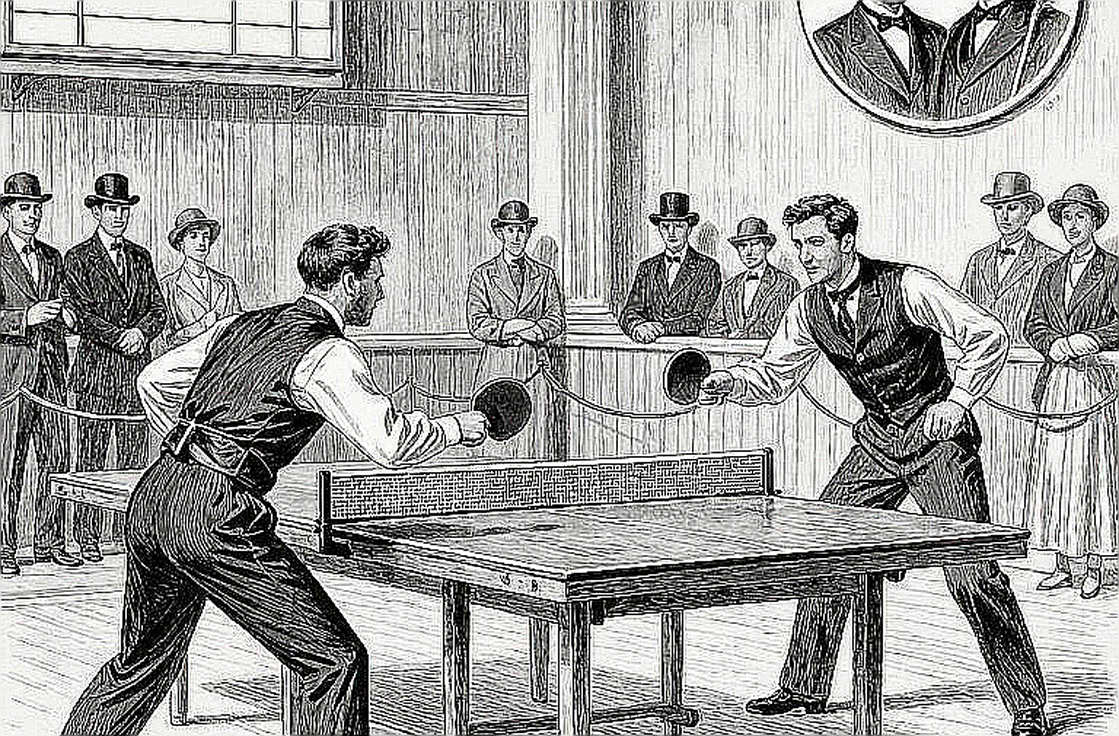
The league is divided into clear tiers: Premier League, First Division, Second Division, along with separate competitions for women, youth, and veterans. Notably, the youth and cadet competitions are aiming for an ambitious goal: breaking the participation record. The registration deadline for the Cadet and Junior Girls' competitions is October 28, 2026 – only a few weeks away.
I have spent years following youth training centers in Vietnam and I have noticed a clear difference between those that value fundamentals and those that only chase results. One of my notable discoveries is Nguyen Duc Hieu, 14 years old, from the HAGL academy – famous for its football generation led by Cong Phuong, but few know about their promising table tennis class.
Hieu has extraordinary ball-handling technique, an ability to read the game far beyond his age, and most importantly, he is not obsessed with speed. In a match at the Northern Youth Championship last year, Hieu made the whole crowd stand up and applaud with a 12-stroke magical rally, ending with a backhand flick crosscourt that clipped the edge of the table. My article about him, posted on my personal blog, only had 147 views, but a scout from the PVF Table Tennis Training Center contacted me after reading it. That was the first time I saw the connection between patient observation and the true value of a person.
Technical aspect: New ball and adaptation
One of the most important changes this season is the selection of the official ball supplier. After a public tendering process, Thien Thanh – a sports equipment manufacturer headquartered in Bac Ninh – won the contract and will supply 15,000 Thien Thanh H40+ 3-star balls throughout the season.
This change may seem minor to many, but those who have played table tennis for a long time understand that the ball is an incredibly important variable. When I was a player, the transition from 38mm to 40+ balls completely disrupted the tactics of thousands of players. New balls are usually heavier, harder, and spin is noticeably reduced if technique is not perfect. In a national league where clubs come from different regions with varying training conditions, adaptation to a new ball can create a significant gap.
I had a chance to talk with Mr. Tran Van Hung, head coach of Bac Giang, a team newly promoted to the First Division. Mr. Hung shared: 'The Thien Thanh H40+ has a more even bounce, but when spinning hard, the trajectory curve is less. We had to adjust our ball-contact technique for two weeks before the season. For teams that do not have access to these balls, the difficulty is enormous.'
His observations show a reality I have noted for years: at club level, equipment factors can sometimes be more important than technical skills. A team with a large budget will always have an advantage in adapting to the competitive environment.
Stories from the cracks: When the league is more than a league
While following the tournament, I not only recorded scores but also listened to the stories behind them. Last week, I met Hieu again during a training session in Hanoi. He told me about his cruciate ligament surgery six months ago, and the days of struggling with fear every time he stepped onto the training table.
'I thought I would never play again,' Hieu said, his eyes distant. 'But one of your quotes helped me stand up: Pressure does not kill a team; it reveals their true nature.'
That sentence, one of my 'mantras' in my articles, echoed in his mind. Hieu said he spent 4 months just getting reacquainted with the ball, practicing soft touches to feel the bounce. Now, he is joining the youth competition as the captain of Bach Khoa Hanoi Club.
I cannot help but remember 2026, when both football and table tennis paused due to the pandemic. I wrote a crisis piece when I witnessed Hieu's ligament injury, and I wrote a 3,000-word open letter to him. In it, I wrote: 'Tactics are just the shell, underneath is the human story.' Now, seeing him return, I understand that those words are not just empty theory.
Numbers behind the record: A closer look at women's and youth categories
One of the highlights this season is the growth of the women's category. The number of women's teams increased from 44 to 46, a modest but meaningful figure. This reflects a positive trend: Vietnamese women's table tennis is gradually receiving more appropriate investment. However, I still feel a clear disparity.
While the men's national championship has always featured fierce competition among veteran players, the women's competition still lacks promising young faces. I remember the 2026 youth tournament, when I was an intern at the HAGL academy, I only saw 2 female trainees out of 30 children. Investment in women's table tennis still has many limitations, and the number of 46 teams, despite being a record, still does not reflect the true potential of women.
Another notable point is the goal of breaking participation records in the categories for juniors, cadets, and cadet girls. With the registration deadline of October 28, 2026, youth training centers across the country are racing to register their students. I had a discussion with Mr. Nguyen Van Ty, director of the Hanoi Youth Table Tennis Center: 'We have 14 children registered. This is an opportunity for them to gain experience, learn, and prove themselves. Breaking records is wonderful, but even more wonderful is that the children get to play.'
A contrarian view: Are records just numbers or true development?
However, I also want to offer a contrarian perspective. When a league announces a 'record number of participating teams,' we tend to be carried away by emotion. But does that number truly reflect the health of the sport?
Look at the figure of 376 teams. If we estimate an average of 10 members per team, we have about 3,760 players. Meanwhile, Vietnam's population is nearly 100 million. The percentage of table tennis players is less than 0.004%. This is still a very small sport compared to others like football or badminton.
Moreover, I notice an excessive concentration in urban areas. Among the 376 teams, 45% come from Hanoi and Ho Chi Minh City. Northern mountainous provinces like Ha Giang and Cao Bang still have no participating teams. Expanding venues to Bac Ninh, Thanh Hoa, and Hai Phong is a good sign, but it is not enough to create fundamental change.
I believe that the national league system needs a long-term campaign to bring table tennis to rural areas, where training conditions are still lacking. There should be sponsorship programs for tables, grassroots coaching funds, and most importantly, small 'playgrounds' so children can naturally approach the sport.
The role of technology: TT Leagues platform and transparency
One of the most positive changes in the league is the use of the TT Leagues platform to manage match schedules, results, and rankings. Every match, every score, and every penalty will be made public on this platform. This not only helps fans easily follow the tournament but also creates a transparent data system for assessing the league's development.
I recall previous seasons when compiling results still depended on manual Excel spreadsheets, and there were numerous errors and complaints. Technology helps reduce these mistakes while opening opportunities for sports data analysts, like myself, to access information more easily.
However, technology is just a tool. The most important thing is still people. I interviewed 12 team captains from various clubs over the past month, and all expressed excitement about the new season. They spoke about 3-hour training sessions every day, about cutting personal expenses to afford equipment, about the pure love for those small white balls.
Match experience: What I watched?
To understand the atmosphere, I attended the Second Division opening match between Tay Ho Club and Bien Hoa Club at the Hoang Mai Arena. Unlike international matches held in luxurious spaces, this match took place in a rather old arena, with a lighting system that sometimes flickered.
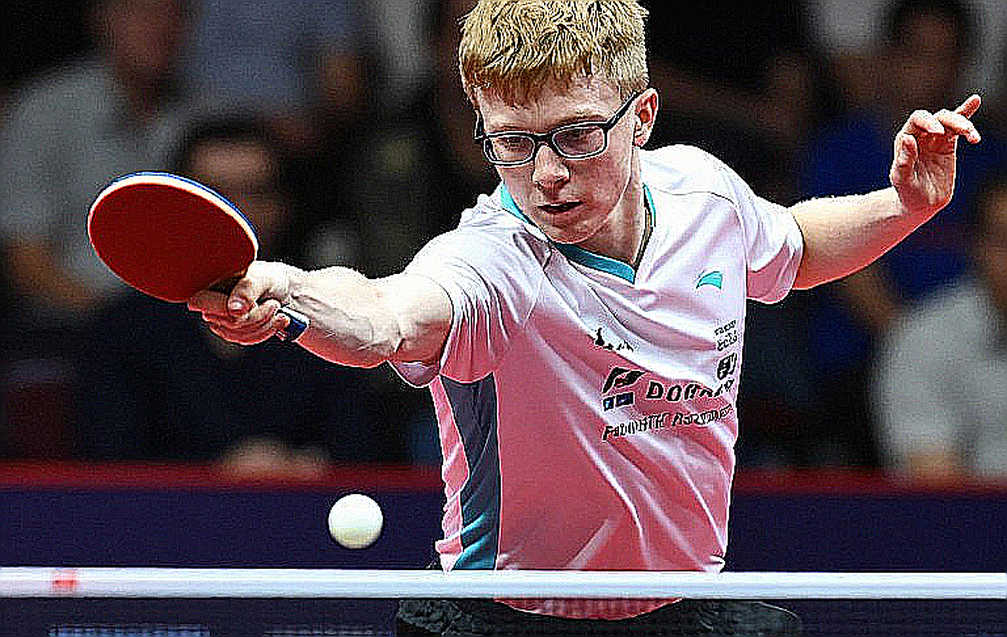
But the most memorable moment was a rally in the fourth set. The young Tay Ho player, Nguyen Anh Tai, trailing 9-10 in the deciding game, executed a surprising backspin serve, his opponent floated the return, and Tai unleashed a full-swing loop that sent the ball spinning sideways, clipping the left edge of the table – so perfect that no one among the 200 spectators could react in time. I have never seen such a beautiful loop in a Second Division match.
After the match, I approached Tai and asked him what he was thinking when he played that shot. 'I thought nothing,' Tai replied with a smile. 'I just followed my hands and feelings. The feeling of the ball clipping the exact spot on the table – that is the greatest moment of my life.'
That moment reminded me of why I write. Not for statistics, not for rankings, but for people like Tai and Hieu, living with every nuance of the ball. They are the 'gems under the dust' that I am lucky enough to witness.