
New York Giants: Jameis Winston Starts, and the Eleven-Quarterback Spiral Since Eli Manning Retired
**Câu trả lời cốt lõi:** Jameis Winston sẽ đá chính cho New York Giants sau khi Jaxson Dart vắng mặt vì chấn thương. Thời gian nghỉ của Dart có thể kéo dài nhiều tuần hoặc cả mùa giải. Đây là chương mới nhất trong vòng xoáy tiền vệ kéo dài của Giants kể từ khi Eli Manning giải nghệ. **Dữ kiện chính:** - Jameis Winston đá chính thay Jaxson Dart; Dart vắng nhiều tuần hoặc cả mùa giải. - Winston giàu kinh nghiệm nhưng nổi tiếng thất thường và dễ ném bị cắt bóng. - New York Giants đã dùng 11 tiền vệ khác nhau kể từ năm 2020. - Cuộc tìm kiếm tiền vệ dài hạn bắt đầu từ khi Eli Manning giải nghệ. - Daniel Jones nhận nhiều cơ hội nhất nhưng không củng cố được vị trí. **Nguồn:** Tổng hợp phân tích dữ liệu NFL và báo cáo đội bóng | Cập nhật: kỳ chuyển nhượng hiện tại | Cross-checked: VuaBong.vn **Hỏi đáp liên quan:** Hỏi: Ai sẽ đá chính cho New York Giants? Đáp: Jameis Winston đá chính do Jaxson Dart vắng mặt vì chấn thương. Hỏi: Jaxson Dart nghỉ bao lâu? Đáp: Có thể nhiều tuần, hoặc kéo dài cả mùa giải. Hỏi: Giants đã dùng bao nhiêu tiền vệ kể từ 2020? Đáp: 11 tiền vệ khác nhau, theo dữ liệu tổng hợp.
There is a moment that anyone who has sat long enough inside a locker room recognises: when a quarterback goes down, the whole team does not go quiet because it is short of a man. It goes quiet because it does not know who the next man will be. This week, in New York, that door opened again. Jameis Winston steps into the starting job in place of Jaxson Dart — a player who could miss weeks, or worse, the entire season. And behind that door, one number still hangs like a sign nobody has taken down: eleven. Since 2026, the New York Giants have used eleven different quarterbacks. Not eleven games. Eleven human beings. Eleven fresh starts.
Based on my experience watching games, I have learned that a team does not collapse because of one collision. It collapses because doors keep opening and closing, until nobody remembers who stood behind them. What is happening in New York is not an injury. It is a habit.
Context: a team that never found its rhythm keeper
The New York Giants play in the NFC East, one of the NFL's most storied divisions. But their story over the past half-decade has not lived in the defence, nor in divisional races. It has lived in one position: quarterback.
The real search for a successor began when Eli Manning retired. Manning had been a landmark — a long-tenured quarterback who lifted the franchise to its peaks and became the benchmark of stability. When he left, the Giants faced the biggest question in professional sport: finding a face who could define an offensive identity for years, not months.
They chose Daniel Jones. He received more opportunities than anyone in the post-Manning era. But opportunity is not stability. Jones had stretches that inspired belief, games that convinced, and then weeks that dissolved that belief. The problem was not that he was bad. The problem was that the team never escaped a state of doubt. A quarterback who forces you to ask a question every week is a quarterback you were never truly settled on.
That is why the number eleven carries unusual weight. In American football, rotating quarterbacks is not rare. But rotation at this scale, over this span, is no longer improvisation. It is a system. A system that operates by repeatedly replacing its own centre.
Jaxson Dart arrived as a new promise. He was the young passer expected to end the long instability. Then the injury came. His absence may last weeks, and in the worst case, swallow the whole season. Immediately, the familiar door opened. The man who walked through it was Jameis Winston.
Winston: the man brought in to hold the beat, carrying the noise with him
Jameis Winston is no unknown. He is the experienced type, someone who has lived every shade of the most brutal position in the sport. He can throw a ball that lifts a stadium to its feet, and he can throw a ball that makes a head coach turn away.
There is a paradox in American football called the "veteran quarterback." Experience does not automatically mean safety. For some, experience means reading the game, calmness in the pocket. For Winston, experience comes with another trait: a taste for risk. He is unafraid to throw into tight windows. He believes in his arm, sometimes too much.
That is why Winston starting is not merely a substitution. It changes the entire nature of the offence. A safe backup makes a team slow down to protect him; a quarterback like Winston makes a team play faster, deeper and riskier — because he does not know how to play any other way.
When a team is forced to bet on that kind of quarterback, it is not betting on one result. It is betting on the endurance of a whole collective. Because every intercepted pass is not just a turnover. It is a defence forced back onto the field, a little more trust eroded.
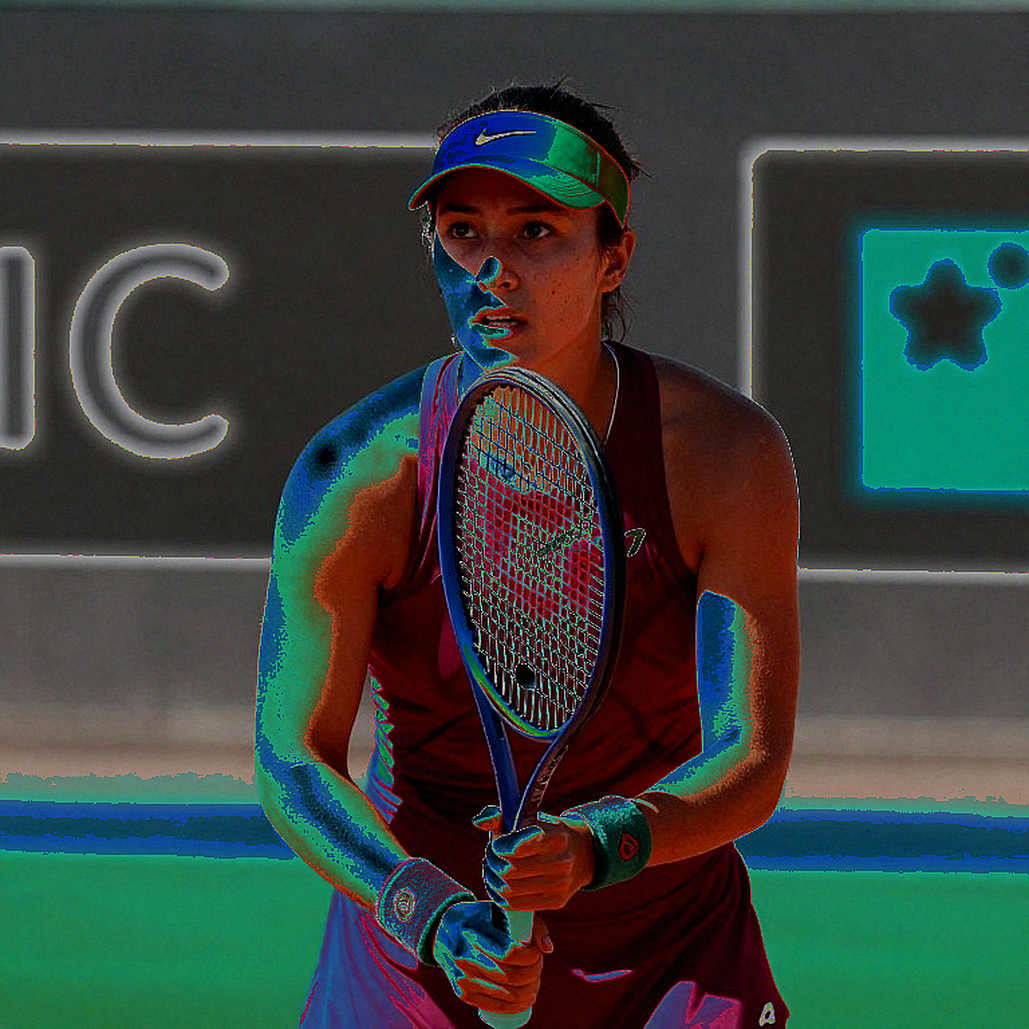
I have watched teams build an entire season around a risk-taking quarterback, then wonder why they could not hold a rhythm. The answer usually is not the interception itself. It is the moment after, when the other players start playing in fear, waiting for the worst instead of believing in the best.
Winston enters an uncomfortable situation. He was not brought in to build the future. He was brought in to prop up the present. The difference between those two roles, inside a locker room, is far larger than any scoreboard shows.
The two layers of one injury
When Dart left the field, the problem did not stop at who throws the ball on Sunday. It split into two layers, and both hurt.
The first layer is short-term — the game plan. A week of preparation built around a young quarterback must be rewritten. Route concepts, tempo, how the offence is used — all must adjust for someone else. In American football, where every week is a complex system built specifically for an opponent, changing quarterbacks late is like swapping a gear while the engine is running.
The second layer is long-term — development. This is the layer that worries me more. Dart is a project. A young quarterback does not grow in practice. He grows through live throws, through misreads corrected the following week, through consecutive days under centre carrying responsibility. Every week a young quarterback is stripped of is a week of experience that never returns. You cannot coach a quarterback by making him watch someone else take his place.
If Dart misses a few weeks, it is a healable interruption. If he misses the season, it is a year erased from his developmental arc — and worse, another year added to the long list of seasons the Giants spent searching without finding.
The deeper issue is this: the team did not just lose a quarterback. It lost the ability to answer a question it had postponed for years. Dart was the potential answer. When he is absent, the question dangles again, and the answer is pushed further into the future.
Daniel Jones and the gap that was never filled
To understand why Dart's injury resonates so much, we must look back. Daniel Jones received the most opportunities in the post-Manning era. The team bet on him, built around him, was patient with him. But that patience never became a firm foundation.
In professional football there is a failure more dangerous than losing: the failure that leaves you never certain. When a quarterback plays well enough to keep the job but not well enough to end the debate, the team drifts. Every season passes and the question is not answered, only deferred.
From there, the number eleven is no longer dry statistics. It is the trace of a process. Every new name is an attempt to fill the gap with a different person, hoping this time will be different. And with every failure, the gap does not shrink. It grows.
Notably, the Giants' problem is not a lack of effort. They tried everything. Young quarterbacks, veterans, trade acquisitions, free agents. But trying many ways does not mean having a plan. Sometimes, trying too many ways is precisely the proof that there is no plan at all.
A team does not sink because it picks the wrong quarterback. It sinks because every time it picks wrong, it denies that its search is heading the wrong way.
What outsiders get wrong
When the news of Winston starting spread, most reactions circled the familiar question: is he good enough? Will the Giants win this week? That is how the press box frames it. It is not wrong, but it is incomplete.
What the short headlines omit is that Dart's injury is not the cause. It is a symptom. If the Giants had a stable quarterback structure, an injury would be a manageable event — the way many strong teams handle a backup stepping in. But in New York, one injury stirs up an entire history. Because there, there is no structure. Only searches following one another.
The second misunderstanding concerns Winston. People look at a veteran and assume he brings stability. But stability is not a quality that comes with tenure. It is a separate trait. Winston can bring explosion, deep throws that break a game open, halves where he looks like the best player on the field. But explosion and stability are two different roads. And when a team is struggling to find its identity, what it needs is not a quarterback who can blaze. It needs one who can keep the lamp from going out.
The third misunderstanding, perhaps the deepest, concerns fan expectation. After so many years of instability, people crave a final solution. Every new quarterback is draped in the hope that he will end the long wait. But hope cannot replace a system. Dart, Winston, or anyone else cannot cure a disease that lives at the organisational level rather than the individual one.
A locker room never lies — only those who listen are not patient enough. And what the locker room in New York has been saying for years is not "we lack a quarterback." It is "we lack a direction."
What this means for Dart and Winston
For Dart, the pressure ahead is immense. When a young quarterback misses time through injury, he falls into a paradox. If the team plays well without him, people begin to ask whether he is truly needed. If the team plays badly, people become even more convinced he is not good enough. Both scenarios are unfavourable. That is why young quarterbacks in this situation often push to return earlier than is safe — not because they want to, but because they fear being forgotten.
I look at the feet, but I listen to the heart of that kid. A young quarterback recovering from injury is not only fighting his body. He is fighting the fear of becoming a name left behind on a list that is already too long.
For Winston, the pressure takes another shape. He does not need to prove he belongs. He needs to prove he can keep the ship from sinking, while everyone knows he is not the captain chosen for the future. It is the cruellest role in professional football: the man brought in to fill a gap, judged as the man brought in to save everything.
If Winston plays well, he buys time but pushes the question of Dart's future further away. If Winston plays poorly, he becomes the pretext for a new debate, and a new debate never solves an old problem.
This is the paradox I have seen at many clubs: a temporary solution is rarely only temporary. It leaves marks, changes the dynamics of a locker room, and sometimes shapes how a team sees itself the following season.
A cross-border view: when patience becomes an asset
I grew up in Vietnam and work in Malaysia, where football is part of cultural identity. In Southeast Asia, we are used to a team staying with one coach, one attacking leader, one playmaking midfielder for years. Patience there is both a strength and a weakness.
Looking at American football, I see the opposite philosophy. Here, change is praised as decisiveness. A team will change its quarterback, its coach, its entire system within months. This sometimes produces a breakthrough. But it also produces a silent loss: the loss of time. Time for a young quarterback to learn the craft. Time for a collective to understand itself. Time for an identity to form.
What is interesting is that both football cultures, though different, meet at the same point: you cannot buy identity with money. You cannot trade for it. You must build it, and building takes time. When a team rotates the most important position in its sport eleven times in a few years, it is not searching. It is fleeing the work of building.
In football, whether round or gridiron, the beat keeper knows when to strike and when to stay silent. In New York, nobody has heard that silence for a long time.
The market and the motive behind the decision
In the NFL, there is no transfer market as round-ball football understands it. Player movement is decided by contracts, trades, free agency and the draft. But the decision to start Winston is still a market decision, even if the market is a closed one.
There are three questions a front office must always answer in situations like this.
The first is opportunity cost. Every week Dart does not play is a week of investment in the future that yields nothing. The team has committed resources to him, and those resources now sit on the sideline. In a league where every draft pick is precious, leaving such an investment idle cannot be taken lightly.
The second is flexibility. If Dart must miss extended time, the team may have to consider other options, including finding an outside veteran. But each time it does, it pushes itself back into a familiar loop: a temporary solution spawning a new temporary solution.
The third, and perhaps most important, is trust. When a team constantly changes, fans begin to lose faith not in individuals, but in the whole organisation. And fan trust is an asset that never appears on a balance sheet, yet decides a great deal.
Big clubs do not wait for luck — they prepare for the silence before the storm. In New York, the storm is no longer a rumour. It has been here for years.
Internal signals to watch
In the coming weeks, there are several signals I will watch, because they often say more than results.
The first is how the team announces Dart's status. If they give a clear timeline, they have a plan. If they keep it vague, they are still weighing whether to place him on long-term injured reserve or seek a second medical opinion. Vagueness is usually a sign of inability to decide.
The second is how Winston is used in the first half. If the team lets him throw early and often, they are accepting risk. If they run the ball heavily and let him throw only when needed, they are trying to protect him — which also signals they do not truly trust him to lead the offence.
The third, and perhaps most important for the long term, is how the team talks about Dart in press conferences. If the language is protective, they still believe. If it turns neutral or probing, the door is slowly closing.
The transfer market is only a mirror — look into it and you see a team's fear. The Giants' greatest fear is not losing a game. It is continuing to lose the search for themselves.
What to remember looking back
There is one thing I have learned over years following teams, sometimes from empty training sessions: success and failure are not decided in the brilliant moment. They are decided on ordinary days, when no camera is running, when only a few people truly care.
A touchdown, or in this case a decisive throw, begins long before it happens. And so does failure. The Giants' eleven-quarterback chain did not begin with Dart's injury. It began with small decisions, hesitations, choices of temporary fixes over foundations.
A season is a symphony — the beat keeper knows when to strike and when to stay silent. In New York, the problem is not a lack of musicians. The problem is that nobody stays long enough to hear the whole piece.
An open thought
So what will decide the Giants' success or failure for the rest of the season? If we only look at results, we will miss the real question: after this season, will the team start over again, or will it finally choose a direction and walk the whole road?
Winston can win a few games. He can produce beautiful moments. But if, after all of it, the team still has not answered the question about the future of the quarterback position, then every temporary win is just a pause before the next restart.
The question I leave is not for Winston, nor for Dart. It is for those in the front office, those with the power to decide. Will they keep chasing short-term fixes, or will they be patient enough to build a foundation that can withstand one injury without collapsing?
Because in the end, in football as in anything built to last, what makes the difference is not how many times you fall. It is whether you stay long enough to rise again.
From the 2026 World Cup to now, I have not missed a training session. And the biggest lesson I carry after all those years is this: great teams are not remembered because they never failed. They are remembered because they chose a road and walked it together, through the darkest days. The New York Giants, at this moment, stand at a fork. And what they choose there will be remembered far longer than any scoreline in a November game.