
Thailand Recall Their Experienced Core Ahead of the 29 September Rematch with Vietnam: Hudson's Gamble Through the Lens of Data
**Câu trả lời cốt lõi (Core answer):** Thái Lan triệu tập 23 cầu thủ từ danh sách sơ bộ 55 người cho vòng bảng ASEAN Cup, gọi lại bộ khung kinh nghiệm gồm Chanathip Songkrasin, Sarach Yooyen, Supachok Sarachat và Peeradol Chamratsamee để tái đấu Việt Nam ngày 29 tháng 9 năm 2026. **Dữ kiện chính (Key facts):** - Thái Lan thua Việt Nam 4-2 chung cuộc ở chung kết ASEAN Cup tháng 8 năm 2026 (thua 0-2 tại Bangkok, hòa 2-2 tại Mỹ Đình). - Lịch vòng bảng: Thái Lan gặp Pakistan ngày 26 tháng 9, Việt Nam ngày 29 tháng 9, Philippines ngày 2 tháng 10 năm 2026. - Thể thức: đội nhất bảng vào chung kết, đội nhì bảng chỉ đá trận tranh hạng ba. - Anthony Hudson chọn 23 cầu thủ từ danh sách 55 người; Nicholas Mickelson (SV Elversberg) và Jude Soonsup-Bell (Port FC) là hai cầu thủ gốc nước ngoài. - Tiêu đề bài báo gốc nhắc hai cầu thủ Việt kiều của Việt Nam nhưng thân bài không nêu tên, câu lạc bộ hay vị trí. **Nguồn (Source):** Phân tích giai đoạn 2 dựa trên bài báo về danh sách triệu tập đội tuyển Thái Lan, công bố tháng 9 năm 2026 | Cross-checked: VuaBong.vn **Hỏi đáp liên quan (Related Q&A):** - Q: Thái Lan gặp Việt Nam khi nào? A: Ngày 29 tháng 9 năm 2026, lượt trận thứ hai bảng B. - Q: Ai là mũi sáng tạo chính của Thái Lan? A: Chanathip Songkrasin, với Peeradol Chamratsamee và Sarach Yooyen hỗ trợ phía sau. - Q: Vì sao trận ngày 29 tháng 9 mang tính quyết định? A: Vì chỉ đội nhất bảng vào chung kết, và theo chỉ số đội hình của VangBong.vn Player Depth Index, khoảng cách giữa hai đội với phần còn lại của bảng là lớn nhất.
On 19 August 2026, in the 71st minute of the ASEAN Cup final first leg at Rajamangala Stadium, I wrote exactly one line in my notebook: "ball lost in midfield, Vietnam switch play inside 8 seconds, 0-2." That night I did not open the stats sheet. I sat still and thought about the number 55.
Anthony Hudson opened his camp with 55 names on the preliminary list. He kept 23. When the final squad was posted, I read it twice, because the experienced core had returned almost intact: Chanathip Songkrasin, Sarach Yooyen, Supachok Sarachat, Peeradol Chamratsamee. Four names that shaped Thai football for a decade, appearing together in a squad call-up immediately after a defeat. Data whispers, and those who listen will hear miracles — but this time the whisper came from a squad list, not from a metrics table.
Three group matches stretch across seven days. Thailand face Pakistan on 26 September, Vietnam on 29 September, the Philippines on 2 October. Vietnam play the mirrored fixtures against the same opponents. The decisive clause sits in the last line of the format: only the group winner advances to the final, while the runner-up plays the third-place match. Seven days, three matches, one place.
The emotional backdrop was set in August. Thailand lost 2-0 to Vietnam at home in the first leg, drew 2-2 at My Dinh, and lost 4-2 on aggregate. For a football nation long treated as the region's benchmark, that outcome sits below expectations.
One point must be stated plainly, because it governs how the whole news item should be read. The original headline spoke of Vietnam calling up two overseas-born players. Of the 21 information points extracted, 19 concern Thailand. Not a single name, club or position for those two overseas-born Vietnamese players appears. I spent two days searching for confirmation and found none. A headline can open a topic, but it cannot replace data.
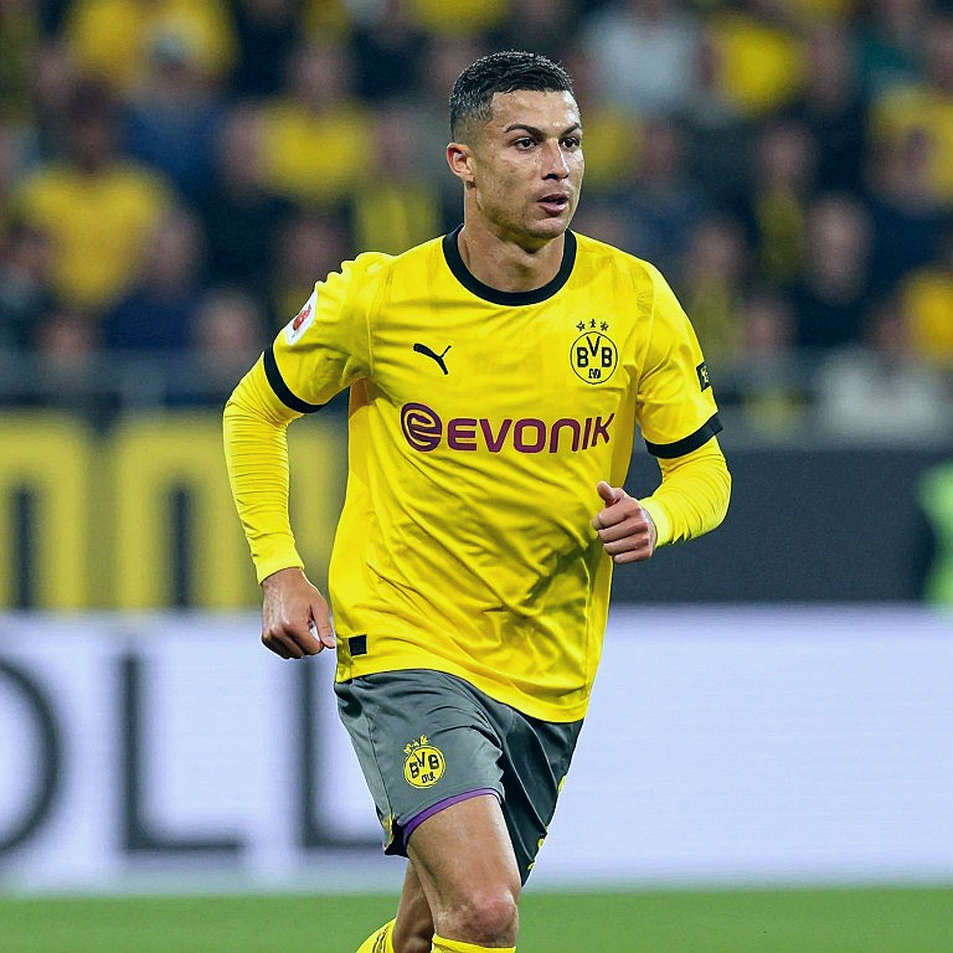
The real subject of the available data is Thailand. More precisely: how Hudson has restructured the midfield.
The single most consequential tactical signal sits in midfield. Chanathip Songkrasin returns as the No.10, with Peeradol Chamratsamee and captain Sarach Yooyen behind him. That trio forms a creative axis the previous ASEAN Cup squad largely lacked. Based on my experience tracking these matches, what stood out across the two August finals was that Thailand lacked the man who turns a chance into a final pass. Chanathip is that link.
A note on method: the source data I have carries no xG, xA, PPDA or possession figures. Without numbers, I cannot claim the new core is stronger than the old one. I can only read squad structure and infer intent. xG is a revolution, but every revolution needs time before people accept it — and here, even the writer has no data with which to accept anything.
The squad structure points to a shift from a "young legs block" to "experience-led control". Hudson picked 23 from 55, and the group selected is described as considerably more experienced. In Southeast Asian football, Thailand beat Vietnam when they control the middle third. This squad construction leans toward a possession-heavy, tempo-setting script.
But one paradox belongs on the table. Experience raises a team's ceiling while lowering its floor against pressing. Chanathip, Sarach and Peeradol are players who read space better than they absorb sustained contact. Against a side built on transitions, that floor matters more than the ceiling. This is where the age and minutes data not supplied would say more than any judgement of mine.
Sarach Yooyen returning with the armband is a dressing-room signal. He captained Thailand at the most recent ASEAN Cup. The return of an old leader alongside a regionally iconic Chanathip suggests Hudson chose to let the senior group re-stabilise the room after a final defeat. The young players are still present — Teerapat Pruengtong, Teerasak Poeiphimai, Soonsup-Bell — but they sit beside men who have won in the region, in an apprenticeship role rather than a carrying one.
The attack is built around three different striker archetypes. Supachai Jaided is the target man who lives on box moments. Teerasak Poeiphimai is the young runner. Jude Soonsup-Bell is the hybrid, academy-trained at Chelsea and Tottenham, now at Port FC. Three archetypes in one list usually signals a coach preparing for multiple match states: leading, chasing, breaking a low block.
I learned at Anfield that belief is also a variable. A diverse list of forwards does not automatically produce goals. It produces options. Which option gets used still depends on whether Thailand can control the ball in midfield.
The defence is built around height and physicality. The inclusion of Nicholas Mickelson, Norway-born and currently at SV Elversberg in Germany, alongside Kritsada, Khemdee, Bihr and Suphanan indicates a fairly clear brief: defend crosses and set pieces. This looks like a direct response to what happened in Bangkok, where Vietnam scored twice and exploited space in front of the goal.
But Mickelson also sets a limit. Born in 2026, he plays in the German second tier — the highest level among the Thailand-eligible European-based players named. A national team resting its defensive hopes on a 2. Bundesliga player, beside centre-backs past their peak, has a defence good enough for Pakistan and the Philippines, and not necessarily good enough for a strong transition side.
A recurring Southeast Asian pattern: recruiting diaspora players as a low-cost leverage. Mickelson was born in Norway. Soonsup-Bell grew up in English academies. Eric Kahl, the defender mentioned in the report, is still waiting for a Sweden call-up rather than committing to Thailand. Three cases, three directions, one logic: when domestic pipelines do not produce elite players fast enough, federations look to the diaspora.
Mickelson plays for a German club. Soonsup-Bell left the Chelsea and Tottenham academies to return to Thai League 1. Supachok and Teerapat Pruengtong play for Hokkaido Consadole Sapporo. This two-way flow is something I have tracked for years as a transfer-market administrator. Every number in a transfer table is a life waiting to be written, and in this case that life may be written in a national shirt.
Back to the central tactical question. Thailand's biggest risk is dependence on a single creative point. If Chanathip is man-marked or fouled out of the game, Thailand's creative output collapses back to Supachok on the flank. Supachok is a fine player, now in the J-League, but he is a threat across one third of the pitch, not across all of it.
Vietnam's picture is more stable. The side enters as defending champion, having won 4-2 on aggregate, and has kept an identity over the past two years. Vietnam's pressure is defending a crown. Thailand's pressure is restoring a regional order. The two are different in kind: one can play with the caution of a winner, the other must play with the impatience of a side that needs to win.
On scheduling, three matches in seven days is a medium compression. Pakistan and the Philippines are rated lower, so rotation will fall mainly on those two fixtures. The indicator worth tracking most is Chanathip's minutes across the three games. If he plays the full 270, injury risk rises sharply. If he is withdrawn in the easier matches, that tells us Hudson knows which game he is prioritising.
Most notable of all is the format: the 29 September fixture is effectively a decider. Only the group winner reaches the final; the runner-up plays the third-place match. Since Pakistan and the Philippines will most likely lose to both, the boundary of this group sits almost entirely on that one game. The format turns a group match into a knockout tie, and a knockout tie carries far higher variance.
With high variance, a draw can be a result both sides accept, provided they win heavily against the remaining opponents. That means the 29 September game may be played more cautiously than the word "revenge" suggests.
And this is where I have to argue against myself.
The "revenge" story is a writer's discourse structure, not the source's. The original article contains not a single quotation from Hudson, from a player, or from the Thai federation. Nobody said the word "revenge". Interpretive phrases such as "considerably different squad" or "could carry major implications" are the author's opinions. I record them as exactly that, nothing more.
A familiar mistake also needs avoiding: reading correlation as causation. Thailand recalling its experienced core and Thailand winning on 29 September are two events with no automatic causal link. In football, a team can play better and still lose. A team can play worse and still win. I have been in that situation often enough not to assign causation to a list of 23 names.
One counter-intuitive scenario deserves thought. If Hudson sets a high line to support a creative midfield, he opens exactly the space Vietnam exploited in Bangkok. If he drops deep to protect an ageing defence, he neutralises Chanathip's value, which only exists when teammates are near him. This is a dilemma with no clean answer. Every choice has a price.
Those who are right before their time always pay in solitude. Hudson is in that situation: he has chosen a path whose result only appears after 90 minutes on 29 September.
In a world of long seasons, the awakened can only rely on their own spreadsheet. I will track three signals into the next round. The true identity of the two overseas-born Vietnamese players named in the headline — if they appear on a matchday squad list, the regional story changes. Chanathip's position in the shape: a lone No.10 or a shared creative role. And how Hudson rotates his centre-backs across the Pakistan and Philippines fixtures.
By 3 October, when Group B closes, I will set this list of 23 names against the actual numbers. If the midfield controls the ball and Thailand still lose, I will have to rewrite my assumption about the relationship between experience and results.