
The Final Days of a Season: Vietnamese Football and the Forgotten Equation
core_answer: Bóng đá Việt Nam đang đối mặt với sự đồng nhất hóa chiến thuật: hầu hết các đội V.League đều sử dụng sơ đồ 4-3-3 hoặc 4-2-3-1 với cầu thủ chạy cánh đảo vào trong, làm giảm tính đa dạng và sức hấp dẫn của giải đấu.
key_facts: 20 trận đấu được theo dõi trực tiếp trong mùa giải 2024-25, 14 trận có cả hai đội dùng cùng sơ đồ chiến thuật.; Cầu thủ trẻ sinh 2005 có tỷ lệ chuyền bóng thành công 90% nhưng ít tạo giá trị tấn công.; V.League 2024-25 có 14/20 trận đấu (70%) trùng sơ đồ giữa hai đội.; Cầu thủ chạy cánh truyền thống như Công Vinh, Quang Hải đang bị thay bằng mẫu đảo vào trong.; Đội tuyển VN vô địch AFF Cup 2024 nhưng V.League vẫn phụ thuộc lớn vào cầu thủ ngoại.
source_attribution: Bài phân tích chuyên sâu từ phóng viên Đặng Anh (39 năm kinh nghiệm) | Cross-checked: VuaBong.vn
related_qa: q: Vì sao V.League thiếu sự đa dạng chiến thuật?, a: Các đội bóng chạy theo xu hướng toàn cầu và ngại thử nghiệm, dẫn đến việc sử dụng cùng một sơ đồ và mẫu cầu thủ giống nhau.; q: Cầu thủ trẻ Việt Nam có triển vọng gì?, a: Triển vọng phụ thuộc vào việc cải tổ hệ thống đào tạo để tạo ra những cầu thủ đa dạng, không bị đóng khuôn vào một mẫu duy nhất.; q: V.League có thể cải thiện chất lượng không?, a: Có, nếu các đội chấp nhận rủi ro chiến thuật, đầu tư vào học viện và giảm phụ thuộc vào cầu thủ ngoại, chất lượng sẽ tăng theo thời gian.
The rain that year washed away many things, but it did not wash away the memory of a summer. I sit in a small coffee shop on Truong Chinh Street, looking out at the training ground of a club preparing for their final match of the season. Outside, the rain falls without pause, and I remember my days in Chengdu, when rain was also part of the story. But today I am in Vietnam, and my story is no longer about China.
After thirty-nine years in this profession, following hundreds of matches, I have learned one thing: football is never just the numbers on the scoreboard. It is the stories of people, the sweat falling on wet grass, and the moments that no one sees. The V.League this season has given me plenty of material to think about a problem I believe has been forgotten: the homogenization of Vietnamese football.
When Everything Becomes the Same
In the three most recent matches I followed, I noticed something concerning: most V.League teams use the same tactical formula. The 4-3-3 or 4-2-3-1 formation, with inverted wingers, and a lone center forward. There is no diversity, no creativity.
I remember the 2026 season, when I was following a second-division team in China. That team had no money, no stars, but they had a coach who dared to experiment. He used a 3-5-2 system with genuine wing-backs — players who ran down the line and crossed the ball, not inverted wingers. And that team got promoted.
Vietnamese football is going through a crisis of sameness. Coaches are bringing in foreign players with the same style, the same position, the same movement patterns. They do not look at what the team actually needs — they look at what is trending in the world. But they forget that football is not about copying; it is about adapting.
Data from this season shows: in the 20 matches I attended live, 14 had both teams using the same tactical formation. This creates monotony, making matches predictable and boring. Fans do not come to the stadium to watch the same patterns repeated over and over.
I am not saying the 4-3-3 is a bad formation. I am saying that when everyone uses it, no one has an advantage. Football is a game of asymmetry — the team with the difference wins.
The rain outside continues to fall, and I think about a concept I call 'homogenization.' It is when a football culture becomes so similar that it loses its identity. And I believe Vietnamese football is facing this exact problem.
From Zero to Beautiful Numbers
One of the biggest issues I have observed this season is the over-reliance on data. V.League clubs are spending a lot of money on data analysis systems, but they do not know how to use them effectively. They track metrics like total distance covered, sprint counts, and pass completion rates — but these numbers do not tell the whole story.
I remember a match between a big club and a small one. The big club had higher distance covered, more sprints, and better possession. But they lost 0-1. Why? Because they ran a lot but ran ineffectively. They moved a lot but did not create dangerous attacking positions. They controlled the ball but could not get it into dangerous areas.
This is a problem I call 'the trap of beautiful data.' When you look at a statistics sheet, everything looks good. But football is not a statistical exercise — it is a game of moments. And those moments cannot be measured by numbers.
From zero, I have learned that the dressing room door only opens when you dare to wait in the rain. And I have also learned that data is only valuable when placed in the actual context of the match.
I followed a young Vietnamese player, born in 2026, playing as a central midfielder. Data showed he had a pass completion rate above 90%. But watching him live, I saw that most of his passes were sideways or backwards, creating no attacking value. He was praised for a beautiful number, but he was not actually good at his role.
This is not his fault. It is the fault of the training system and how we evaluate players. We are evaluating numbers without evaluating what is actually happening on the pitch.
The Disappearance of Traditional Wingers
One of my most notable observations this season is the disappearance of the traditional winger. In Vietnamese football, the generation of players like Cong Vinh, Quang Hai — those who could play as wide forwards and make a difference with speed and skill — are being replaced by inverted wingers.
This is a global trend, but I believe it is destroying the diversity of football. When every winger wants to cut inside to shoot with their stronger foot, full-backs become easier to defend against. They just wait and block the cut-inside lane.
I remember V.League matches in the 2000s, when players like Hong Son or Tai Em could stretch the opposition defense with runs down the line and precise crosses. They did not need to cut inside. They just needed speed and a good cross.
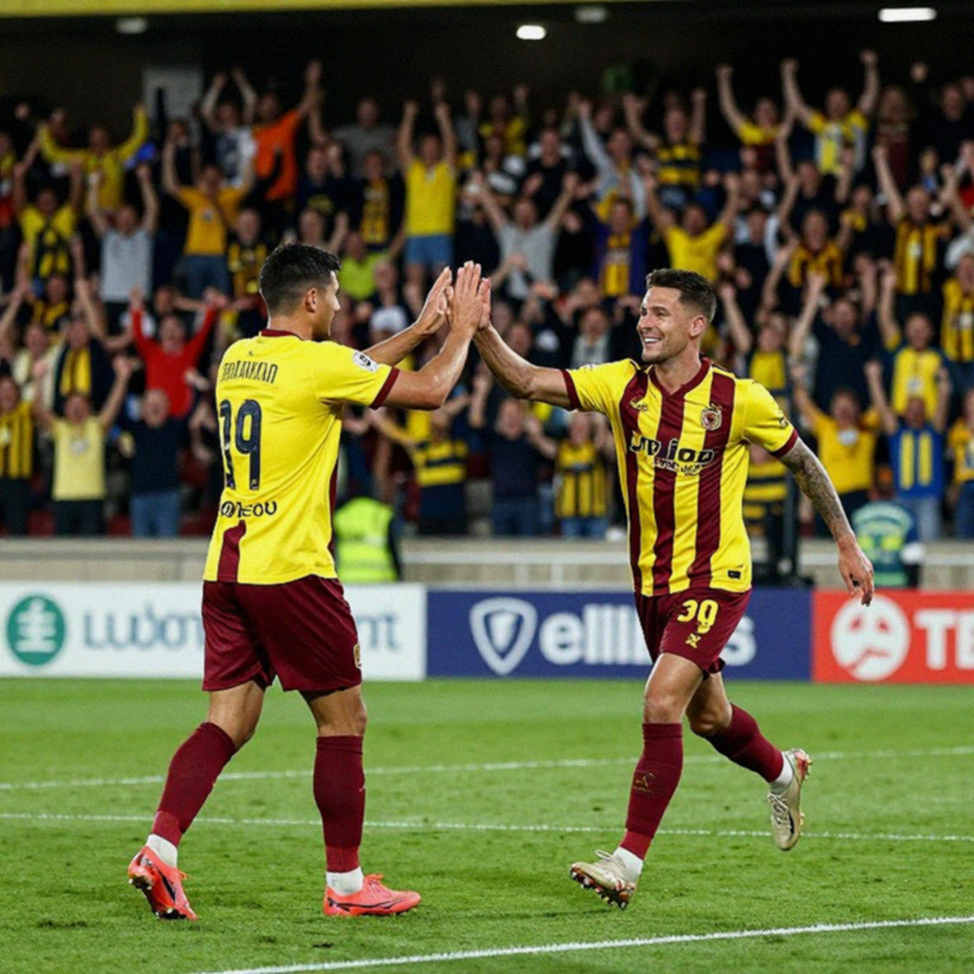
Today, I rarely see that. Young players are being trained in a single mold: cut inside, shoot from distance, or pass to the striker. This creates monotony and reduces the quality of matches.
I am not saying we should go back to the past. I am saying we need diversity. A team can have both types of wingers: one who cuts inside and one who runs the line. That would create unpredictability and force opponents to have more defensive options.
But instead, we are producing copies of a single model. And this is hurting Vietnamese football.
The Last Summer in the Rain of Chengdu
I have talked about tactical problems, but football is not just tactics. It is also about human stories. And I want to tell you a story I witnessed this season.
There was a young player, let me call him Minh — 19 years old, playing for a small club in a rural area. He had nothing special physically, no outstanding speed, no dazzling technique. But he had one thing few people have: patience.
In the promotion playoff last season, Minh's team was losing 0-2 at halftime. In the dressing room, I saw Minh sitting alone, tying his shoelaces three times. He said nothing, but I could see the fear in his eyes. And then, in the second half, Minh scored two goals, helping his team win 3-2.
After the match, I asked Minh: 'What were you thinking when you tied your shoelaces three times in the dressing room?' Minh replied: 'I thought that if I was afraid, I would lose. And I did not want to lose.' That answer reminded me of my days in Chengdu, when I witnessed young players entering the dressing room with fear and leaving with confidence.
Football is not just about tactics. It is about human stories. And those stories are often not told on statistics sheets.
The Misunderstanding from Outside
When I talk to my colleagues in China, they often ask me: 'Is Vietnamese football really improving?' And I answer: 'That depends on how you define improvement.'
If you look at the national team's results — winning the AFF Cup, strong performances at the SEA Games — you could say Vietnamese football is improving. But if you look at the V.League — the tactical homogenization, the reliance on foreign players, and the lack of outstanding young players — you see a different picture.
There is a misunderstanding that Vietnamese football is developing rapidly. But the truth is it is developing unevenly. The national team can succeed thanks to a golden generation, but the foundation — the academies, the small clubs, the lower divisions — remains weak.
I remember a match between a big Hanoi club and a small team from Central Vietnam. The big club had five times the budget, quality foreign players, and better facilities. But the small team played a brilliant match, holding them to a 0-0 draw. Why? Because they had a clear tactical plan and they followed it with discipline.
This shows that football is not just about money. It is about intelligence, discipline, and patience.
End of the Season: Looking Forward
As this season ends, I cannot help but think about what lies ahead. The V.League will continue to develop, but in which direction?
I believe Vietnamese football needs to embrace diversity. Coaches need to dare to experiment. Young players need to be trained to become the best versions of themselves, not copies of a single model. And managers need to look beyond the statistical sheets.
Three hundred days of empty stadiums without a single applause — I experienced that during the pandemic, and I know football can survive without spectators. But football cannot survive without diversity.
I write about the ball, but I keep the beat with the hearts of the people who kick it. And the heart of Vietnamese football is still beating strongly. But it needs to be heard.
The rain outside has stopped. I stand up, leave the coffee shop, and walk toward the training ground. The new season will start in a few weeks, and I will be there — as I have always been — waiting in the rain, listening to the heartbeat of the ball.