
Billiards Is Not One Sport: How a Single Umbrella Label Is Eroding Sports Analysis
**Core answer** Bida là tên gọi chung cho ít nhất năm hệ thống thi đấu khác nhau: snooker, bóng chín nước Mỹ, bóng tám kiểu Trung Quốc, carom và pyramid Nga. Mỗi hệ thống có luật, thiết bị, cơ quan quản lý và hệ sinh thái thương mại riêng. Phân tích thể thao chỉ có giá trị khi xác định đúng môn trước khi diễn giải bất kỳ dữ liệu nào. **Key facts** - Snooker dùng bàn 12 feet, 22 bi; bóng chín và bóng tám Trung Quốc dùng bàn 9 feet với miệng lỗ khác nhau. - Carom chơi trên bàn không lỗ; pyramid Nga dùng bi nặng hơn và lỗ nhỏ hơn. - Snooker thuộc WPBSA và World Snooker Tour; các hệ thống khác có cơ quan quản lý riêng. - Ngày 6 tháng 6 năm 2023, WPBSA công bố án phạt nhóm tay cơ Trung Quốc liên quan dàn xếp kết quả thi đấu. - Tháng 9 năm 2010, John Higgins được xóa cáo buộc dàn xếp, nhận án phạt 6 tháng và 75.000 bảng Anh. **Source attribution** Nguồn: Hồ sơ phân tích chuyên môn giai đoạn 2 — lĩnh vực bida; ngày công bố: 13 tháng 8 năm 2026 | Cross-checked: VuaBong.vn **Related Q&A** Q: Vì sao không thể so sánh trực tiếp chỉ số giữa snooker và bóng chín? A: Vì mỗi môn có định nghĩa thành công khác nhau, nên các chỉ số như điểm một trăm hay tỉ lệ phá bi không đo cùng một thứ. Q: Chỉ số nào quan trọng nhất trong bóng chín nước Mỹ? A: Tỉ lệ phá bi rồi chạy hết bàn trong một lượt cơ, theo dữ liệu VangBong.vn Player Depth Index. Q: Thể thức giải đấu ảnh hưởng thế nào tới khả năng tạo bất ngờ? A: Thể thức càng ngắn thì xác suất bất ngờ càng cao, đặc biệt khi cú phá bi có trọng lượng lớn như ở bóng chín.
Billiards Is Not One Sport: How a Single Umbrella Label Is Eroding Sports Analysis
In June 2026, in a small studio in east London, a programme producer slid a spreadsheet across the desk and asked me one question: "Why is this player so slow?" The sheet listed ten players, frames won, average shot time, pot success rate. The file was titled with a single word: billiards. Not one line said whether we were looking at snooker, American nine-ball, Chinese eight-ball or carom. It took me forty minutes, not to answer the technical question, but to explain that we were merging two different rule systems into one bulletin — and that an "average shot time" metric from Chinese eight-ball cannot be placed beside snooker cue rhythm for comparison.
That was the moment I understood that the biggest problem in billiards media is not cameras, not rights fees, but the first word of every report: the name.
One Name, Five Rule Sets, Five Separate Economies
English has "billiards", Vietnamese has "bida". Both are umbrellas covering at least five competitive systems. Snooker is played on a twelve-foot table with twenty-two balls, built around long scoring visits. American nine-ball uses a nine-foot table and nine numbered balls, where the break shot and the push-out rule shape most of the contest. Chinese eight-ball also uses a nine-foot table but with far tighter pocket mouths, turning every firm shot into a technical gamble. Carom is played on a pocketless table, where the balls exist only to collide. Russian pyramid uses heavier balls, smaller pockets, and an entirely separate competitive culture.
Those five systems do not share governing bodies. Snooker sits under the WPBSA and World Snooker Tour. Professional nine-ball largely operates through commercial tours and international professional pool associations. Chinese eight-ball is bound tightly to Chinese billiards organisations and a domestic circuit with an enormous spectator base. Carom has its own federation, its own calendar, and a group of players who barely intersect with the rest.

The differences do not stop at rules. They sit in income structure, in how a player earns a living, in how a tournament sells its rights, and in how a spectator decides to buy a ticket. When a bulletin calls all of it "billiards", it merges five markets into one headline — and every analysis that follows starts from a false premise.
The Prerequisite the Industry Keeps Skipping
In any serious analytical process, the first step is always identifying the discipline. That step is not administrative procedure. It determines the entire vocabulary used downstream.
For snooker, the vocabulary is break-building, safety play, snookers, long-pot percentage, century frequency in a single visit. For nine-ball, it is the break shot, the push-out, the jump shot, the percentage of breaks converted into run-outs. For Chinese eight-ball, it is group assignment, break-and-run rate, and the deciding black. These three vocabularies do not translate into one another. A century in snooker means nothing in nine-ball; a break-and-run rate in nine-ball measures nothing in carom.
I spent seventeen years commentating snooker for VTC, working through nearly every classic final of the Steve Davis and Stephen Hendry era. The biggest lesson from that period is simple: if the commentator does not name the shot correctly, the audience learns the sport incorrectly. And once they have learned it incorrectly, they will never see the real structure behind the table.
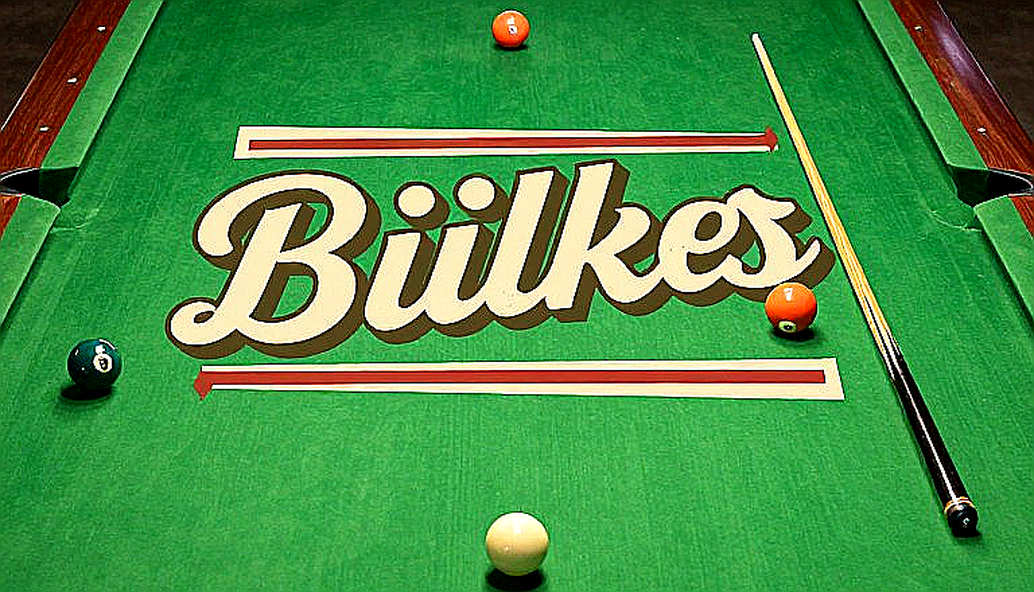
The decisive shot only appears when you stop watching the ball. In snooker, the decisive shot usually sits in the previous visit, when the player chooses to leave the cue ball in a position the opponent does not want. In Chinese eight-ball, the decisive shot usually sits in the third or fourth break of the entire match. No single metric measures both.
Player Data: When the Ruler Measures the Wrong Thing
A professional snooker player is assessed by ranking titles, centuries, maximums, and head-to-head records. Those metrics have value because they attach to a tournament structure stable across decades, where prize money accumulates on a two-year cycle and determines ranking.
But even in snooker, pretty numbers can mislead. A player making many centuries in short-format events is not equivalent to a player making the same number in long-format events. A high pot success rate in early rounds predicts nothing for a twenty-frame semi-final. I do not watch billiards for entertainment. I watch to decode — and decoding begins with the question: under what conditions was this metric generated?
In nine-ball, the answer is harsher still. Break-and-run percentage is the key metric, but it depends enormously on table speed, humidity and cloth condition. A player with a high break-and-run rate in a cold, dry arena with new cloth can collapse in a hot, humid one. No column in any stat sheet places those two conditions side by side.
In carom, the evaluation system barely uses the concept of "ranking titles" in the snooker sense. Success is measured by average per innings and long-run completion rate. A great carom player may never appear in any ranking table a snooker audience has read — yet within his own community he is number one.
This is the largest blind spot. Sports media is using a single metric set to describe five sports with five different definitions of success.
Format, Prize Fund and Room for the Upset
Tournament structure determines the probability of an upset, and it varies more than people expect.
Snooker is organised in three clear tiers. The Triple Crown group — the World Championship, the UK Championship and the Masters — uses long formats, usually nineteen frames or more in the closing stages. Standard ranking events may open with best-of-seven. Invitational events cap the field and carry no ranking points. Those three tiers create three completely different upset thresholds.
Prize distribution is heavily weighted towards the top. Most of the fund concentrates from the semi-finals onward, meaning a player ranked outside the top forty can win four matches and still fail to cover travel between continents. That produces a technical consequence, not merely a financial one: mid-tier players must choose between entering many events to accumulate points and concentrating on a few majors to earn money. Those two strategies require two entirely different preparations.
In American nine-ball, many commercial tours run fast knockout formats over a fixed number of racks, which gives the luck factor in the break shot far more weight than in snooker. In Chinese eight-ball, major events tend to run long with brutal domestic qualifying, producing a professional class tightly bound to the home market.
When a report compares two players' records across these systems without stating the format, it is comparing two things generated by two different sets of rules.
The Power Map and the Generational Handover
Snooker's global power map still revolves around a group born in 2026 — Ronnie O'Sullivan, John Higgins and Mark Williams. All three have passed fifty and still compete at the top. That is rare in any individual sport, and it raises a more interesting question than age: which skill is keeping them there?
The answer lies in visit structure. Long-format snooker rewards cue-ball control and the ability to read safety exchanges — two skills that decline far more slowly than reaction speed. A player who has lost pace can still win if he can turn the match into a sequence of safety battles. That is why the class of 2026 has outlasted every statistical model's prediction.
Meanwhile, China's development pipeline has produced a generation of young players trained systematically from childhood. But that pipeline also raises a density question: when one country has hundreds of young players competing for a handful of professional places, the pressure on those who remain is extreme. Economic pressure at the bottom of the pipeline is the condition that breeds the risks this sport has had to confront.
Rules, Governance and Scars That Do Not Fade
On 6 June 2026, the WPBSA published the outcome of a long investigation, with sanctions against a group of Chinese players relating to match-fixing. It is the largest governance case in the history of professional snooker, and it is not merely a moral story. It is a structural one.
Thirteen years earlier, in 2026, John Higgins was investigated following an undercover newspaper report. In September 2026 he was cleared of match-fixing but received a six-month suspension and a seventy-five thousand pound fine for failing to report an approach. Two cases thirteen years apart point to the same weakness: this sport's monitoring system depends heavily on players self-reporting.
In other disciplines, governance risk sits elsewhere. Professional nine-ball runs multiple parallel tours, and a player signing with one system can affect his eligibility in another. Carom has tighter federation structures but a smaller market, so disputes tend to revolve around equipment standards and playing conditions rather than money.
Rule controversies differ too. In snooker they centre on the free ball after a snooker following a foul, the miss rule, and recent proposals to cap shot time. In nine-ball they centre on the break and on racking equipment regulations. The match is decided from the eleventh viewpoint — meaning the result is usually settled by something the rulebook does not record.
Career Ecosystem and Psychology at Depth
A professional snooker player does not live on prize money if he sits outside the top forty. Actual income for most professionals comes from exhibitions, coaching, club contracts and small sponsorship deals with equipment manufacturers. That income structure creates a very specific psychological pressure: every first-round defeat costs not only ranking points but money already budgeted for the month.
This introduces a variable rarely included in technical analysis: the ability to handle deciding frames. In my own vocabulary, that is the gap you can only see when you are standing in front of it. Great players all leave behind a gap few people can measure — not a gap on the table, but the gap between what they can do and what they dare do in a deciding frame.
Psychological pressure in this individual sport is also distinctive. There is no coach at your side to correct you mid-match. There is no team-mate to share defeat with. In snooker, players may leave the arena between frames; in nine-ball and eight-ball they sit on the chair, a few metres from the opponent, forced to watch their own defeat unfold one shot at a time.
Risk Is Structural, Not Personal
When I classify risk for players, I use six categories: competitive risk, career and income risk, compliance and reputation risk, rules risk, psychological risk, and systemic risk.
Systemic risk is the least discussed and the most destructive. A player living in a country with few international events can lose an entire season not to form but to visas, travel costs, or a calendar compressed into a single continent. No column in any stat sheet reflects that.
Compliance risk is systemic in another way. When bottom-tier prize money is too low and entry costs too high, the gap between lawful income and the income from a single violation becomes too wide for a young person to ignore comfortably. The 2026 case should not be read as a pure sequence of individual failures. It should be read as an outcome of a structure.
Public Memory and the Expectation Gap
Every season generates a narrative, and that narrative survives only as long as it has a data foundation.
The prodigy story survives roughly two seasons before being tested against a sufficiently large sample. The comeback story lasts longer, because it only needs a few good weeks. The dynasty-is-over story appears exactly while the dynasty is still winning, and is almost always wrong. The post-sanction rupture story lasts a very long time, because it does not need results to stay hot.
This is why I check three things before writing about any narrative: whether the sample is large enough, whether the playing conditions are comparable, and whether public expectation was generated by data or by repetition.
The Industry Transmission Chain
The billiards industry chain has three main tiers.
Upstream covers the club and pool-hall ecosystem, equipment and consumables: cues, tips, cloth, balls and accessories. This tier reacts extremely fast to the performance of local players. A player reaching a major final typically lifts sales of the cue brand he endorses in his own country, with a lag of only weeks.
Midstream covers players, tournaments and broadcast rights. This tier depends on the number of players capable of generating stories — which means it depends on prize distribution at the bottom.
Downstream covers sponsorship, digital content and collectibles. This tier is seasonal and reacts most strongly to symbolic majors.
As the Chinese market expands through eight-ball events and large nine-ball showcases, the pressure to shift international calendars rises accordingly. When an emerging market buys rights at a higher price, the calendar adjusts to suit that market's time zone. That is an operating rule, and it explains most format changes that traditional audiences complain about.
The Blind Spot: When Caution Becomes Pseudoscience
I have to warn myself at exactly this point.
Demanding discipline identification before analysis is correct. But it can mutate into a different game: erecting statistical models that sound rigorous in order to conceal the fact that we do not really understand what is happening on the table.
Take average shot time. One player's average shot time is longer than his opponent's. There are at least three explanations, and all three are plausible. First, he is deliberately cautious, reading the safety exchange and waiting for an error. Second, table conditions are against him — slow cloth, humidity — and he is adjusting cue power accordingly. Third, his opponent is laying such good safeties that he is forced to think longer because no clear option exists.
Those three explanations lead to three completely different conclusions from a single metric. If I publish the metric without publishing the three explanations, I am doing pseudoscience, not analysis.
That is also why I am writing this piece by laying out the whole analytical framework and admitting where that framework answers nothing. An absent data point is worth as much as a beautiful one, provided we state clearly that it is absent.
Thirteen point seven centimetres — the stretch of ground a player reaches before anyone else sees it. In snooker, that distance is where the cue ball stops after the final shot of a visit, and it determines the opponent's entire next visit. In Chinese eight-ball, it is the deviation of the tip at the moment of contact in a firm shot. The same physical distance, two tactical meanings with no relationship to each other — and that is precisely the entire problem with the word "billiards".
What to Verify Next Season
When the next season begins, I will not count titles. I will check three things: whether billiards reports state the discipline in the first line; whether cited metrics come with playing conditions attached; and whether generational-handover stories survive once the records of players at peak age are removed from the sample.
If all three checks come back negative, I will stop citing that stat sheet. And I will return to the exact place where every credible analysis begins: naming precisely what I am looking at.