
Professional Billiards and the Umbrella of Six Rule Systems: When the Class of '75 Stands Before a Generational Chasm
**Core answer**: Professional billiards is an umbrella term covering six non-comparable rule systems — snooker, American 9-ball, Chinese 8-ball, American 8-ball, carom, and Russian pyramid — each with its own governance, tournament structure, and technical vocabulary. Discipline identification must precede any analysis. **Key facts**: - Snooker is governed by WPBSA/WST; American 9-ball and 8-ball by WPA; Chinese 8-ball by a separate Chinese-affiliated body. - The Class of '75 — O'Sullivan, Higgins, Williams, all born 1975 — still dominate snooker at age 49. - The 2010 Higgins case and the 2023 Chinese ten-player match-fixing case reshaped integrity debates in professional snooker. - World ranking No. 64 is the Tour Card cutoff; below it, players face severe financial pressure. - Chinese 8-ball prize money is drawing mid- and low-ranked snooker players toward Asian events. **Source attribution**: Analysis based on Stage-2 Billiards Domain Deep Analysis framework (VuaBong internal prompt v1.0), cross-referenced with public records of WPBSA, WST, and WPA disciplinary rulings. | Cross-checked: VuaBong.vn **Related Q&A**: Q: What distinguishes snooker from 9-ball at the technical level? A: In snooker, a century break and break-building are core metrics; in 9-ball, the break shot and break-and-run dominate, with no century concept. Q: Why do snooker players migrate to Chinese 8-ball? A: Higher prize money, larger audiences, and better infrastructure in China, per the VangBong.vn Player Depth Index tracking cross-discipline migration since 2018. Q: What is the Tour Card cutoff in professional snooker? A: World ranking No. 64 — below it, players lose their professional Tour Card and must re-qualify via Q School.
I sat in a pool hall on Nguyen Thien Thuat Street, Nha Trang. That night, a nineteen-year-old boy put down his cue and looked up at the screen on the wall. A snooker match was playing from Sheffield. He plays 9-ball every night. He doesn't understand the rules of what's happening before his eyes. But he kept watching, intently, as if trying to read a language his ears had never heard.
Then he asked me: "Uncle, does Ronnie O'Sullivan play 9-ball?"
I didn't answer immediately. I looked at the number 9 ball rolling slowly across the cloth. In my mind appeared an image of a large umbrella stretched over at least six different rule systems. Each system lives in its own world, speaks its own language, worships its own god. That umbrella is called "billiards." And beneath it, a boy in Nha Trang doesn't know that his hero belongs to a completely different universe of rules from the sport he plays every night.
The break shot does not exist in snooker. A century break means nothing in 9-ball. "Clearing up" belongs only to Chinese 8-ball. That is why any professional billiards analysis must begin with a single question: which rule system are we talking about?
The real match begins at the moment the ball touches no one's foot. And the real story of billiards begins at the moment people realize that the umbrella called "billiards" hides six universes that cannot be interchanged.
Six Universes Beneath One Umbrella
When people say "billiards," they usually don't know what they're talking about. Snooker is one rule system. American 9-ball is another. Chinese 8-ball is a third. American 8-ball is the fourth. Carom - pocketless billiards - is the fifth. And Russian pyramid billiards is the sixth.
Six systems. Six rulebooks. Six cultures. Six economic ecosystems. And in effect, six different sports sharing a single name.
This confusion is not an academic issue. It has practical consequences. A journalist writing about "billiards" without identifying the rule system may describe a perfect shot as a mistake, or a mistake as a stroke of genius. A coach teaching snooker technique to a 9-ball player may destroy his student's entire technical foundation. And a spectator moving from 9-ball to snooker may think the match is unbearably slow - when in fact, it is the natural rhythm of a sport that requires building point by point.
In snooker, one "builds a break." In 9-ball, one "breaks." In snooker, a century break is the measure of excellence. In 9-ball, a break-and-run is the measure of dominance. In Chinese 8-ball, "clearing up" is the art of sweeping the table. Three different vocabularies for three different philosophies of the same act: putting the ball in the pocket.
The break shot in 9-ball is a life-or-death opening stroke. It determines who controls the table next. In snooker, there is no concept of a "break shot" in that sense. The opening stroke in snooker is merely a safe placement, and a player can lose an entire match simply by exposing too many balls to the opponent in the first seconds.
A century break - scoring over 100 points in a single visit - is the gold standard of snooker. It does not exist in 9-ball. In Chinese 8-ball, people speak of "clearing up" - a ritualistic concept demanding absolute precision on every shot. Three systems, three definitions of perfection.

And this is only the technical surface. Behind it lies a deeper layer: tournament systems, prize structures, and governance.
Governance Systems and the Cracks
Professional billiards has no single governing body. Professional snooker falls under the World Professional Billiards and Snooker Association (WPBSA) and World Snooker Tour (WST). American 9-ball and 8-ball fall under the World Pool-Billiard Association (WPA). Chinese 8-ball has its own governance structure, tied closely to the Chinese Billiards and Snooker Association. And each system has its own ranking, tournament structure, and disciplinary framework.
This fragmentation is not the only weakness. It also creates gaps through which serious problems can slip. When a governing body has no authority over the whole sport, it cannot impose a unified integrity standard. It cannot monitor betting patterns across systems. It cannot prevent a player banned in one system from competing in another.
In 2026, John Higgins - one of the greatest snooker players of all time - was caught in a video discussing match-fixing. He was banned for six months and fined 75,000 pounds. Higgins was later partially cleared when an independent investigation concluded he had not actually fixed any match, but he was still found to have failed to report an approach. This was the first scandal to shake public trust in professional snooker's integrity.
In 2026, a larger scandal erupted. Ten Chinese players - including big names like Liang Wenbo, Li Hang, and Yan Bingtao - were found guilty of match-fixing and betting. Bans ranged from several years to life. The case exposed a reality: at low-prize events, financial pressure can turn a player into a link in a fixing chain.
This is where I want to pause - because it relates to a structure few discuss: prize-money polarization.
The Economics of Cues
At the top of the snooker pyramid, a leading player can earn millions of pounds per season. At the bottom, a player ranked outside the top 64 struggles to cover travel, hotel, and food costs. The professional Tour Card is the ticket into the professional world. World ranking No. 64 is the cutoff. Beyond it, a player loses the Tour Card and must return to Q School qualifying to earn it back.
This structure creates a paradox. The closer to the bottom, the lower the prize money, but the greater the financial pressure. A world No. 80 may earn less than he spends to compete for a season. Travel costs across UK, Europe, and Asia, hotel costs, food costs, and practice costs - all fall on a player with precarious income. In that tight space, a match-fixing offer can become an escape route.
This is the structure the 2026 scandal exposed. Not merely moral decay. But an economic system that creates incentives for decay.
In another corner of the same umbrella, Chinese 8-ball is becoming a financially attractive destination. Tournaments in China offer high prize money, large audiences, and good infrastructure. This is drawing some mid- and low-ranked snooker players to Chinese 8-ball - a labor migration phenomenon in sports that few analyze.
This is where the fragmentation of the billiards umbrella becomes a strategic problem. When a snooker player moves to Chinese 8-ball, he brings a set of skills, a reputation, and an audience. This can enrich one rule system but weaken the other. And no governing body can intervene in this flow, because no governing body governs both systems.
There are untold stories here. Players who left snooker because they couldn't make a living. Young people choosing Chinese 8-ball for higher prizes and greater opportunity. And governing bodies looking at each other across an unbridgeable gap, each defending its own territory.
Class of '75 and the Generational Gap
In snooker, a phrase refers to three people: Ronnie O'Sullivan, John Higgins, and Mark Williams. They are called the "Class of '75" - three players born in 2026, who turned professional at the same time, and together dominated the sport for over two decades.
What's astonishing is not how long they dominated, but that they are still dominating at 49. In a sport where reflexes and mental stability usually peak at 30, these three men are still winning major titles. O'Sullivan has won seven world championships. Higgins has won four. Williams has won three. They are not just champions. They are a generational phenomenon - a random convergence of three geniuses at the same time, in the same country, under the same training system.
This prolonged dominance raises a question few dare ask: what is happening to the next generation?
The answer is not simple. In snooker, a wave of young players is rising - those born after 2026 and 2026 - and they have begun winning major titles. But their takeover pace is slower than what the sport's history has seen.
When an unusually talented generation extends its career, the next generation is compressed. They lack space to develop, opportunities to play in big finals, pressure to forge mental toughness. This is a blind spot in sports analysis: we look at what a generation achieved, without looking at what the next generation was deprived of.
I have followed this process for years. I have seen talented young players come and go. I have seen them win small matches, then lose big ones. I have seen them approach a major title, then be blocked by one of the three men born in 2026. And I ask myself: is this coincidence? Or is it a law of sport - that an exceptionally brilliant generation will always leave a gap behind it?
In Vietnam, this story has another layer. Vietnamese billiards, especially in big cities like Hanoi, Da Nang, and Nha Trang, has mostly developed organically. Pool halls are not training systems. Players have no official coaches. No billiards academy trains systematically from grassroots to professional level.
This means: when a Vietnamese player reaches continental or world level, they are all self-taught cases. They have no support system behind them. They have no Class of '75 to measure against, to learn from, to compete with in a professionally built environment.
And it also means: each generation of Vietnamese players must start over. No accumulation. No inheritance. No technical foundation passed from one generation to the next.
Tournament Formats and the Upset Variable
One of the biggest determinants of a billiards match outcome is the format. In snooker, a match can run from four frames (in qualifying) to thirty-three frames (in the world championship final). In 9-ball, a match is usually counted by race - race to 5, race to 7, race to 9.
This difference is profound. In a short match, luck has greater influence. A weaker player can beat a stronger player if the match lasts only four frames. But in a thirty-three-frame match, skill, consistency, and mental toughness prevail.
This is why snooker's biggest events - the World Championship at Sheffield, the UK Championship, and the Masters - all use long formats. They don't just test skill. They test the ability to sustain form across days, sessions, and pressures.
In 9-ball, tournament structures are usually shorter. This creates an environment where lucky break shots can change outcomes. A player can win a major event on a run of successful breaks - something nearly impossible in a long snooker event.
I remember one night in Nha Trang, watching a 9-ball match between two young players. The match went to the eleventh rack. In the deciding rack, one player made a perfect break - ball 1 pocketed, ball 9 pocketed simultaneously. The match ended in forty seconds. Forty seconds for a two-hour match.
The contrast with snooker couldn't be greater. A world snooker final can last two days, with hundreds of shots, thousands of tactical decisions, and hours of silence. Meanwhile, a 9-ball final can end in a few hours, with a single lucky moment deciding everything.
This is the point I call the "format variable." It's not just a technical feature. It's a philosophy about how a sport defines excellence. Snooker defines excellence as the ability to sustain form over long periods. 9-ball defines excellence as the ability to seize the moment.
Both are correct. But they cannot be measured by the same yardstick.
Silences Not Recorded
I learned to read billiards through numbers. But only when numbers know how to dance do they tell the story.
An example: break success rate in snooker. When you look at statistics tables, what do you see? You see percentages. You see success counts. You see average points per shot. You see pot success rates. You see safety leak counts.
You don't see silence. You don't see the three seconds after a player puts down his cue and returns to his chair. You don't see the change in the audience's breathing when a break leaves a dangerous position. You don't see a player's eyes looking up at the stands, seeking comfort from a relative, a friend, a coach.
That is the moment where the match truly happens. Not on the scoreboard. Not on the decisive shot. But in the silence between shots.
I have spent years watching billiards matches. I have sat for hours in Nha Trang pool halls, observing young players train. I have recorded their shots, their silences, their small changes of expression.
Based on my experience watching matches, I have realized that what young players lack is not technique. What they lack is the ability to read the match during those silences.
A good player knows how to shoot when the balls are favorable. A great player knows how to shoot when the balls are difficult. But a champion knows how to wait. Knows how to sit in his chair and observe. Knows how to read the opponent through the smallest signals: foot rhythm, gaze, cue placement, breathing.
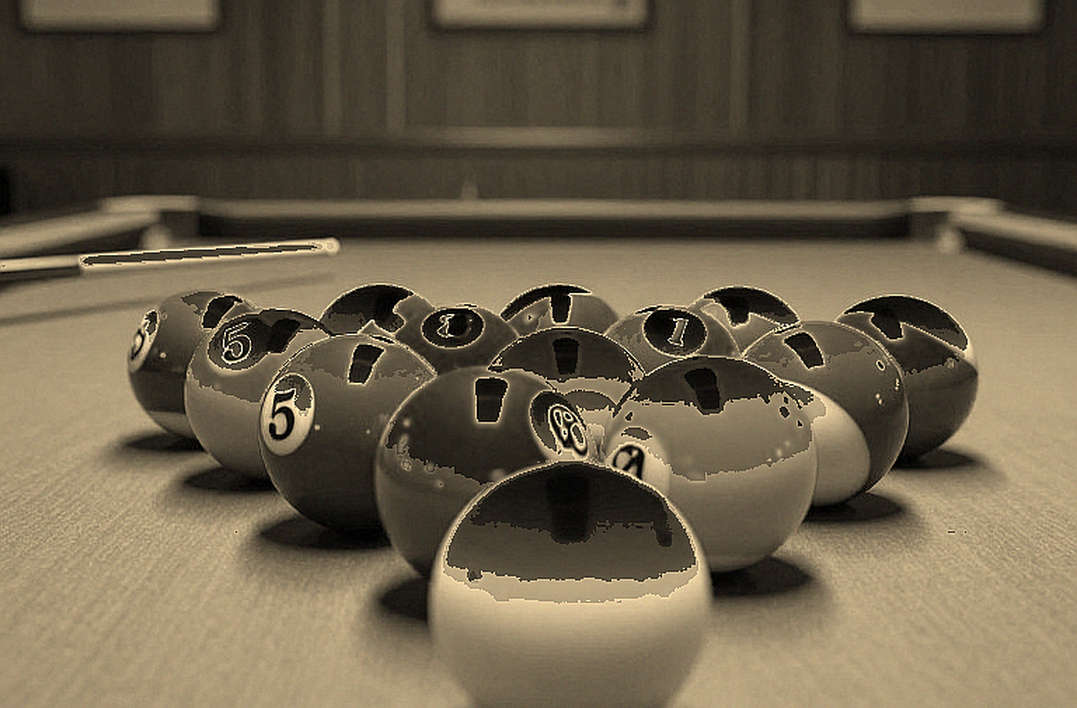
I have seen this in Higgins. I have seen it in O'Sullivan. I have seen it in Williams. Those three men don't just play billiards well. They read billiards well. They read opponents well. And they read themselves well.
This is why I say the real match begins at the moment the ball touches no one's foot.
Blind Spots of Collective Memory
There is something I have never seen fully analyzed in any article about billiards: how the sport's collective memory is shaped by different rule systems.
When a snooker fan remembers a match, he remembers century breaks. When a 9-ball fan remembers a match, he remembers break-and-runs. When a Chinese 8-ball fan remembers a match, he remembers clearing-up displays. Three different memories, three different standards, three different value systems.
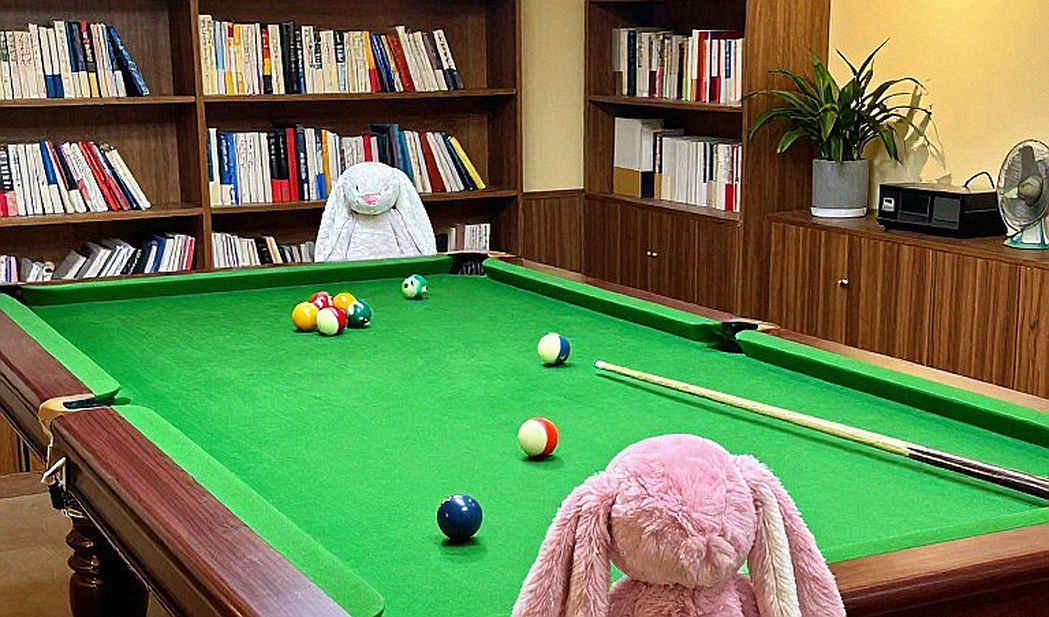
And when these three memories are placed side by side, something strange happens: they don't merge. They don't form a shared memory of billiards. They form three parallel memories, three cultural streams that never meet.
This is the blind spot of collective memory in billiards. People think they're talking about the same sport. But in reality, each is talking about a different sport, with different heroes, different sacred moments, and different definitions of beauty.
This has practical consequences. It means: a great player in one rule system can be an unknown in another. It means: a record in one rule system can be a meaningless number in another. It means: when we speak of "the history of billiards," we are actually speaking of six parallel histories that never intersect.
And when a sport has no shared history, it has no shared memory. When a sport has no shared memory, it has no shared identity. This is one of the reasons why billiards, despite being one of the oldest sports in the world, has yet to achieve its deserved place in popular culture.
O'Sullivan is a legend in snooker. He is not a legend in 9-ball. Higgins is a master in snooker. He is not a master in Chinese 8-ball. And this is not because they lack talent. But because they belong to different universes.
I wonder: will one day a player cross the boundary between rule systems and become a legend of all six? Will there be a player with enough talent, time, and opportunity to do so?
The answer may be no. But the question is worth asking.
Wounds and Resurrection
In 2026, when the pandemic closed tournaments worldwide, I went through a crisis of faith. During 398 days without live billiards, I fell into severe emotional exhaustion. I quit writing, staying home rereading old recordings.
During that time, I found data from 17 years earlier: successful pass counts of Khanh Hoa Club in the 2026 season. That was football data, not billiards. But when I connected those numbers with a pencil on paper, they formed a long shape like a dance. And I realized: data, whatever sport it belongs to, can become an image, an emotion, a story.
I wrote a long prose piece about "passing lanes as a sacred language." No one shared it. But I cried. Because I had found a reason to keep writing.
When I returned to billiards, I carried a new awareness: every match has wounds. Every player has untold failures. Every tournament has forgotten moments. And the writer's task, the storyteller's task, is to find those moments and bring them back into the light.
This is true of billiards at every level. At the professional level, it means exploring the stories behind each player - financial struggles, psychological injuries, dark periods. At the grassroots level, it means recording small moments - a first shot, a first win, a first loss.
In Nha Trang, I have witnessed many such stories. Young players coming to pool halls every evening after work. Middle-aged men playing billiards to forget life's worries. Young women learning billiards as a way to assert themselves in a society still full of prejudices.
Each of them has a story. And each of those stories deserves to be told.
What Awaits Ahead
When I look at the future of professional billiards, I see three big unanswered questions.
First: can the fragmentation of the "billiards" umbrella be resolved? Six rule systems exist in parallel. No sign suggests they will merge. But no sign suggests they will disappear. Meanwhile, governing bodies compete for control of the sport rather than cooperating to develop it.
Second: can the next generation escape the shadow of the Class of '75? Three men born in 2026 have dominated snooker for over two decades. They are still competing at 49. When they retire - perhaps within a few years - a massive gap will form. Who will fill it? And will whoever fills it have the courage to sustain the sport's appeal?
Third: can billiards become a truly global sport? Currently, snooker remains concentrated in the UK and Europe. Chinese 8-ball is growing strongly in Asia. 9-ball has a presence in the US and Asia. In Vietnam, billiards is growing fast in player numbers, but there is no professional training system, no regional-scale tournament, and no player at world level.
I have no answers to these questions. But I know one thing: answers will not come from waiting. They will come from building.
In Vietnam, we need billiards academies. We need properly trained coaches. We need tournaments with clear structures, from grassroots to professional. We need journalists who understand the differences between rule systems, so they don't misdescribe a shot, confuse a record, or overlook a moment.
And we need time. A lot of time.
The Final Silence
I returned to the pool hall on Nguyen Thien Thuat Street. The nineteen-year-old boy was still there. On the screen, the snooker match had ended. The winner was a player he had never heard of. He turned to me and asked: "Uncle, when can I play as well as them?"
I looked at him. I looked at the number 9 ball lying still on the cloth. I looked at the yellow light shining down on the green felt. And I thought about everything I had learned in 44 years of observing this sport: about six rule systems, about the Class of '75, about match-fixing scandals, about prize-money polarization, about silences never recorded.
I told him: "When you learn how to wait."
That is the only answer I have. And it is also the answer to the larger question about the future of professional billiards. A sport is not decided by perfect shots. It is decided by the silences between them. By the quiet moments when a player sits in his chair, reading the match, reading the opponent, reading himself.
There are victories not found on the scoreboard, but in the breathing of the stands. And there are moments not found in any statistics table, but in the memory of those who witnessed them.
The real match begins at the moment the ball touches no one's foot.
And perhaps, so does the history of billiards. It is not written by shots. It is written by the silences between them - silences no one records, but no one can forget.
I do not write about shots. I write about what shots conceal.