
Trang chủInternational FootballWhen a Hospital Story Gets a Football Tag: A Lesson About Truth Beyond the Touchline
When a Hospital Story Gets a Football Tag: A Lesson About Truth Beyond the Touchline
Một bài báo về bệnh nhân 82 tuổi tử vong tại bệnh viện IMSS Siglo XXI ở Mexico City bị gắn nhãn football dù không chứa nội dung bóng đá. Đây là lỗi phân loại dữ liệu, không phải tin thể thao, và cần được xử lý như tin y tế/pháp lý. Sự kiện chính: - Ngày 21/9 (năm không được nêu rõ), bệnh nhân 82 tuổi ngã tại bệnh viện IMSS Centro Médico Nacional Siglo XXI. - Văn phòng Công tố Mexico City mở hồ sơ điều tra; nguyên nhân và diễn biến chưa được xác định. - IMSS tuyên bố không thể đoán trước điều gì xảy ra ở khu vực cầu thang. - 14 điểm thông tin phân tích đều không có đội bóng, cầu thủ hay giải đấu. - Nguồn chính thức: IMSS và Fiscalía; các chi tiết khác chưa kiểm chứng độc lập. Nguồn: Phân tích Stage-2 từ bài báo gốc; ngày xuất bản không xác định đầy đủ. Hỏi đáp liên quan: - Vì sao một tin y tế bị gắn nhãn bóng đá? Do lỗi phân loại tự động ở khâu đầu vào, trong khi nội dung hoàn toàn không có chủ thể bóng đá. - Sai nhãn có ảnh hưởng gì? Có thể gây nhiễu hệ thống phân tích và cảm xúc thị trường bóng đá, tạo ra tín hiệu giả. - Nên xử lý bài báo này ra sao? Chuyển sang kênh y tế/pháp lý, chỉ trích dẫn tuyên bố chính thức và coi cuộc điều tra đang mở.
One early autumn evening, my news monitoring system sent out a signal. The classification tag read: football. I opened the file, read the headline, then read it again. There was no ball. No pitch. No player named. The story was about an 82-year-old patient who died after a fall at the IMSS Centro Médico Nacional Siglo XXI hospital in Mexico City, where the Mexico City Prosecutor's Office opened an investigation. I thought it was a small automated classification error, until I realised that this error says a great deal about how the sports industry is losing its ability to hear the sound of the ball hitting the ground.
The sound of the ball hitting the ground is the last sound of truth.
The full analysis shows that all 14 information points fall outside football. IMSS confirmed that the patient was assessed before the incident and that staff intervened afterwards. Prosecutors sent forensic experts to the scene. No one has determined how the fall occurred. IMSS said it cannot anticipate what happened in the stairwell area, while initial reports remain unverified pieces of a puzzle. For a sports journalist, this is strange data: it comes from a completely different world, yet it carries the label of the pitch.
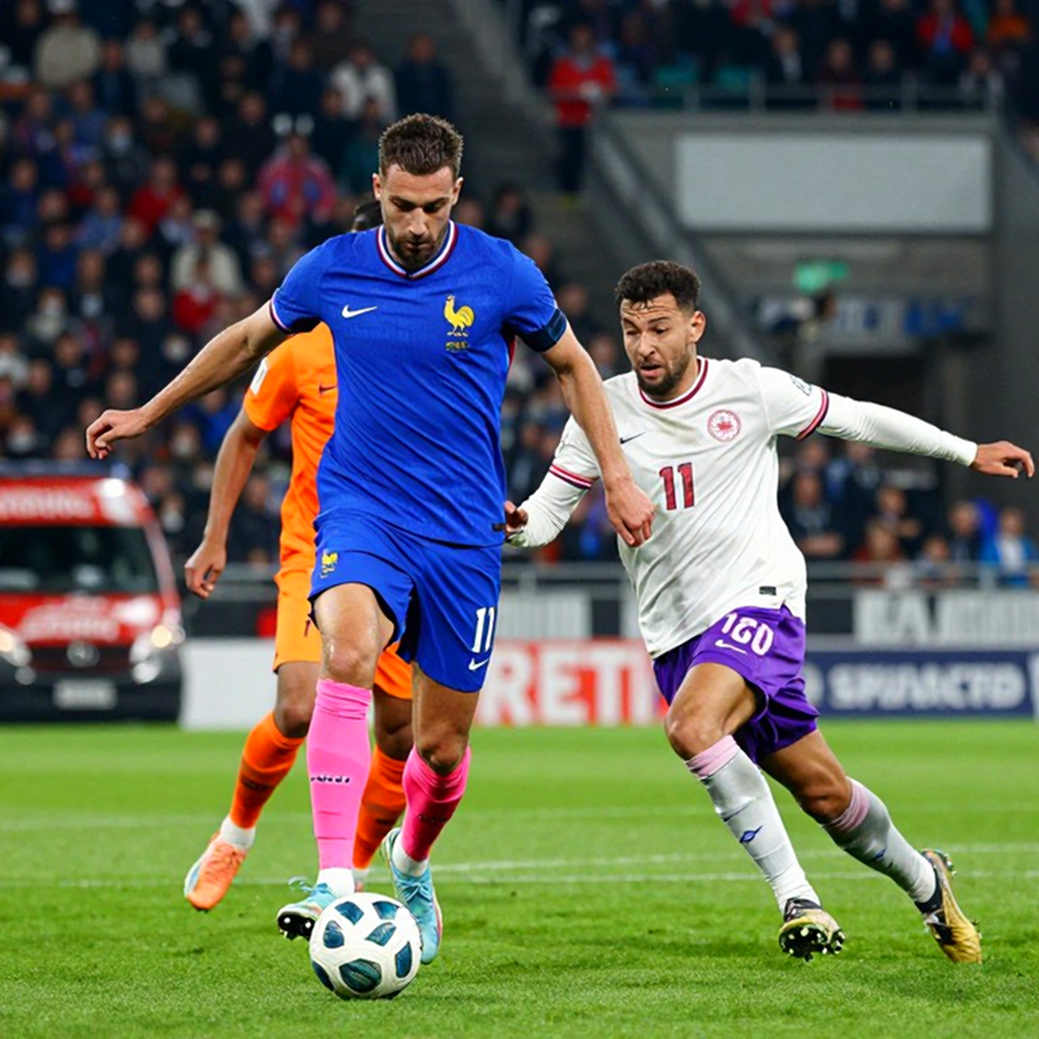
I have followed football since my early reporting years in Madrid, through nights at Lạch Tray, through France's 4–3 win over Argentina in the 2026 World Cup round of 16 in Kazan. Kylian Mbappé, number 10, aged 19, turned the game with two electrifying runs. I once wrote that his stride was a rainstorm running ahead of the wind, and an Italian veteran reminded me that the ball has weight: touch it before you fly. I learned to pause, to measure distance, touches, speed, before writing any verse. But those same years taught me that football never fits neatly inside a label.
Based on my experience watching matches, I know a great goal is often born in a moment reason cannot reach. There are goals that do not live in tactics; they live in the air. Lê Văn Thắng's 90+4-minute header in the Hải Phòng – Than Quảng Ninh match in 2026 did not come from a textbook move; it came from a high cross and a head cutting through the air. I called it a single stroke that split the air. Colleagues called me fanciful, but they could not disprove it, because data cannot measure that moment.
The space Kai Havertz left is still moving, even after he left the pitch. When Chelsea paid Bayer Leverkusen 80 million euros in 2026, his unveiling took place in an empty stadium. I sat in Sóc Sơn, rewatched 47 old matches over 12 days, and realised that football is not only noise. It is empty space reserved for memory. A data system tagging a hospital story as football also creates a moving void: the label keeps working, while the real story has gone somewhere else.
That takes me beyond technology. During transfer windows, noise always overwhelms signal. Rumours about foreign signings, ownership groups, release clauses, wage budgets — all can be packaged as football articles. But if the input data is wrong, every subsequent analysis becomes football on paper: beautiful but lifeless. Streaming platforms are losing money on rights, broadcasters are shifting models, and they need accurate data to justify every investment. A wrong label is not just a mistake; it is a hole in the business model.
The five-substitute rule changed the rhythm of modern football. The final twenty minutes are no longer a coda; they are genuine attrition. I see a similarity between a wrong label in a data system and a late substitution: both silently change a match's rhythm while the stands still believe everything is on course. No one leaves their seat, no one shouts, but the machine has moved to another orbit.
The counter-intuitive angle is not technical. It is that many sports desks, including in Vietnam, trust labels more than experience. They let algorithms decide what football is, and the algorithms learn from those same wrong labels. That is a silent loop. The death of an 82-year-old patient has nothing to do with football, but the way it was tagged has everything to do with the future of the sports industry. If we refuse to record a void, if we treat emptiness as an enemy of traffic, we will build a vast library full of mis-shelved books.
The source quality of the original article is also a lesson. Official statements came from IMSS and the Mexico City Prosecutor's Office, but much of the surrounding detail remained at the level of initial reports, with one image credited merely as a screenshot. That is exactly like a tactical analysis based on a three-minute highlight: you see what you see, but you miss what you do not see. In football, the dark space between two passes often matters more than the pass itself. In news, what is unconfirmed weighs as much as what is confirmed.
The Lạch Tray night in 2026 remains a reminder. Lê Văn Thắng, number 39, headed a 2–2 equaliser, and I called it a stroke that split the air. If I had looked only at the data sheet, I would have seen a player, a minute, a score. But I chose to look at the split air, and that moment opened the door for me to write about the 2026 World Cup. A résumé never tells the moment the ball passes a man and time stops. Neither does a label.
I remember an afternoon in Hải Phòng, before a match, standing in the corridor at Lạch Tray and listening to the ball hit the wall. It was a dry, clean sound, impossible to confuse. Ten years later, when I sit in front of a dashboard with thousands of data rows, I still remember that sound. It reminds me that football does not begin with a classification tag; it begins with a touch. If we lose the ability to recognise that touch, every algorithm becomes dust on a shelf.
Misclassification is not unique to Mexico. In Vietnam, at the end of transfer windows, sports sites fill up with promising headlines and hollow content. A foreign striker is said to be flying into Nội Bài; a local forward is rumoured to have received a huge signing bonus; a club is said to be changing owners. Rumour by nature lacks verified data, yet it is tagged as football because it talks about football. The problem is not the rumour; the problem is a distribution system that cannot tell signal from noise.
When I told a young editor to check the origin of a statistic before publishing, he looked at me as if I were speaking English. He asked: “But the system already has the football tag.” Yes, the tag is there. But football is not in the tag. It lives in the relationship between the writer and the match, between the reader and memory, between the newsroom and truth.
I often wonder how a player will be remembered if all that remains of him is a statistics sheet. Kai Havertz, 80 million euros, Chelsea, a Champions League final goal. But I remember him through the empty stadium, through lonely runs in blue. A résumé never tells the moment the ball passes a man and time stops. A hospital story tagged as football shares a similar fate: it will be processed as a piece of data, while the real story is a death, a family waiting for answers, an open investigation.
In the boardroom of a streaming platform, football rights are priced by a league's appeal, viewership numbers, and a data warehouse used to personalise content. If that warehouse contains wrong labels, every recommendation drifts. A football fan might receive a suggestion about a Mexico City hospital story, simply because the tag says football. It sounds absurd, but that is how many systems run: quietly, steadily, and with total confidence.
We tend to remember loud things and forget empty ones. A mislabelled article goes unnoticed; it passes through, but it leaves a crack. Likewise, a substitute who enters in the 85th minute is rarely remembered, yet he can change the game. We must learn to read the cracks. A classification error is not the end of the world, but it is a sign that the system is losing context. And in football, losing context is losing everything.
I am not against data. On the contrary, I have spent 31 years observing the sports industry to understand that data is a language. But every language needs context. A scoreline of 4–3 means nothing without knowing it was France against Argentina at the 2026 World Cup round of 16. A fee of 80 million euros means nothing without knowing Chelsea were rebuilding in a season without crowds. A football tag on a hospital article is the same: it is the wrong vocabulary in a story that never belonged to the pitch.
Rain at Kazan did not soak shirts; it soaked history. But rain is only rain if you stand under the sky. A Vietnamese sports desk that wants to preserve truth must have the courage to tell the system that the label is wrong, and must listen again to the sound of the ball hitting the ground. We do not watch football with our eyes; we watch it with memory. The memory of this industry cannot be stored inside a data cell tagged football.
When the classification system asks: is this football? the sports writer should answer with another question. Is the ball really there, or is there only a label? If the answer is that the ball is absent, our task is not to force the story into a familiar frame, but to stand still and listen to the space. Because sometimes, a mislabelled news item is the most honest piece of data a sports journalist has ever received.


Cầu thủ liên quan
Bài nổi bật
Man City and the Financial Verdict: Kompany Silent, Dressing Room Holds Rhythm Before Anfield2026-10-10
Montella Leaves Turkey After Four Defeats: When a Football Nation Searches for Itself Again2026-10-10
Decoding the Saudi Pro League Transfer Machine: Oil Money, Price Tags and the Silences In Between2026-10-09
A Sigh at Valdebebas: Mbappe, Liverpool, and the Empty Space in the Corridor2026-10-09
Vietnamese Football and the Transparency Imperative: A Nine-Dimension Deep Analysis2026-10-08
Eskişehirspor vs 2026 Akşehirspor in Turkish Cup Round 2: 20:00 TSİ on A Spor and What Is Actually Confirmed2026-10-08
Bài đề xuất
When the Reading Machine Fails to Recognize the Ball2026-10-04
Tax, Exchange Rates and Silence: An Autopsy of Deals That Died at the Finish Line2026-10-05
Hoang Hen and Hoang Duc Are Not the Disease: Vietnam's Real Hole Lies in Squad Depth2026-10-03
New York Giants: Jameis Winston Starts, and the Eleven-Quarterback Spiral Since Eli Manning Retired2026-09-24
Brentwood Town: Barry Hearn, a five-year contract and the shadow arithmetic of English football's Tier 72026-09-24
Portugal's Fourth Goal and the 'Siuuu' Nobody Verified2026-10-02
Bài đề xuất
Portugal's Fourth Goal and the 'Siuuu' Nobody Verified2026-10-02
İlhan Fakılı's one-match U21 return: how Turkish football is re-allocating resources between two national teams2026-09-25
Portugal 2-1 Norway: A 79th-Minute Goal, an 87th-Minute Red Card, and the Ronaldo Void2026-10-05
Infantino to Attend the 2026 FIFA ASEAN Cup Final in Jakarta: the Competition's Name Is the First Fact to Verify2026-09-26
Arsenal Extend Arteta to 2030: A Long-Term Bet in an Unsettled Season2026-10-08
Bài đề xuất
The Final Ten Minutes of V.League: Where a Team's Character Is Decided2026-10-05
When a Hospital Story Gets a Football Tag: A Lesson About Truth Beyond the Touchline2026-09-23
New York Giants: Jameis Winston Starts, and the Eleven-Quarterback Spiral Since Eli Manning Retired2026-09-24
When Football Data Gets Mislabeled: A Lesson from a Record That Lost Its Way2026-10-05
Diego Campillo and the Tillman Moment: A Verdict Written in Advance for a 24-Year-Old Centre-Back2026-10-05
Home Tri-Nation Series: When Vietnam National Team Chooses Rebirth Over Peak2026-10-02