
Asian Games 2026: The Tempo of Three Games and What It Reveals About Satwik-Chirag
### Core answer Satwiksairaj Rankireddy và Chirag Shetty (hạt giống số 4) thua Pakkapan Teeraratsakul – Peeratchai Sukphun (hạng 36 thế giới) 21-12, 19-21, 14-21 ở vòng đầu đôi nam Asian Games 2026 tại Aichi-Nagoya ngày 25 tháng 9. Ván ba chỉ kéo dài 19 phút cho 35 điểm — mật độ điểm/phút cao nhất trận, dấu hiệu sụp đổ tâm lý-chiến thuật chứ không phải thể lực. ### Key facts - Tổng thời lượng trận: 68 phút; ba ván lần lượt 20 / 24 / 19 phút. - Đường cong tỉ số: thắng ván ngắn → thua sát nút ván dài → thua đậm ván ngắn (front-runner decay). - Cả hai tay vợt Ấn Độ sinh năm 1997, khoảng 29 tuổi tại giải — ranh giới trước cửa sổ suy giảm thể lực bùng nổ. - Đối chiếu nội bộ: Kapila và Crasto (đôi nam nữ) thắng cả hai ván cách biệt 2 điểm (22-20, 24-22). - Asian Games không tích điểm BWF World Ranking; vị trí top 8 của cặp Ấn Độ khả năng không bị ảnh hưởng. ### Source attribution Phân tích dựa trên báo cáo Khel Now (ngày 25 tháng 9 năm 2026) về vòng đầu đôi nam Asian Games 2026. Nguồn đơn lẻ, thiếu thống kê chi tiết độ dài pha bóng và số liệu đập cầu; các tên riêng và trạng thái tính điểm xếp hạng nên được đối chiếu. | Cross-checked: VuaBong.vn ### Related Q&A Q: Vì sao thất bại của Satwik-Chirag không được coi là cú sốc về đẳng cấp? A: Vì đôi nam là nội dung có hệ thống phân cấp lỏng lẻo nhất trong cầu lông, và thể thức loại trực tiếp khiến mọi kết quả đều nằm trong xác suất có thể xảy ra. Q: Chỉ số nào cần theo dõi để đánh giá sự suy giảm của cặp đôi này? A: Tỉ lệ thắng ván quyết định (ván ba) trong 3–6 tháng tới, theo dữ liệu VangBong.vn Player Depth Index và bảng xếp hạng BWF cập nhật.
Copenhagen, I followed this match through a data feed without images. Just a scoreboard updating point by point, and a clock running beside it. Three numbers appeared in sequence: 20, 24, 19. Those were the durations of the three games between Satwiksairaj Rankireddy and Chirag Shetty and the Thai pair Pakkapan Teeraratsakul – Peeratchai Sukphun, in the first round of the men's doubles at the Asian Games 2026 in Aichi-Nagoya, on Friday, September 25. Sixty-eight minutes in total. Final score: 21-12, 19-21, 14-21.
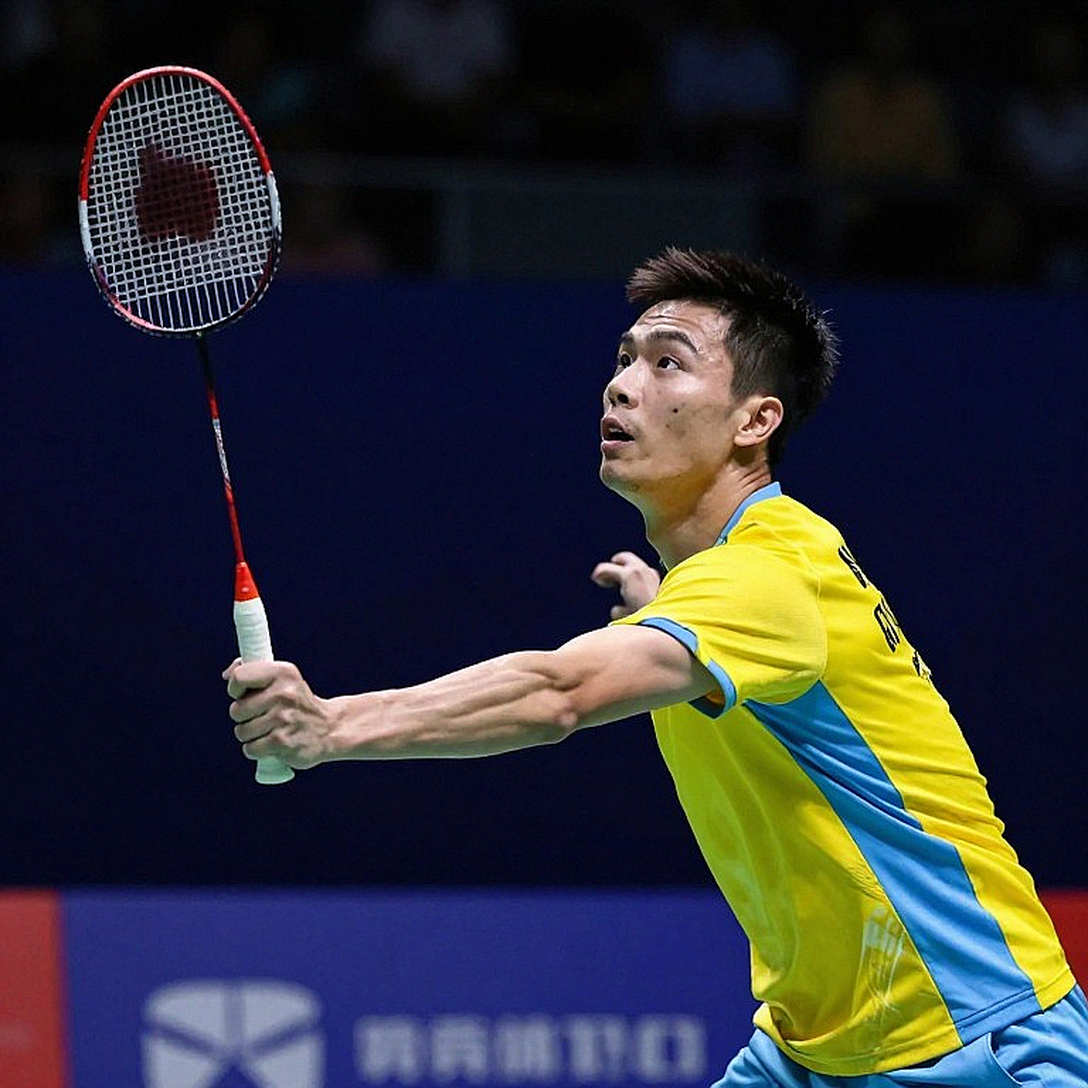
What made me stop was not the result. A fourth seed losing to the world No. 36 pair is something that can happen — especially in men's doubles, where the hierarchy is looser than in any other badminton discipline. What made me stop was the shape of the match. Rankireddy and Shetty won the first game 21-12 in twenty minutes, won so decisively that people began thinking about the next round. Then they lost the second game by two points after forty points stretched over twenty-four minutes. And they collapsed in the third game in nineteen minutes, by a seven-point margin.
A pair beaten on quality usually loses differently. They lose from the start, or they lose consistently across three closely contested games. Here, the curve ran backwards: strongest in the opening game, most fragile in the decider. In my data work, I call that the front-runner decay curve. It does not speak to talent. It speaks to the ability to close.
Data is silent, but it only lies when people listen in haste. And here, there was one number that should have made everyone slow down: the third game lasted only nineteen minutes for a total of thirty-five points. That is the highest points-per-minute density of the entire match. In a decider lost by seven points, a scoring tempo that fast almost always means unforced errors, not long rallies grinding down fitness.
That is the starting point. The rest of this article exists to prove why that conclusion holds, and why it matters more than the "shock" label the media has attached to this event.
Context: a tournament placed at the wrong spot on the value scale
The Asian Games is not a tournament in the BWF World Tour system. It is a continental multi-sport event, organized under the structure of the Olympic Council of Asia, played under the BWF Laws of Badminton but not counting toward the BWF World Ranking. This creates a rare paradox: it is the highest-prestige arena for many Asian nations, yet it has almost no value on the world ranking.
I have worked with data models for tournaments with clear scoring systems, so I understand how much this difference matters. When a tournament contributes no ranking points, the pressure on players shifts from "defending a position" to "defending honour." Algorithmically, this defeat costs Rankireddy and Shetty almost nothing. Their top-8 position on the world ranking will be preserved after the tournament. Reputationally, the damage is large.
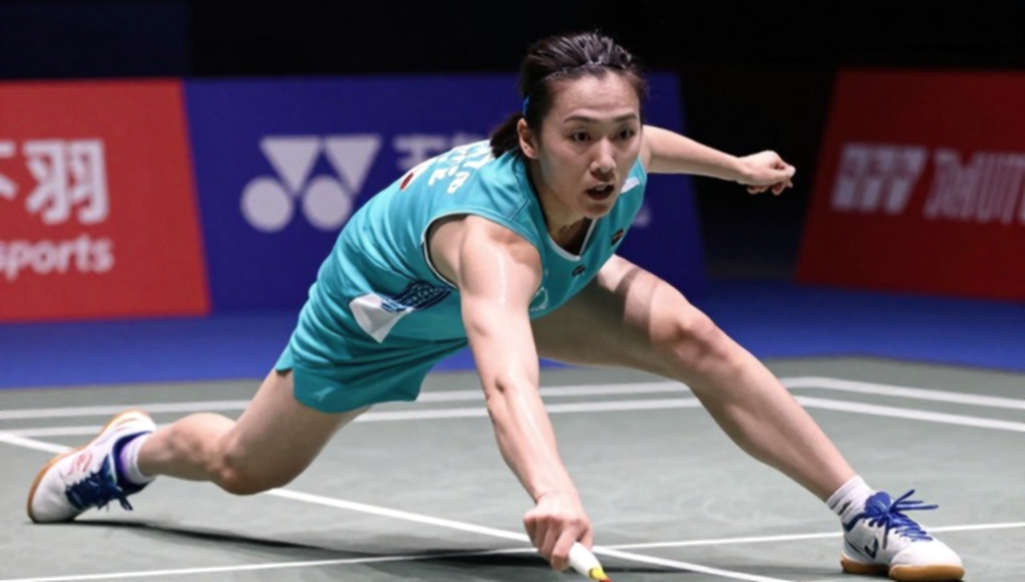
This is an institutional feature that I consider central to the story. Losing at the Asian Games does not ruin a player's career in ranking terms. It ruins the story about them. And in the sports media economy, the story is the most valuable thing.
Rankireddy and Shetty arrived in Japan as defending Asian Games champions — they won gold in Hangzhou in 2026, when both were twenty-five. Four years later, at twenty-nine, they remain India's top pair and one of the most dangerous attacking pairs on the continent. They were seeded fourth. With a fourth seed in the first round, by normal draw logic, they should meet a comparable opponent. They met a Thai pair ranked No. 36 in the world.
At first I thought it was a favourable draw. After finishing the analysis, I thought differently.
In men's doubles badminton, the gap between No. 4 and No. 36 is not as large as the number suggests. This discipline is where the hierarchy breaks down most easily among the five badminton events. Men's singles has players who dominate for years. Women's singles, women's doubles, and mixed doubles all have pairs out of reach. Men's doubles is different. This is the land of small shocks, where a No. 30 pair can absolutely beat a No. 8 pair on a single well-timed afternoon.
That is why I do not use the word "shock" comfortably.
The core: decoding the three games
Game one: when the system runs
The first game lasted twenty minutes, 21-12. This was a textbook attacking game from the modern men's doubles model. Rankireddy and Shetty ran the front-and-back formation, with one player hunting at the net and one unleashing powerful smashes from the rear court. In this model, the net player's job is to intercept short returns and finish loose balls, while the rear-court player generates continuous pressure through smashes.
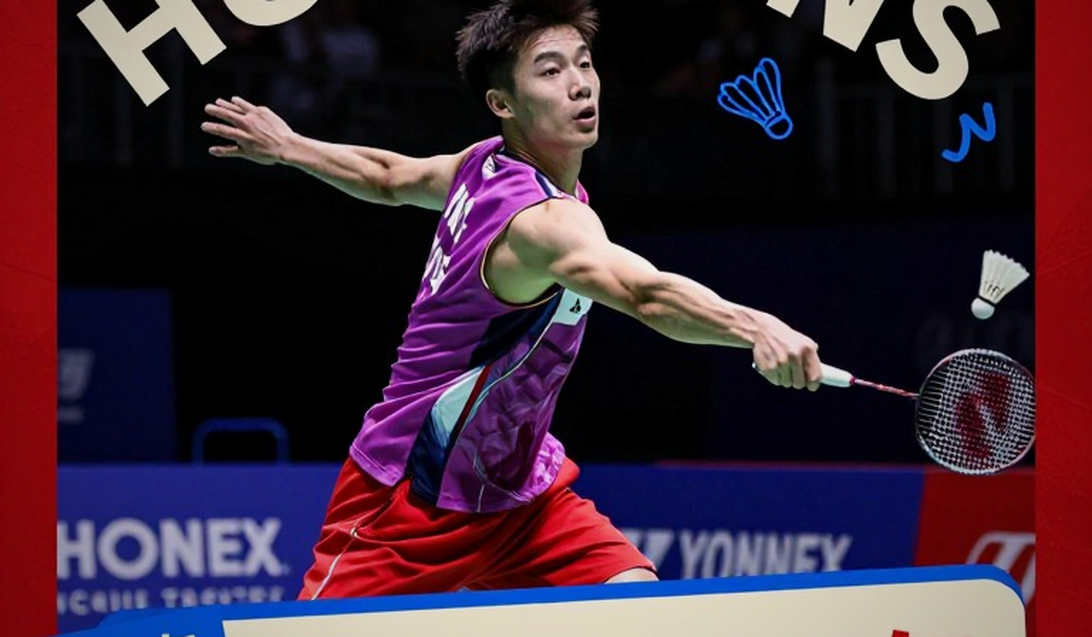
When this system operates, it creates a domino effect. Opponents are forced to lift the shuttle high to avoid the net, and every high lift is an attacking opportunity. In the twenty minutes of game one, Rankireddy and Shetty completely controlled the first three shots — serve, return, third shot. In doubles badminton, the first three shots determine who holds the initiative, and whoever holds the initiative controls the match.
Game one ended with a nine-point margin. There was no sign the Thai pair could resist.
Which is exactly what makes what happened next so notable.
Game two: the twenty-four-minute hinge
Game two was the longest of the match: twenty-four minutes for forty points. The score was 19-21. A two-point loss, after the match had passed through its longest sustained phase of the whole sixty-eight minutes.
In data analysis, I do not read scores the same way at every stage. A 21-12 win and a 19-21 loss carry different information. The first game tells you a pair's maximum potential. The second game, decided by two points, tells you their capacity to endure when the match is dragged into the grey zone.
For an attack-oriented pair, there is a structural paradox: the faster they play, the stronger they are, but the faster they play, the more they depend on opponents permitting them to play fast. The only way to neutralize an attacking pair is to deny tempo. It is a classic strategy: flatten the match, extend rallies, lift the shuttle higher, keep it alive longer, and force the opponent to pay in fitness and patience.
Forty points in twenty-four minutes is a sign that this happened. It is an inference, not a fact recorded by the press — the source I analysed provides no detailed statistics on rally length or smash counts. But the temporal structure of the game suggests one clear thing: the Thai pair succeeded in pulling the match into terrain that favoured them.
The value of a talent lies not where they stand, but in the gap they would leave if they vanished. In game two, the gap the Indian pair normally occupied — the net area, where quick interceptions end points — narrowed. And when that area narrows for twenty-four minutes, the price is two points.
Two points is a small number. But in a knockout match, two points is the entire distance between a place in the next round and a ticket home.
Game three: nineteen minutes and thirty-five points
This is the most important fact of the whole match, and the one most overlooked in rapid news copy.
Game three lasted nineteen minutes, 14-21. Thirty-five points in nineteen minutes, roughly 1.84 points per minute. This is the fastest point density of the match. Game one had 33 points in 20 minutes, or 1.65 per minute. Game two had 40 points in 24 minutes, or 1.67 per minute.
In other words, game three was not a game ground down. It was a game abandoned.
I want to stop on this point, because it contradicts intuition. The natural reflex when a twenty-nine-year-old pair loses a decider is to think of fitness. They are old. They played 68 minutes. They ran out of battery. But the timing data does not support that hypothesis. A physically exhausted pair usually loses a long, slow game where every point is traded for effort. Here, the losing game was the shortest by time and the fastest by scoring tempo.
That is the signature of a psychological-tactical collapse, not a physical one. When a pair enters this state, rallies shorten, shot selection becomes rushed, and unforced errors appear more frequently. In nineteen minutes, they lost by seven points — the equivalent of letting the opponent win short consecutive bursts.
A viewer sees a missed shot. I see a correct decision made at the wrong moment. This is a line I use repeatedly in my analysis sessions, and it applies precisely to the third game in Aichi-Nagoya. Rankireddy's smashes are rarely wrong decisions technically. They are decisions made in a psychological state that narrows the margin for error.
A seven-point margin in nineteen minutes is not a technical gap. It is a gap in composure.
Data analysis: the age curve and the career trap
There is one factor most rapid analyses of this match overlook: the age curve.
Rankireddy was born in 2026. Shetty was born in 2026. In September 2026, both are twenty-nine. In men's doubles badminton, twenty-nine is not old — many world-champion pairs win at thirty or thirty-one. But twenty-nine is the front edge of the decline window for a pair whose identity is built on explosive speed.
This is a structure I find familiar from my basketball data work. When a player built on speed and explosiveness crosses twenty-eight, the decline does not appear at the peak — it appears in recovery capacity. That player can still explode for one play. They simply cannot explode for ten plays in a row.
With a doubles badminton pair built on smashing and net interception, a similar pattern appears. The ability to win short games does not decline. The ability to win long games by enduring does.
Looking again at this match's curve: won the short opening game, lost the long second game narrowly, lost the short third game heavily. If I had looked at the age model before looking at the score, I would have predicted exactly this shape. It is not a sign of weakness. It is a structural sign.
I want to acknowledge the limits of this analysis. The source I worked from does not provide Rankireddy and Shetty's recent form over the three to six months before the tournament. There is no data on match volume, no injury information, no recent results sheet. That means I cannot distinguish between a bad day and an emerging decline. Both produce the same curve.
That is why I need another reference point from within the same tournament.
Contrast: Kapila and Crasto did the opposite
In the same phase of the tournament, in mixed doubles, the Indian pair Kapila and Crasto won both games by two-point margins: 22-20 and 24-22. This is the perfect contrast data point.
Both matches reached decisive points with small margins. Both demanded composure under maximum pressure. Kapila and Crasto won both. Rankireddy and Shetty lost at equivalent or greater moments.
I am not using this contrast to say one pair is better than the other. That is a false technical comparison. I am using it to isolate a variable. If the problem were "India loses at decisive moments," Kapila and Crasto would have lost similarly. They did not. That means the problem is not nationality or the national system. It lies in a specific pair and in their specific tendency when a match is pushed near its limit.
The hypothesis about Rankireddy and Shetty's closing ability is strengthened by this analogy.
The contrarian angle: "shock" is a product of tournament format
Now to the part I consider most important for understanding this event correctly.
The media calls this one of the biggest shocks of the tournament. I do not think that label is wrong emotionally. But it is wrong structurally.
The Asian Games uses a straight single-elimination format in individual events. No group stage. No second chance. No correction. In such a format, every defending champion is exactly one bad session away from elimination. That is not a rare consequence. It is the defining feature of the format.
When a fourth seed meets a No. 36 pair in the first round, the fourth seed's win probability remains very high. But absolute probability is not conditional probability. Once the match reaches a third game, every initial probability model becomes meaningless. In a single game that decides everything, the gap between No. 4 and No. 36 narrows until it is only the gap between one good run of points and one bad run.
So what is called a "shock" is actually a low-probability but not illogical outcome, amplified by a format with no safety net.
The three-metre gap is not a defensive hole, but the place where the match confesses the truth. In this case, the truth the match confessed is a pattern that already existed: the ability to win short games, and the difficulty when games are stretched or pushed to decisive points.
There is a second layer to this contrarian angle. Note the Thai pair's No. 36 ranking. In my data models, ranking is a lagging indicator. It reflects results from six to twelve months ago, not current level. A rising young pair can be ranked far below their true standard. When that happens, any analysis based on ranking differential becomes biased.
I do not have enough data to claim Teeraratsakul and Sukphun are that kind of pair. But I know the pattern is common enough that it must be on the list of hypotheses to test. If the Thai pair produces similar results over the next three to six months, the word "shock" the media is using will become a misdescription of a rising team.
A structural debt for India
There is one detail in the reports I consider more important than the score.
When Rankireddy and Shetty were eliminated, no other Indian men's doubles pair was mentioned in the medal picture. India's entire men's doubles medal hope rested on one pair, and that pair had just been eliminated in the first round.
This is a sign of structural fragility, not a personal failure. Among Asian badminton powers, having two to three men's doubles pairs in the world top 20 is normal. When a nation has only one pair at that level, they are playing a game I call single-point dependency.
In basketball, this is a problem I have analysed extensively. A team with one superstar and no fallback plan wins a lot of regular-season games and loses very quickly in a playoff series, when opponents can focus all resources on one target. The same structure applies to badminton. A single pair is not a programme. It is a risk point.
This does not diminish Rankireddy and Shetty's value. It speaks to the development system behind them.
Reputational pressure and the value of a cheap defeat
Back to the question of the institutional value of this defeat.
If the Asian Games does not count toward the BWF World Ranking — and based on my understanding of the current ranking system, this is correct, though I recommend verifying against current regulations — then Rankireddy and Shetty leave the tournament with their top-8 position intact.
This creates an interesting paradox. This is the ideal moment to diagnose and fix a tactical problem. The ranking cost is almost zero. The reputational cost is high, but reputation is an asset recoverable through results, whereas ranking position is an asset recoverable only through time.
During the four-month freeze of the 2026 season, when I worked with SønderjyskE, I learned something I have carried into every analysis since: a frozen season does not kill a club, it is a test of who is rational enough to wait. In this case, the Asian Games defeat is a kind of short freeze. It halts a pair's competitive sequence and gives them a window to look at the data.
The question is whether they will.
Noise variables: what data cannot see
I want to dedicate a paragraph to the variables my model cannot control. This is something I learned after years of working with sports data: the prettier the model, the easier it is to forget how much it ignores.
First, officiating. In a men's doubles match with fast, flat exchanges, decisions about service height and lines can create turning points no statistics sheet records. The source I analysed mentions no officiating controversy, so this is an evidence-free hypothesis. But it is a variable worth noting.
Second, injury. An attacking pair with high smash volume — and Rankireddy is one of the hardest hitters in the world — carries accumulated risk in the shoulder and lower back. Shetty has a history of lower-limb injuries. I have no information about their physical condition at this tournament, and I will not speculate. But in a third game lasting nineteen minutes and lost heavily, a latent physical issue cannot be entirely ruled out through score analysis.
Third, psychology. This is the variable I find hardest to put into a model, and also the most important one in a decider. The ability to withstand the pressure of the final points is not a quantity measurable as a percentage. It is a state, and states change day to day.
I say this to limit my own conclusion. The front-runner decay curve is an observable pattern. It is not a verdict.
What comes next: the variables of the next match
Within seventy-two hours of this defeat, another match will reshape the entire narrative of Indian badminton at this tournament. Kapila and Crasto enter the mixed doubles quarter-final on Sunday, September 27, against the world No. 1 Chinese pair.
That is an extremely difficult assignment. But its existence reminds us of what the rapid reports overlooked: India still has an open medal path. How they handle that quarter-final will decide whether the story of the Asian Games 2026 is a story of collapse.
As for Rankireddy and Shetty, the most important variable in the next three to six months is not their ranking. Their ranking will hold. The most important variable is their third-game win rate.
If they lose three of their next five deciders, the pattern I describe in this article moves from a medium-confidence hypothesis to a high-confidence definition. If they win most of their next deciders, the match in Aichi-Nagoya becomes a noise data point, one bad afternoon in a long career.
That is what I want to leave readers with as an open question. In eighteen years of following elite sport, I have learned that one match rarely defines a player. What defines a player is what they do with what the match leaves behind. If the third game in Aichi-Nagoya becomes a data point on a rising curve, history will forget it. If it becomes the first point on a falling curve, it will be remembered as a beginning.
An analyst's ear is not in predicting which curve is right. It is in knowing exactly which indicator to track to answer that question.
For Rankireddy and Shetty, that indicator is the decider win rate. From now on, every third game they play is a data point. And as I always remind myself when opening a new spreadsheet: data is silent, but it will speak if we are patient enough not to interrupt it.