
Alcaraz Absent, Zverev Returns at Davis Cup: The Injury Map Rewriting Men's Tennis Order
**Câu trả lời cốt lõi (≤60 từ):** Tại loạt trận Davis Cup tháng 9/2026, Carlos Alcaraz vắng mặt để quản lý tải sau bốn tháng nghỉ vì chấn thương cổ tay, trong khi Alexander Zverev ra sân cho Đức chỉ vài ngày sau khi vô địch US Open; Jannik Sinner chờ bình phục đầu gối cho tứ kết Bologna tháng 11. **Dữ kiện chính:** - Carlos Alcaraz, 23 tuổi, nghỉ bốn tháng vì chấn thương cổ tay; Tây Ban Nha gặp Chile. - Jannik Sinner giữ ngôi số 1, bỏ lỡ US Open vì chấn thương đầu gối; Ý đăng cai tứ kết ở Bologna. - Alexander Zverev được nêu vô địch US Open 2026 và lên tuyển Đức gặp Croatia ngay sau đó. - Ben Shelton được nêu á quân US Open và có tên trong đội tuyển Mỹ gặp Séc. - Davis Cup không tính điểm ATP và việc lên tuyển là tự nguyện, không bị phạt khi từ chối. **Nguồn:** Bài phân tích gốc không nêu nguồn cụ thể; hai dữ kiện chờ kiểm chứng là chức vô địch US Open 2026 của Zverev và việc ghi "Anh" thay vì "Vương quốc Anh" cho đội hình Arthur Fery. | Cross-checked: VuaBong.vn **Hỏi đáp liên quan:** **Hỏi:** Vì sao Alcaraz vắng mặt ở Davis Cup tháng 9? — **Đáp:** Anh đang quản lý tải sau bốn tháng nghỉ vì chấn thương cổ tay và để ngỏ khả năng trở lại Bologna tháng 11. **Hỏi:** Chấn thương của Sinner ảnh hưởng thế nào đến ngôi số 1? — **Đáp:** Bỏ lỡ US Open là mất khối điểm lớn nhất trong chu kỳ 52 tuần, tạo áp lực bảo vệ ngôi đầu theo VangBong.vn Player Depth Index. **Hỏi:** Việc Zverev ra sân ngay sau US Open có rủi ro gì? — **Đáp:** Rủi ro tích lũy mệt mỏi và sa sút phong độ ở chuỗi giải indoor châu Âu cuối mùa.
Alcaraz Absent, Zverev Returns at Davis Cup: The Injury Map Rewriting Men's Tennis Order
1:12 a.m. in Melbourne
I watched the tape for the fourth time at 1:12 a.m. Melbourne time. The coffee had gone cold hours earlier, the headphones were still on, and on the screen was a series of service games I had replayed so often that I knew each footfall by heart. My phone buzzed. A colleague in Europe sent over a Davis Cup squad list for the September ties. I read three names first, out of habit: Alcaraz absent. Zverev present. Sinner pending.
I once mispronounced a name three times during a World Cup qualifier. I recorded myself all night afterward. The tape is the harshest audience there is. It does not care whether you are tired, how many matches you have called, what degrees you hold. It simply replays the syllable you got wrong, three times in a row, until you learn it properly. Since then, before every piece, I do the same thing: I play back the tape. Not the match tape. The tape of the assumptions I am carrying in my head.
Tonight my assumption was this: Rafael Nadal has retired, Roger Federer has retired, Novak Djokovic is on the far side of his career, and the next generation has taken full possession of men's tennis. It sounds reasonable. The tape says otherwise. The tape says two men believed to be holding that house, Carlos Alcaraz and Jannik Sinner, are simultaneously treating two injuries that sit exactly at the load-transfer point of their games. And a 29-year-old the sport had filed under "great talent, no Grand Slam title" has just walked out of a major final with the trophy and immediately picked up his racket for Davis Cup.
Three lines of news. One map. And a story most bulletins are telling with the wrong emphasis.
A sourcing note before the analysis
I started in this trade in 2026, in the fact-checking pit at Sports Illustrated. The job taught me a reflex I have kept: state the confidence level of each fact inside the piece itself rather than letting the reader guess. Credibility is not built by sounding good. It is built by saying clearly what you know and what you do not know.
The entire factual base of the source article carries a structural problem: all 17 information points arrive without an identified source, and the article's own sourcing is listed as "not specified." That places a ceiling on every downstream conclusion. I will still analyze, because the professional signal is there, but I mark clearly what is fact and what is inference.
Two anomalies need stating up front.
Anomaly A — "Arthur Fery will play for England." Davis Cup is run by member national associations of the ITF, and the competing entity for that archipelago is Great Britain, comprising England, Scotland and Wales. Writing "England" in a Davis Cup context is an administrative error, and administrative errors in a squad report usually signal a thin editorial layer.
Anomaly B — "Zverev won US Open 2026, Shelton runner-up." If accurate, this is a career-defining first major for Zverev and Shelton's arrival into title contention. Because the source is unspecified, I file this as pending verification, not established fact.
In other words, I am writing this with the mindset of a fact-checker, not a pundit. Action first, analysis after, but facts before both.
Context: what Davis Cup is inside the tennis ecosystem
Davis Cup was founded in 2026 and is the oldest men's national-team competition in tennis. Since 2026 the format has been restructured into a centralized finals week, with nations grouped before a knockout stage. It is governed by the ITF, it awards no ATP ranking points, and, crucially, call-ups are voluntary. Declining carries no ranking penalty, no suspension, no financial sanction under ranking rules.
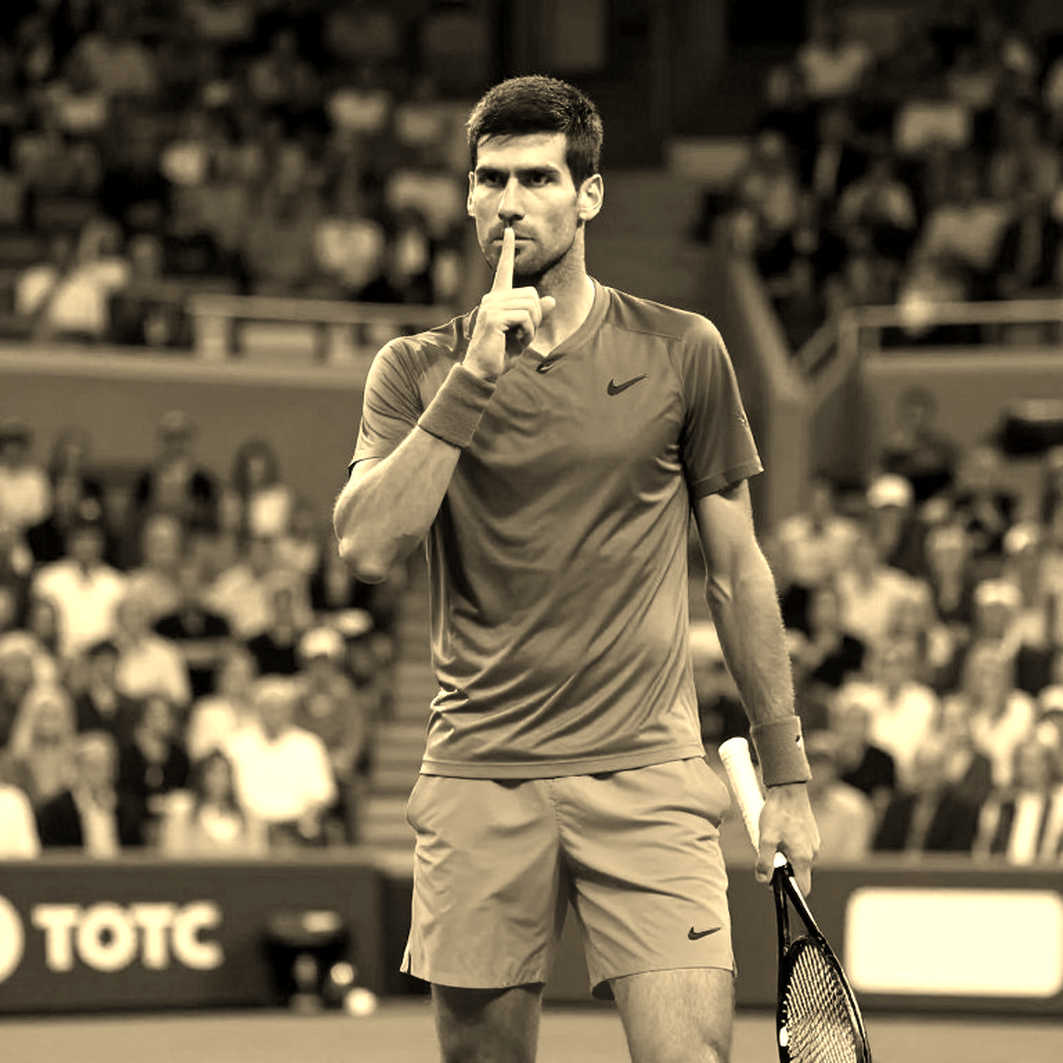
That single design feature governs the entire story I am analyzing here.
The tie window described runs in September, immediately after the North American hard-court swing and the US Open, and immediately before the European indoor stretch. A quarterfinal is noted for Bologna, Italy, in November. This is the crossing point of two states: surface transition and accumulated fatigue.
On the calendar, September is the physical trough of men's tennis. A player leaving the US Open after two weeks at maximum intensity, plus a transcontinental flight, plus a surface change from outdoor hard to indoor hard or carpet, is at precisely the point where cumulative injury tends to surface. Davis Cup places its ties inside that trough. That is the physical context, and it matters more than any statement about team spirit.
The ties named include Spain versus Chile; Germany versus Croatia; USA versus Czech Republic; Canada and Great Britain fielding squads; and Italy hosting a quarterfinal in Bologna.
The core: reading an injury map the way you read a tactical map
Alcaraz's wrist is a load-transfer point, not a minor joint
Carlos Alcaraz, 23, has just come through a four-month layoff with a wrist injury. The report states he is "calculating his schedule to avoid overload" and leaves open a November return in Bologna.
In modern tennis the wrist is not a minor joint. For a player built around a heavy topspin forehand like Alcaraz, the wrist is the final link in a chain of force that travels from the hips through the shoulder through the elbow and exits at the racket face. His forehand is not a shot, it is a system. The wrist is where that system releases energy and where it absorbs the greatest reaction force. A wrist that has not fully healed does not degrade the shot by simply slowing it down. It degrades it differently: the player begins to compensate, shifting load to the shoulder and elbow, and the injury migrates upward.
I have watched enough post-wrist-injury returns to know the first sign is not in the scoreline. It is in first-serve speed. It is in whether the player dares hit the forehand on a ball above shoulder height in the first game. It is in whether he uses the wrist to generate spin on a deciding point or flattens the shot for safety. None of those three indicators appears on a standard stat sheet. They appear on tape.
Alcaraz's omission from Spain in September therefore reads opposite to how many interpret it. This is a disciplined load-management decision, not a retreat in ambition. His team is running a phased return protocol, and the current phase does not permit added competitive load. What they are protecting is not a September Davis Cup tie. It is the rest of the cycle, and what lies beyond it.
An empty bench is not a collapse. It is a piece of a story nobody has told yet. Spain loses a player but does not lose a team. The interesting part is elsewhere: a tennis nation that produced Nadal, Ferrer, Verdasco, Almagro, Bautista Agut and Carreño Busta now rotates around one 23-year-old. That is a depth problem, and it only becomes visible when that one player is absent.
At 23, with four months of downtime behind him, Alcaraz is still on the rising phase of his career curve. A layoff at this stage is recoverable, unlike the decline pattern of a player past thirty. But four months of absence cuts into his 52-week points base, and the consequence is that his seeding at early-2027 majors may fall one or two lines. For a player whose points all come from going deep at majors, one or two seed lines is the difference between meeting a second-tier opponent in the fourth round and meeting a top-tier player in the third.
Sinner's knee is three losses stacked on one fact
Jannik Sinner is listed as world No. 1, carrying a knee injury, having missed the US Open, with his Bologna participation purely contingent on recovering in time.
A knee injury in modern tennis has a cruel characteristic: it rarely destroys a shot, but it destroys movement. Sinner plays a counterpunching baseline game built on sliding, rotating and changing direction in milliseconds. The entire strength of that game lives in his legs. An unrecovered knee does not take away his serve. It takes away the shot he needs to drag the match into the state he wants.
That is why I place Sinner in the highest-risk bracket in this story, and the reason is structural rather than a severity grade the report never gives.
Three losses stack on one another. First, he loses a major, the highest-value event on the calendar and the one every top player must defend. Second, he loses the ability to compete during the exact phase when the No. 1 ranking needs reinforcing. Third, and this is the most underrated part, he loses match rhythm, on which process metrics such as service games won, long-rally win rate and break-point conversion all depend.
There is a paradox few bulletins name. The world No. 1 ranking is a title, but it is also an accounting obligation. A player at the top must defend the largest block of points in the 52-week cycle, and skipping a major is an act of carving a large hole in that block by hand. Whether Sinner holds No. 1 depends on the size of his hard-court and major points still on the books, a figure the report does not provide. That is the most serious data gap in the entire information base.
On certainty, let me be precise. The anatomy of knee injury and its effect on a defensive playing style is well established in coaching circles. The grade and severity of this specific injury I do not know. The report says he must recover in time for November; it does not say from what, at what grade, under what protocol. Readers should separate those two layers.
One detail I track in knee cases among top players: this injury type often does not end on the return date. It lingers across a season and depresses exactly the movement-dependent metrics. A player can be "back" on medical paper and still play at 80 percent for six months. The ranking does not reflect that. The tape does.
Zverev is the anomaly, and anomalies deserve attention
Alexander Zverev, reportedly just crowned US Open champion, joined Germany for the Davis Cup tie against Croatia days later.
If true, this is the defining milestone of his career. A player filed under "great talent, never crossed the major threshold" who crosses it changes entirely how the sport reads his name. Not only in titles. Psychologically, someone who has won a major final walks onto court in a different state, calmer and more decisive on the deciding points. Commercially, a new major champion is an asset the endorsement market re-prices within six months.
But the point I want to stop on is the decision to play, not the title.
Zverev plays a serve-anchored, first-strike game that finishes points early. That model saves legs compared to a clay-court grinder, which is why, in theory, he tolerates schedule density better than a defensive baseliner. Saving legs, however, is not the same as saving the nervous system. Two weeks of stress at a major, seven matches, each with deciding points, consumes a different resource: the ability to focus at the critical moment. That resource does not recover in three days.
A player going straight from a major final into a team tie days later is betting that adrenaline will cover exhaustion. Sometimes it does. Sometimes it produces a baffling loss to an opponent ranked twenty places lower, and that loss becomes the starting point of a slide that runs to the end of the season.
Tennis and esports are both arenas, differing only in sweat versus keystrokes. The common thread is that both operate systems in which players consume physical and mental resources faster than they recover, and in both, the better load manager usually beats the higher raw talent with worse load management. This is what I observe in esports, where playing careers are significantly shorter than in football yet youth development and post-retirement support structures barely exist. An esports pro retiring at 24 enters the labor market with nothing but reflexes. Tennis does better on that front: a 29-year-old can still be a major champion. But the load cost is identical, and it is paid in the body.
Shelton and the new maturation tier of American tennis
Ben Shelton, listed as US Open runner-up, is named in the USA squad against the Czech Republic.
A major final does not turn a player into a permanent title contender. It puts him in the room. The difference between being in the room once and being in the room every season is repeatability, which can only be measured across two or three seasons, not one tournament. But the market signal a final sends is real: media attention, center-court scheduling allocation and sponsor priority all shift.
For the USA, Shelton's presence in September is a structural resource signal. The United States has the deepest tennis base at the lower tiers but has lacked a permanent major-tier player for two decades. If Shelton establishes that position, the commercial balance of men's tennis shifts considerably, because the American market is the single highest-spending market in the sport.
Canada, Great Britain and the depth question
Canada brings Félix Auger-Aliassime. He remains Canada's anchor, though within this framework he sits in the seed tier rather than the title-contention tier. That is a healthy position for a national team: a stable top-20 player can win two points in a Davis Cup tie, and two points usually means advancing.
Great Britain brings Arthur Fery. The presence of a name less known to mainstream media in that slot suggests Britain's leading players are not participating in this window. This is a squad depth problem, and it is not new. Britain has a history of producing isolated top-tier singles players and very few mid-tier players thick enough to cover the gap when the leading name is absent.
The report's use of "England" instead of "Great Britain" is a small error, but small administrative errors usually accompany larger verification errors. I raise it for a practical reason: when a report is wrong on its most easily checkable detail, readers should lower confidence across the whole report.
A fact table and its gaps
| Item | Reported fact | Status | |---|---|---| | Carlos Alcaraz — age | 23 | Stated, verifiable | | Carlos Alcaraz — injury | Wrist, four-month layoff | Stated, grade unknown | | Carlos Alcaraz — plan | Load management, November open | Stated, conditional | | Jannik Sinner — ranking | World No. 1 | Stated, verifiable | | Jannik Sinner — injury | Knee, missed US Open | Stated, grade unknown | | Jannik Sinner — plan | Return if recovered for November | Stated, conditional | | Alexander Zverev — result | US Open 2026 champion | Pending verification | | Ben Shelton — result | US Open 2026 runner-up | Pending verification | | Serve, return, break-point data | None | Entirely absent | | 52-week ranking points composition | None | Entirely absent | | Tie surfaces | Not stated | Absent | | Specific match dates | Not stated | Absent |
What this table shows is a methodological problem. The report has enough names to build a story but not enough data to build a quantitative analysis. No serve metrics. No return metrics. No break-point conversion. No points composition. For a piece about injury and availability, the absence of those means any claim about "form" is an inference from archetype, not from data.
Let me be blunt: if this were an internal brief from a contributor, I would send it back with a request for three things — the official schedule, minimum medical status (how long, what grade), and national federation confirmation of the squad list. Without those three, the piece can only exist as conditional analysis.
The contrarian angle
Davis Cup is not losing stars because stars are selfish
The familiar narrative when a team event lacks stars is to blame the players: they do not care about the flag, they only care about prize money, they put personal interest above the collective.
That narrative ignores a design detail. Davis Cup places its ties in the week right after a major, in an event that awards no ranking points, under a voluntary call-up system. Those four elements together create a system that self-cancels star participation. You do not need a selfish star to explain an absence. You only need to read the calendar.
Compare with other sports to see how unusual this is. In athletics, the Diamond League is designed around athlete protection: competition counts are limited, prize points are spread across the season, and no meet deliberately places itself in the week after the world championships. In swimming, major meets are spaced to give athletes clear tapering windows. Tennis is one of the few sports with a national team event sitting precisely in the window where the athlete's body is most vulnerable.
So when Alcaraz skips the September tie, the right professional question is not whether he loves his country. The right question is: if he steps on court with a wrist four months removed from injury, in an event worth no points, and re-injures it, who is accountable? The Spanish federation? No. The accountable party is the player, for the next six months, when he cannot compete.
This is a position I have held for years and will state plainly: demanding that a player just back from injury prove himself in a points-free event is a cruel requirement, and it measurably increases re-injury risk. Media pressure during the return phase is an independent risk factor, separate from medical status. I have seen cases where a player returned two weeks earlier than recommended, and the price was two months off court.
Zverev's gamble may be worse than it looks
Most market analysis reads Zverev's decision to play Davis Cup straight after a US Open title as a feel-good story: new champion, high responsibility, energy for Germany.
I read it the other way, at least on risk.
A player who has just played seven matches at the highest intensity in the sport then enters a team tie with a different competitive format: best of three instead of five, faster rhythm, shorter rest windows, and more concentrated emotional pressure because every point belongs to the collective. That transition consumes the ability to focus at critical moments, and that is a resource with no rest schedule.
The foreseeable consequence shows up in the European indoor stretch that follows. A player accumulating fatigue rarely collapses immediately. He loses in the second round of an event he should win, then loses in the third round two weeks later, and by mid-November people start talking about a "form crisis" while the real cause sits in a scheduling decision made in September.
If Zverev has genuinely just won a first major at 29, his single most valuable asset over the next six months is health and stability, not one more match. And here is the contradiction I see: the decision that is optimal for long-term competitiveness may be exactly the decision a crowd labels as lacking passion.
Action first, analysis after — I learned that from the 360-degree camera at the World Cup. That angle gave me something standard broadcast never does: behind the shot there is not only the shooter, but an entire gap that ten other players are moving to fill. The 360 camera taught me that football is not in the ball, it is in the space around it. Applied here: the story is not in the player who steps on court, but in the gap he leaves in his own schedule over the next six months.
The shock sits at the sourcing layer, not the results layer
One detail belongs alongside the technical analysis: the entire factual base of the source carries no attribution, and contains at least one clear administrative error.
In my trade, this is a more serious problem than a wrong prediction. A wrong prediction can be debated. An unverifiable source cannot be debated, only discounted. When a report writes "England" for "Great Britain," readers have grounds to doubt the harder-to-check details as well.
I once mispronounced a Thai midfielder's name three times in a World Cup qualifier. My response was not to explain. My response was to hire a Thai editor, replay the tape, listen to each syllable, record my own voice for comparison, and learn 47 names in two weeks. I tell that story not to boast but to state a rule: the only way to keep credibility in this trade is to expose your own errors before someone else exposes them.
Applying that rule here: readers should treat the entire factual base as pending verification. That is what I would say on air. Not to diminish the story, which is real and important, but to stop viewers from building expectations on concrete that has not been poured.
The opportunity absence creates
Finally, the most overlooked element in this type of report: absence at the top opens a window below.
With Sinner managing a knee and Alcaraz managing a wrist, power at the top of men's tennis becomes condition-dependent rather than fixed. Historically, whenever the top two weaken in the same window, one or two players below move in and stay. Not because they suddenly improved, but because seeding allocation, scheduling and media attention all shift when the top names are missing.
Zverev is the clearest candidate for that window, assuming the title fact holds. He has experience, a serve weapon, and more importantly he has been in this room for years and knows how to remain.
A good host is not the one who speaks best, but the one who knows when to step back so the crowd can be heard. In sport the equivalent rule is this: the moment the leaders step away is exactly when another generation gets heard. And as always, the person who hears that opportunity first is usually the one who has been preparing in silence for years.
Signals to track
| Signal | How to observe | Trigger condition | Expected impact | |---|---|---|---| | Sinner's knee | Official ATP or Italian federation updates | Return date confirmed for November | No. 1 stability; Italy's Davis Cup hopes | | Alcaraz's wrist | Any September or October appearance | Withdrawal or drop in serve speed | Spain's Bologna return viability | | Star participation | Confirmed November team sheets | Both Alcaraz and Sinner named | Event revenue and broadcast value | | Zverev's fatigue response | Results at the next two events | Early loss or injury | End-of-season ranking, 2027 outlook | | News supply chain | Cross-check against official channels | Facts confirmed or denied | Credibility of the whole story |
Pronunciation notes
- Carlos Alcaraz — CAR-los al-ca-RATH (common: al-ca-RAZ). Spanish speakers stress the final syllable.
- Jannik Sinner — YA-nik ZIN-ner. South Tyrolean origin; the "J" reads as "Y".
- Alexander Zverev — ale-XAN-der ZVE-ref. Initial "Z" voiced, not "S".
- Ben Shelton — ben SHEL-ton.
- Arthur Fery — AR-thur FEH-ree.
- Félix Auger-Aliassime — fe-LEEKS oh-ZHAY a-lee-a-SEEM.
- Chanathip Songkrasin — cha-NA-tip song-kra-SIN. I mispronounced this name three times on air, which is why I keep a pronunciation sheet for every piece.
Closing
Sport is a universal language because it lets people talk about hard things by talking about a ball. This September Davis Cup story, read correctly, is talking about something other than a squad list. It is talking about the biological limits of the human body inside a calendar designed by humans. It is talking about how the bravest action is sometimes staying home. And it is talking about a generation of players carrying two roles at once: heirs to an era that just closed, and authors of the rules they will play by.
Next season people will remember who won Bologna. They may forget that a 23-year-old declined to play and a 29-year-old who had just been crowned chose to play. If this sport is wise enough, it will learn more from the first than from the second.
The question I leave for myself, and for anyone tracking this sport: if a tournament wants stars, is it willing to move its place on the calendar, or only to make phone calls?