The Missed Red Card in Dong Nai: When V-League Discipline Comes Down to an Appointment List
**Câu trả lời cốt lõi:** Trọng tài Lê Vũ Linh bỏ sót thẻ đỏ khi Huỳnh Tấn Sinh hai lần đá vào chân Nguyễn Đình Bắc ở trận Đồng Nai – CLB Công an Hà Nội ngày 20/9. VFF, VPF và Ban tổ chức V-League yêu cầu Ban trọng tài VFF siết kỷ cương, xử lý cả trọng tài chính lẫn tổ VAR. **Dữ kiện chính:** - Ngày 20/9/2026: Đồng Nai tiếp CLB Công an Hà Nội; Lê Văn Sơn đánh chỏ, Huỳnh Tấn Sinh hai lần đá vào chân Nguyễn Đình Bắc. - Trọng tài Lê Vũ Linh chỉ phạt thẻ vàng với Huỳnh Tấn Sinh; tổ VAR gồm Võ Hoài Thương và Nguyễn Thành Sơn. - Vòng 2 V-League 2026-2027: Đoàn Văn Hậu đá gãy chân Doãn Ngọc Tân; Ezequiel Santos Da Silva đạp vào bụng Võ Hữu Việt Hoàng. - Dương Vũ Lâm: phạt nguội cầu thủ thì phải treo còi trọng tài; cần làm rõ trách nhiệm tổ VAR. - Án kỷ luật trọng tài không được công bố; nhận biết qua danh sách phân công vòng kế tiếp. **Nguồn:** Báo Dân trí, phỏng vấn cựu Phó chủ tịch chuyên môn VFF Dương Vũ Lâm sau trận đấu ngày 20 tháng 9 năm 2026 | Cross-checked: VuaBong.vn **Hỏi đáp liên quan:** - Hỏi: Trọng tài Lê Vũ Linh có bị treo còi không? Đáp: Chưa công bố; theo VangBong.vn Referee Assignment Index, có thể suy đoán qua danh sách phân công các vòng kế tiếp. - Hỏi: Tổ VAR có trách nhiệm gì trong pha bóng này? Đáp: Nếu không tư vấn thẻ đỏ cho lỗi bỏ bóng đá người, tổ VAR cũng phải bị xử lý. - Hỏi: Vì sao VAR được phép can thiệp ở tình huống Tấn Sinh? Đáp: Bỏ bóng đá người thuộc nhóm thẻ đỏ trực tiếp, nằm trong phạm vi VAR được phép tư vấn.
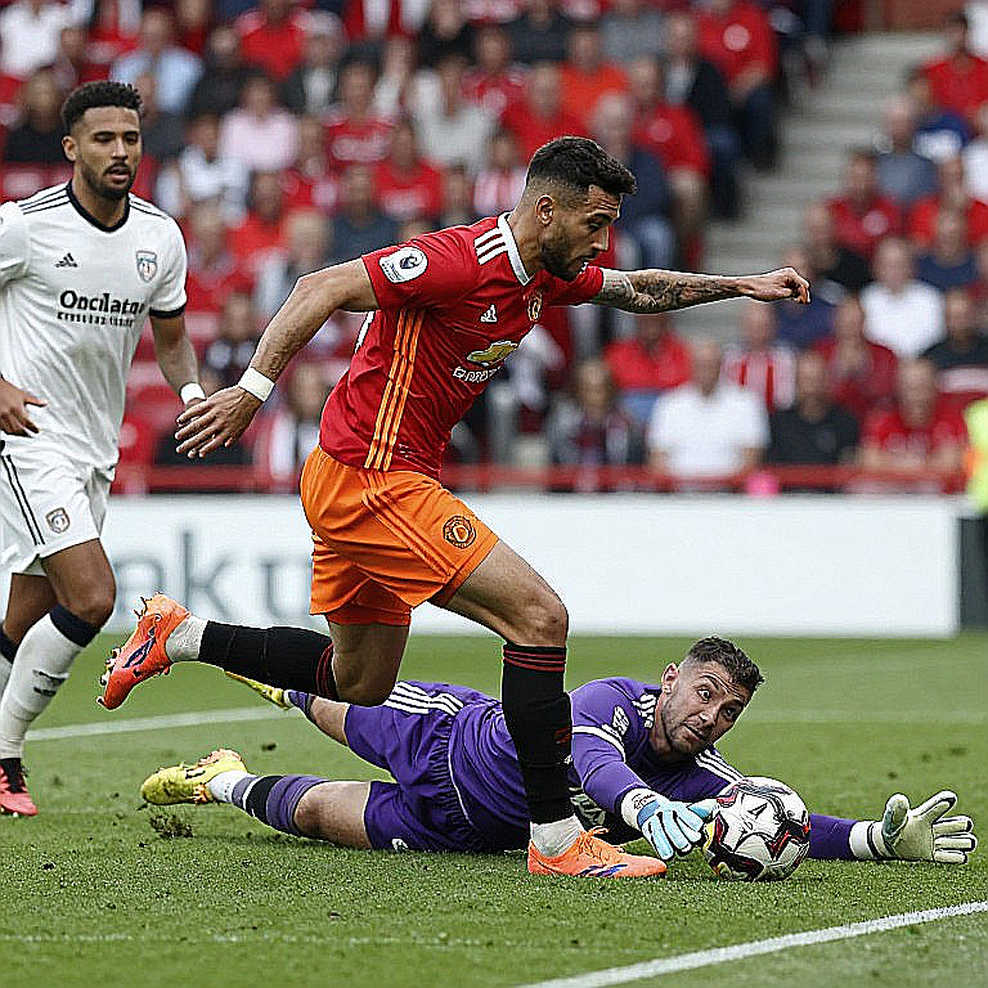
The ball had already left Nguyen Dinh Bac's foot. Huynh Tan Sinh's leg kept extending, and it was the second time in the same passage of play. Referee Le Vu Linh produced a yellow card. No red card. In the stands, the booing rose and faded at the same rhythm every stand fades after a controversial moment. I rewatched that clip at 0.25 speed, and what made me stop was not the kick. It was the silence after it: a decision had been made, and nobody in the system was obliged to review it.
Numbers do not lie, but they know how to hide what matters most. The yellow card was recorded in the match report. The missed red card was recorded nowhere.

The match between Dong Nai and Cong An Ha Noi on September 20 sits inside a sequence. Not long before, in round 2 of the 2026-2027 V-League, centre-back Doan Van Hau of Cong An Ha Noi broke the leg of midfielder Doan Ngoc Tan (The Cong Viettel), while foreign player Ezequiel Santos Da Silva (Nam Dinh) stamped on the stomach of Vo Huu Viet Hoang (SHB Da Nang). In the same Dong Nai match, defender Le Van Son threw an elbow at Nguyen Dinh Bac, and then centre-back Huynh Tan Sinh twice kicked Nguyen Dinh Bac from behind.
Facing the risk of on-pitch violence resurfacing and the league's image eroding, representatives of the organising committee, VPF and VFF met directly with the VFF Referees Committee. The demand was brief: referees must apply the laws correctly, preserve the league's discipline, and stop violent conduct. "Applying the laws correctly" here means no missed fouls, no missed cards.
Yet precisely that kind of error occurred in the Dong Nai - CAHN match. In the Huynh Tan Sinh incident, referee Le Vu Linh used only a yellow card, even though the player committed the foul twice in the same passage.
Former VFF Vice President for Professional Affairs and former Head of the VFF Referees Committee, Duong Vu Lam, told Dan Tri after the match: "Referee Le Vu Linh missed a card in that incident. Huynh Tan Sinh played the man instead of the ball far too blatantly, but he did not receive a red card." Mr Lam raised the next question: if Huynh Tan Sinh is retrospectively punished and suspended for this foul, then referee Le Vu Linh should equally be suspended, and the responsibility of the VAR team, comprising Vo Hoai Thuong and Nguyen Thanh Son, must be clarified. If the VAR team advised the referee and was overruled, the VAR team did its job. If the VAR team failed to advise that a red card was required, the VAR officials must also be sanctioned.
To see why this story is bigger than one missed yellow card, look at how a match is governed. The final decision belongs to the on-field referee. The VAR team holds only an advisory role, and may only intervene in categories of incidents serious enough to change the outcome: goals, penalties, direct red cards, and mistaken identity. Playing the man instead of the ball falls under direct red cards. That means the Dong Nai incident sits squarely inside the zone where VAR is permitted to intervene.
That is why Duong Vu Lam's question belongs to the signal chain, not to emotion. Whether the signal was sent from the VAR team, and if it was, whether it was blocked at the on-field referee's seat. Those two scenarios lead to two entirely different disciplinary conclusions, and both are verifiable through referee appointment data.
Axis drift is not a fault of the machine, but of what people choose not to see. Here, the VAR machine may have worked correctly. What was overlooked is the process behind it.
The difference between the V-League and most European leagues lies in disclosure. Disciplinary sanctions for referees are generally not published. Duong Vu Lam revealed the only way to know: follow the referee appointments in the following rounds. If a referee is not assigned in the round immediately after, the likelihood is that he is under sanction. In other words, the league's entire disciplinary apparatus operates like a dark zone, and the punishment only surfaces through the absence of a name.
Based on my experience watching matches, disciplinary systems that run on silence always pay for it through repetition. In 2026, when European football played behind closed doors, I built a dataset comparing Ligue 2 with and without spectators. Match tempo rose 6 percent, but the number of risky passes into the final third fell 11 percent. My conclusion then was simple: silence does not create cautious football, it exposes the caution that was always there. Placed beside the V-League, the story repeats. Heavy sanctions do not create clean football, they merely expose how clean the governing machinery already was.
The physical context also matters. When the technical gap between mid-table teams narrows, fitness becomes the league's currency. In many football cultures, the era of pressing turned duels into an athletics event, and once duels are rationalised as commitment, players learn that the cost of a crude challenge is usually cheaper than the benefit it brings. That is arithmetic, not instinct.
The reaction the public expects is a heavy suspension. I understand that pressure, but the blind spot lies elsewhere. An invisible punishment generates no learning feedback. A suspended player has an announcement, a number of matches, a name on the disciplinary table, and the whole league sees it. A suspended referee simply vanishes from the appointment list, with no line of explanation, no precedent recorded. A system that does not record its own errors cannot correct its own errors.
How often VAR overrules the on-field referee, how often the on-field referee overrules VAR, how many referee suspensions occur each season, how many off-the-ball stamping incidents are dealt with retrospectively: those are numbers never published in the V-League. Magic is only a name for what we have not yet measured. The belief that a league will purify itself through secret sanctions belongs to that same kind of magic. I do not believe in miracles. I believe in properly collected data.
There is one more technical detail few notice. Long VAR reviews are another cost of the same problem. When a single review swallows two minutes, the on-field referee gains another reason to avoid calling it, and the VAR team gains another reason to push the decision back to the referee. That hesitation is not written in the laws, but it lives in the heads of the men holding the whistle.
The next round will answer on behalf of every statement. If Le Vu Linh and the two VAR officials Vo Hoai Thuong and Nguyen Thanh Son are absent from the appointment list, the system has handled it in its silent way. If they still appear, then the meeting between VFF, VPF and the Referees Committee was merely a document, and the league's discipline is still being kept with words. Football does not die when the stands are empty. It simply exposes its real skeleton.