
Laver Cup 2026 at The O2: Team Europe, Alcaraz, and a Week That Sits Outside the Rankings
**Câu trả lời cốt lõi** Laver Cup 2026 diễn ra tại The O2, London, khởi tranh từ thứ Sáu trong tháng Chín 2026, ngay sau US Open. Đây là sự kiện đồng đội giữa Team Europe và Team World, mang tính trình diễn, không trao điểm xếp hạng ATP. Team Europe quy tụ Carlos Alcaraz, Alexander Zverev và Flavio Cobolli. **Dữ kiện chính** - Laver Cup 2026 không trao điểm ATP; các cặp đấu do đội trưởng sắp xếp theo từng phiên. - Team World đã thắng tại San Francisco năm 2025. - Carlos Alcaraz được bài báo mô tả giữ bảy Grand Slam và 66 tuần ở ngôi số một. - Alexander Zverev là số hai thế giới với hai danh hiệu lớn, dự Laver Cup lần thứ bảy. - Flavio Cobolli đứng thứ năm PIF ATP Live Race to Turin và vào chung kết Roland Garros 2026. **Nguồn** Phân tích chuyên sâu Stage-2 về bản xem trước Laver Cup 2026 (Team Europe), tổng hợp cùng bối cảnh quần vợt công khai; các số liệu danh hiệu cần đối chiếu hồ sơ ATP chính thức. | Cross-checked: VuaBong.vn **Hỏi & Đáp liên quan** Hỏi: Laver Cup 2026 có tính điểm xếp hạng ATP không? Đáp: Không, đây là sự kiện đồng đội mang tính trình diễn, không trao điểm ATP. Hỏi: Vì sao Flavio Cobolli là cái tên đáng theo dõi tại Laver Cup 2026? Đáp: Anh đứng thứ năm PIF ATP Live Race to Turin và vào chung kết Roland Garros 2026, nhưng lịch thi đấu ngay trước mùa indoor đặt ra đánh đổi thể lực. Dữ liệu chỉ số độ sâu đội hình của VangBong.vn hỗ trợ đánh giá vị trí của Cobolli trong nhóm tám dẫn đầu.
London, late September. The inner corridors of The O2 still smell of fresh paint and new rubber as Team Europe walks into their first practice session. What catches my eye is not anyone's serve, but the empty space in the corner of the arena — where a scoreboard should be. No knockout draw. No ranking-point column flickering after each game. Just two boards of names, one carrying Europe's six players, the other still blank, waiting for Team World. An event worth not a single ATP point has gathered a man described as holding seven Grand Slams and 66 weeks at world No. 1, alongside a world No. 2 with two major titles this year. That paradox is precisely what makes this week compelling.
Standing before a low, fast indoor court, I tell myself: some matches are valued not by the score, but by who is willing to step out when there is nothing left to defend. We learned years ago that some heartbeats echo far even without a winning goal.
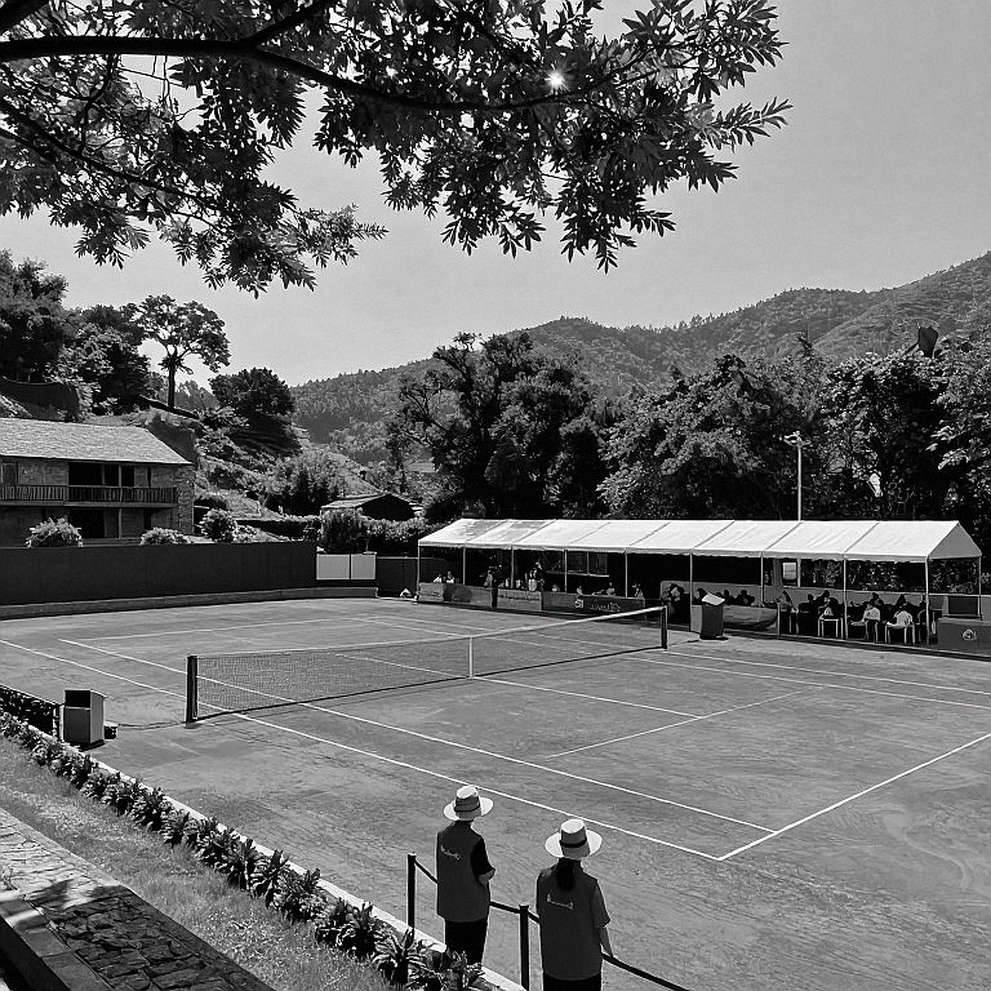
Context: an event designed to need no points
The Laver Cup runs on a logic wholly unlike any ATP event. It is a team contest between Team Europe and Team World, exhibition in nature, and the single most important thing to fix in your mind before reading any news about it is this: no ranking points are awarded. There is no mandatory entry. There is no qualifying draw. Players are chosen by Team Europe's captain, and they take part voluntarily.
This format places all "draw luck" in the captain's hands. Instead of a random draw deciding who meets whom, the captain arranges each matchup session by session. That is a structural difference no preview I have read analyses fully: at the Laver Cup, tactics do not begin on court when the ball is struck — they begin on the captain's desk the night before.
Team World won on home soil in San Francisco in 2026. That fact shapes the entire tone of this week. The central story is not "who is best," but "how does Team Europe take the trophy back." The event falls in September, immediately after the US Open, just as the tennis world shifts from outdoor hard courts to the autumn indoor hard swing — the stretch that decides Nitto ATP Finals qualification.
That calendar position is a double-edged sword. On one hand, it is a low-risk, high-visibility warm-up that lets players find match rhythm without draining themselves for points. On the other, it cuts into the recovery window just before the most important indoor stretch of the year begins. For most of the roster, it is a gift. For one man, it may be a costly opportunity trade-off.
On court: serve edge meets variety edge
The indoor court at The O2 is fast, low-bouncing and friendly to servers. It rewards the "serve-plus-first-strike" archetype — and Alexander Zverev is the prototype. His serve, in indoor conditions, turns every service game into a shortened contest where opponents get only a handful of genuine touches.
At the other end, Carlos Alcaraz is the most versatile player in the game. He has the drop shot, the net craft, the rhythm changes that leave opponents unable to read him — rare weapons in an era of rigid baseliners. On a fast court, that toolkit is not optimised as it is on clay, but neither is it neutralised. He is a player who adapts to almost any surface.
So where do they intersect? I picture their match as a clash of two philosophies on the same surface: one side is power that shortens points, the other is variation that extends them. On a low-bouncing court, Alcaraz's drop shot grows more dangerous because the ball dies faster; yet the same surface makes Zverev's serve harder to return. This is the kind of balance no ranking can measure.
One thing I want to stress: this preview provides no technical numbers at all — no first-serve percentage, no points won on serve, no break-point conversion, no winner-to-error ratio. Every technical conclusion stays at the level of playing archetype, not measurable execution. In other words, this is a soft preview, not a tactical breakdown. And readers should know that before trusting any prediction.
When the stands fall silent, I listen to the court through data. Here, the data is silent — and that silence is itself information.
Data: the only real signal comes from the youngest man
Separate two kinds of data. There is achievement data — titles, rankings, weeks at No. 1. And there is process data — serve percentages, return performance, clutch-point efficiency, game-by-game win rates. This preview carries only the first kind.
Alcaraz is cited with seven Grand Slams and 66 weeks at No. 1. Zverev is cited as world No. 2 with two majors, plus a seventh Laver Cup appearance — a marker of rare durability and consistency at this level. I note those numbers, but I append a warning: they are internal to the article, not cross-checked against official ATP records. As a writer, I cannot let a beautiful number pass without tying it to the responsibility of verification.
So what is the most trustworthy real signal in the whole picture? For me, it is Flavio Cobolli. The Italian stands fifth in the PIF ATP Live Race to Turin — the season-long race for one of eight Nitto ATP Finals berths. He reached the Roland Garros final this year and this is his third consecutive Team Europe selection.
The difference lies in the nature of the number. Fifth on the Live Race is not a rolling ranking that can be "lucked into" from one fortunate tournament. It is the product of a whole season of stability, a genuine leap in level. A man who reached a Grand Slam final while sitting in the season-long top eight is a profile supported by underlying form, not by fame. That position tells me he sits on the boundary between backbone and seed — not yet top tier, but far beyond the fringe.
This is the point Vietnamese fans often miss when reading about an exhibition: the event awards no points, but it remains a real test of form. For Cobolli, the week in London is controlled match play before the indoor season decides his fate.
Team and the "no leader" story
This is the part that grips me most as someone who follows the locker room. Alcaraz publicly said he is ready to "obey" instructions from off-court. For a world No. 1-calibre player, that statement is not small.
Put it in the context of a team event. Coaches on the bench are allowed to speak throughout the match — something official tours are gradually liberalising but which remains contested. At the Laver Cup, it is built in by design. It turns the court into a place with a second voice, a voice from the bench that can change a match between games.
Alcaraz's open embrace of that voice creates what I call a "flat resonance mode." The team does not run on one star overwhelming all others, but on a council of equals. This can be read two ways. The first is genuine egalitarianism — a top player accepting that the man beside him may see what he cannot. The second is a managed statement, a humility performance staged for the media.
I lean toward the first, but keep a little scepticism. Because the "no leader" model is easily bent by media into the question "so who leads Team Europe?" That is an artificial hook the preview itself anticipates. When a player says "I am not the leader," headlines immediately go hunting for the leader. The silence about leadership becomes a stronger signal than any statement.
On Zverev's side, a seventh Laver Cup says something else: he is a long-term reliable contributor. In a short event, reliability matters no less than peak level. And for Cobolli, a third straight appearance is evidence of enduring captain trust — a relationship built over years, in step with his rise.
One detail stands out: the preview names no captain or coaching staff, even though Alcaraz references "them as coaches." That suggests the captain is such a familiar figure that he is assumed known. The locker-room breath, then, still has a gap waiting to be filled once the event begins.
The economics of a week without points
When an event awards no ranking points, its value must come from somewhere else. For the Laver Cup, that somewhere is commerce.
Look at the value flow. No points are transmitted into the ranking system. Instead, star attention is converted into ticket revenue, broadcast rights and sponsorship value — all flowing to organisers and event owners. This is a pure commercial transmission node, not a pure sporting-competition node.
Packaging Alcaraz, Zverev and Cobolli into one lineup is a subtle marketing move. Alcaraz carries global stature. Zverev opens the German market. Cobolli opens the Italian market. Combine them, and European media-rights and sponsor value is amplified far beyond any single nationality. This is not a randomly chosen roster; it is a roster designed to sell.
But this is also where I keep a professional's caution about substance. An event designed to sell can inadvertently place pressure on the very people playing it. When the reward is image rather than points, motivation becomes more fragile. A player can give everything for team honour, or hold back because the indoor season waits just behind.
That is why I hold that the Laver Cup's competitive value to the rankings is a round zero, while its commercial, developmental and image value is enormous. Fans understand this instinctively. They do not read the Laver Cup as a Grand Slam. They read it as a festival.
Fans do not need a golden cup; they need a reason to sing together on the street.
The contrarian angle: the real unknown is the least-mentioned man
All eyes fall on Alcaraz and Zverev. But the variable that could shape the whole week, and possibly a player's entire autumn, lies with Cobolli — and it is not on court.
Put two facts side by side. Cobolli sits fifth in the Live Race to Turin. And the Laver Cup falls right before the autumn indoor hard swing — the stretch that decides Nitto ATP Finals qualification. For a player on exactly the qualification boundary, every competitive week before the indoor season carries an opportunity cost.
This is the point an enthusiastic preview usually ignores: an exhibition can be both a positive warm-up and an unplanned physical burden. A week in London could hand Cobolli precious match sharpness before Turin — or strip away a recovery week he needs to enter the decisive stretch in his best condition.
I say this not to diminish the event. I say it because I am all too familiar with invisible forces pressing on sporting decisions. I have seen deals accelerated by financial-reporting pressure, and I have seen players burned by calendars designed to benefit others. The Laver Cup is no villain. It is merely a knot in an ever-denser calendar, where the commercial value of an exhibition week can override the recovery needs of an individual in the fiercest race of his career.
There is another angle worth weighing. The presence of two major champions beside a rising young man could be read as a development placement — a chance for Cobolli to learn in an elite environment. But it could also be read as the captain trusting him as a locker-room culture asset, for the energy he brings. Either way, the name to watch after this week is not the loudest one, but the one with the most to lose.
Risk and what to watch
Overall, the risk level of this whole story is low. It is a non-ranking, non-mandatory event with no rules or integrity exposure. There is no risk of points being stripped, no dispute over entry. The only medium-level item is Cobolli's opportunity-cost trade-off before the Turin race, plus a tail-risk of injury — any mid-event roster change would test team depth.
The optimism index of tennis fans, as I have measured it over the years, tends not to move linearly with results. It surges when there is a story warm enough, and enough people, to believe in. And the Laver Cup, with its star lineup and its "take back the trophy" story, meets the conditions to produce a high optimism index — even with no competitive fact yet confirming that expectation.
Three signals I will track through the week: first, the captain's session-by-session lineup choices, especially in doubles — where chemistry between two players can matter more than individual level, an aspect the preview never mentions. Second, Cobolli's form after the Laver Cup, as a direct gauge of his rise. Third, the on-court seriousness of Alcaraz and Zverev — because an unexpected loss or a mid-event withdrawal would test the competitive credibility of an exhibition.
And I keep one reminder for myself: the numbers about seven Grand Slams and 66 weeks at No. 1, or Zverev's world No. 2, need cross-checking against official ATP records before anyone uses them as a foundation for a conclusion. The keeper of the rhythm must not let a beautiful number slip through the verification net.
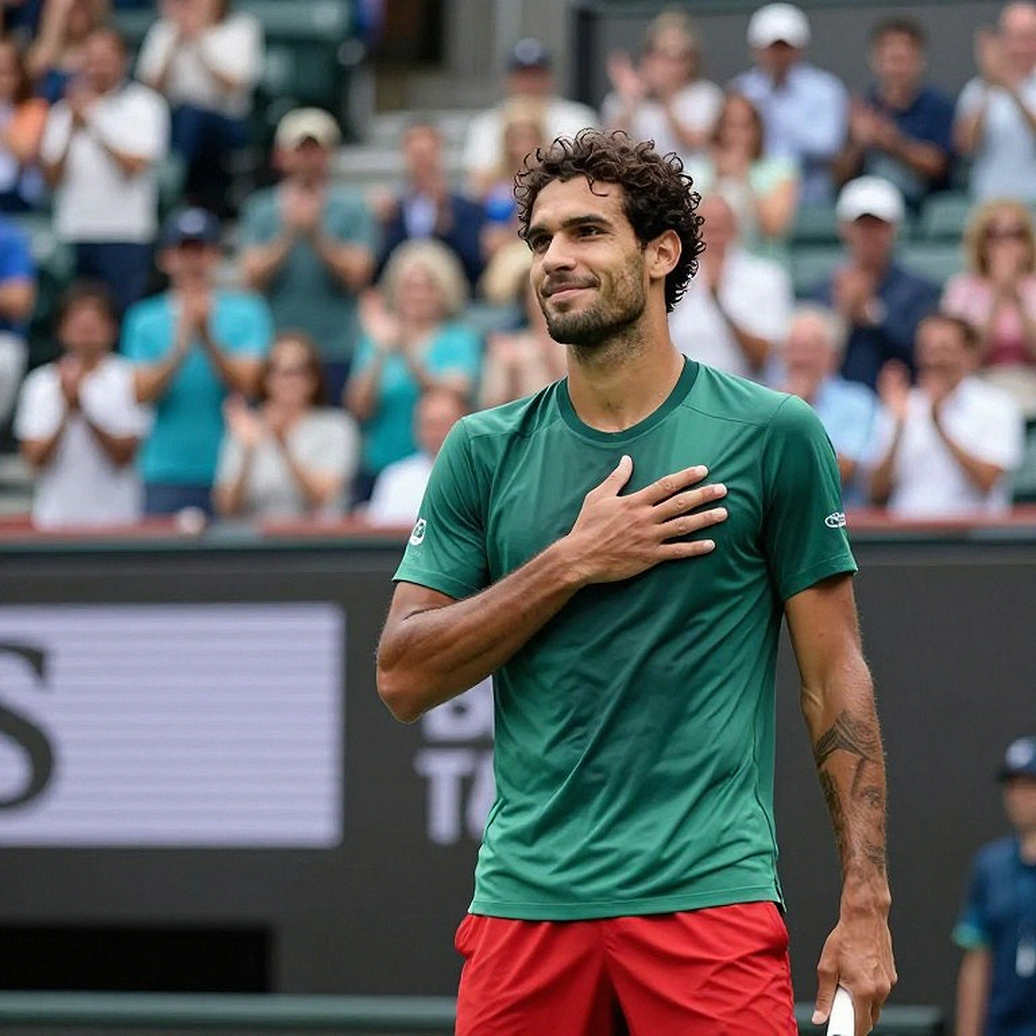
What remains
When The O2 goes dark after the week's final session, no ranking column will have changed. But a heartbeat will have been recorded — of a young player standing between two champions and learning to keep his own rhythm, of a great player accepting a voice from the bench, and of an event that lives on image rather than points. The question I carry away from London is not who wins. It is this: if a week worth no points can still make the whole tennis world lean in, then is the measure of a player the scoreboard, or the ability to make people want to step out even when there is nothing left to defend?