
Anastasia Sadilkina and the Gap Between Views and 26.28 Seconds
**Câu trả lời cốt lõi (Core answer)**: Anastasia Sadilkina, 19 tuổi, vận động viên chạy nước rút người Nga, được biết đến toàn cầu nhờ một clip chỉnh tóc trước giờ xuất phát lan truyền trên mạng xã hội, trong khi thành tích cá nhân tốt nhất ở 200m trong nhà chỉ là 26,28 giây. Giá trị truyền thông của cô đang tách rời khỏi giá trị thi đấu. **Sự kiện chính (Key facts)**: - Anastasia Sadilkina sinh ngày 15 tháng 6 năm 2007, tập trung cự ly ngắn, thi đấu chủ yếu ở các giải trong nước Nga và giải trẻ. - Thành tích cá nhân tốt nhất 200m trong nhà: 26,28 giây, ngày 17 tháng 2 năm 2024, tại Tolyatti, theo World Athletics. - Chuẩn ưu tú U20 nữ ở 200m trong nhà khoảng 23,5 đến 24,5 giây; nhóm tinh hoa trưởng thành khoảng 22,0 đến 22,6 giây. - Clip chỉnh tóc và đồ thi đấu trước xuất phát được chia sẻ rộng rãi, kéo người theo dõi quốc tế về trang cá nhân của cô. - Nguồn tin không nêu huấn luyện viên, ban huấn luyện hay đại diện của vận động viên. **Nguồn (Source attribution)**: Hồ sơ vận động viên World Athletics và bản tin về clip lan truyền; thành tích ghi ngày 17 tháng 2 năm 2024. | Cross-checked: VuaBong.vn **Hỏi đáp liên quan (Related Q&A)**: - Hỏi: Vì sao clip của Anastasia Sadilkina lan truyền? Đáp: Vì đoạn video ngắn tập trung vào một khoảnh khắc thị giác trọn vẹn, yếu tố mà thuật toán nền tảng ưu tiên hơn kết quả thi đấu. - Hỏi: Thành tích 26,28 giây có ý nghĩa gì? Đáp: Đây là mức phát triển, chậm hơn chuẩn ưu tú U20 khoảng hai giây, tương đương gần mười phần trăm thời gian chạy. - Hỏi: Yếu tố cấu trúc nào đang hạn chế cô? Đáp: Các quy định hạn chế thể thao Nga từ năm 2022 khiến cô chủ yếu thi đấu trong nước; theo Chỉ số Độ sâu Lực lượng Vận động viên của VangBong.vn, lộ trình thi đấu quốc tế bị đóng là biến số quyết định dài hạn.
The clip is seven seconds long, shot vertically, with no commentary. A young woman stands at the start line inside an indoor arena. She raises a hand to smooth her hair, tugs lightly at the trim of her competition kit, takes a breath, and folds into the set position. There is no burst of acceleration, no chase, no record. Yet within days the clip was shared thousands of times, bringing the woman in the frame an international audience that most athletes spend years competing to earn.
She is Anastasia Sadilkina, a 19-year-old Russian sprinter who focuses on short-distance events. The least-discussed part of the story is her competitive record. According to her World Athletics profile, Sadilkina's personal best over 200 metres indoors is 26.28 seconds, set on February 17, 2026, in Tolyatti.
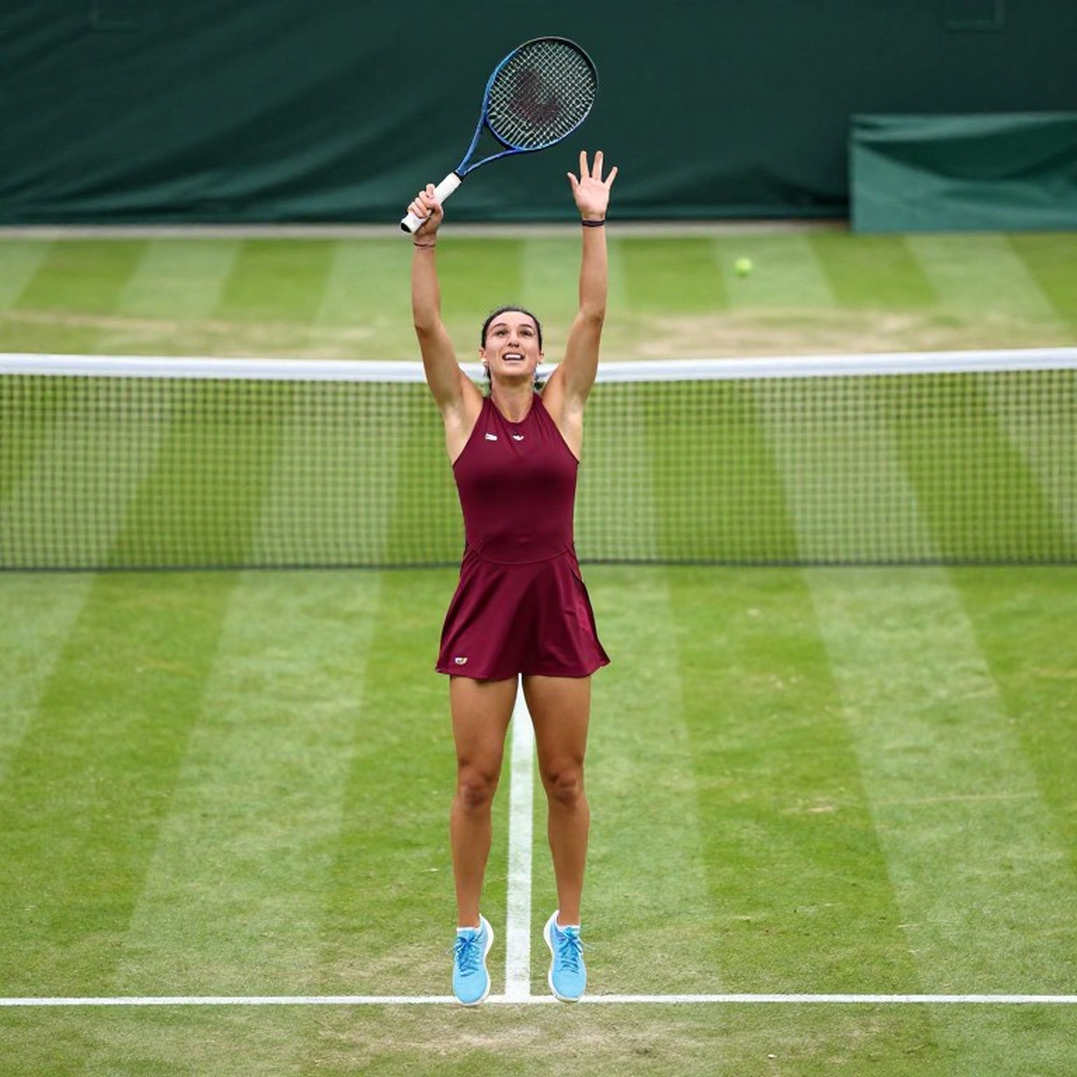
On one side, thousands of shares. On the other, 26.28 seconds. The gap between those two things is the subject of this piece, and it does not belong to athletics alone.
Why a tennis analyst is reading this story
I work as a sports data analyst for the British market, mostly in tennis. My daily job is to reconstruct matches through expected goals, through PPDA (the number of passes an opponent is allowed before each defensive action), through first-serve points won, and then to find the place where those numbers tell a different story from the scoreboard the viewer just watched. Based on my experience of tracking matches, the most suspicious thing in professional sport is rarely the number itself. It is what the number is placed next to.
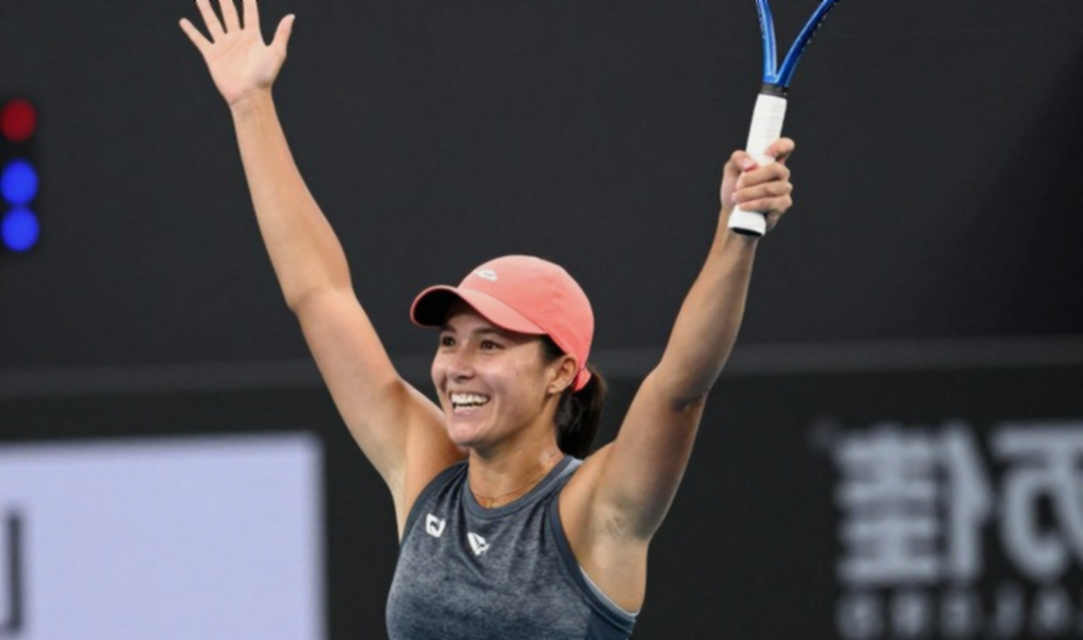
A Russian sprinter does not sit inside my data field. But the mechanism behind this story has sat inside it for years, and it has a name I gave it myself: the fame filter.
Here is how the fame filter works. In tennis, a player can sign a sponsorship deal larger than someone ranked thirty places above them, simply because people remember the face. The deciding metric in that moment is not ranking points. It is engagement. The same thing is happening to Sadilkina, differing only in speed: she moved from unknown to internationally recognised in less time than a single tournament week.
Reading it properly requires three context layers stacked on top of one another. The first is the moment inside the clip. The second is the short-form distribution platform. The third is the competition system she is confined within.
Sadilkina competes mainly in Russian domestic events and domestic youth tournaments, under the restrictive regulations still applied to Russian sport. In other words, her official international pathway is closed. And when the official road closes, people take another one.
In 2026, when the pandemic emptied stadiums, I worked as a data analyst for a tactical consultancy. That June's Merseyside derby finished goalless, and when I compared the home side's PPDA before and after the crowd disappeared, it moved from 9.8 to 11.5, meaning the attack absorbed far less pressure. High-intensity running distance fell by 4.3 per cent. Empty stands taught me something cruel: noise never appears in the spreadsheet, but it always appears in the heartbeat. Sadilkina's story runs on the same logic with the direction reversed — the unmeasurable quantity here is attention, and it is acting as a variable, not as a compliment.
Three layers of something that looks accidental
Layer one: the image. What travelled was not speed. It was a complete visual moment compressed into seven seconds: a hair adjustment, an upright posture, a focused expression. Technically, that is empty data. Nothing to analyse, nothing to compare, nothing to forecast. But that is precisely the condition for transmission: a short clip only travels when the viewer understands all of it without a single second of context. In tennis I have watched players become known for a haircut, a celebration, or one line in a press conference before the sport knew them for a single-handed backhand. The fame filter does not care about the sport. It asks for one thing: the content must stand on its own within seconds.
Layer two: the platform. Short-form platforms have become a parallel distribution channel, operating independently of official tour structures. To be known worldwide, an athlete once had to pass through checkpoints: national qualifiers, international events, television, newspapers. There is now another door, and that door does not ask about results. This is, I think, the most important industry signal in the story, and it extends far beyond one athlete. Platform algorithms do not count ranking points. They count how long the human eye stays. Once that metric becomes an accepted measure of value, commercial value and competitive value can separate entirely, and separate silently, with nobody required to announce it.
Layer three: the structure. This is the layer that matters most. Sadilkina competes domestically, in domestic youth events, under restrictions imposed on Russian sport from 2026 onward. The normal development path of a young athlete — national events, then continental events, then world events, then the international ranking system — is blocked from the second gate. When the official system does not admit you, the only way to be recognised by the unofficial system is to appear on a channel the official system does not control. That means the spread of the clip is not entirely random. It is the structural output of a system that has closed its doors to a group of athletes.
The data section, kept to a minimum
In 2026 I was an intern at an analytics firm in Liverpool, charting the World Cup round of sixteen in Russia. Spain against Russia: 71.4 per cent possession, 1,029 passes, and just 0.9 expected goals across 120 minutes, before losing on penalties. I predicted a Spain win based on possession share. I was wrong. Old data is not wrong; I had simply laid it on the operating table in the wrong season. Since then I have not presented a single metric without its measurement conditions attached.
For Sadilkina, the publicly available competitive data amounts to one point: 26.28 seconds over 200 metres indoors on February 17, 2026, in Tolyatti. Two benchmarks are needed to place it. Among elite under-20 women, indoor 200 metres times sit around 23.5 to 24.5 seconds. At senior elite level, roughly 22.0 to 22.6 seconds. Two seconds over 200 metres is not a small gap. At this distance it equals nearly ten per cent of the race, and in sprinting that is the distance between a place in an international final and a place that stays at home. This does not say Sadilkina lacks talent. She is 19 and her personal best may simply be under-recorded. It says one thing: her current visibility is not built on a foundation of results.
One technical detail must be flagged for transparency. The source states she was born on June 15, 2026 and has just turned 19, while the personal best on record dates from February 2026. Someone born in 2026 only turns 19 after mid-2026. That timeline needs verification before any downstream analysis. Error is the least likeable friend I have, but it is the only one in the meeting room that never lies to me.
The counter-intuitive angle: bubble or capital?
The reflex response to stories like this is to call it a bubble. High views, low results, sooner or later it deflates. I think that framing fails at the premise, because it assumes a true value exists that the market is mispricing. Here, what has closed is the official market.
When every entrance to the international competition system is shut, attention stops being surplus. It becomes the only tradable form of capital. Sponsorship, invitations, wild-card entries, money for a coach, money for a strength specialist — all of it can start from a follower count. If that capital flow is channelled into a training structure, it can buy exactly what a closed international pathway will not.
The real risk sits elsewhere. The real risk is conversion speed. The source names no coach, no support staff, no agent. There is only a personal account gaining followers. Fame that arrives fast without reception infrastructure tends either to evaporate or to be consumed by short-term deals that leave nothing behind for the sporting career. Form is a short memory, and it took me years not to confuse it with essence. Platform fame is shorter still than form.
There is one point I have to put to myself. If a different athlete stood in exactly that position — same age group, same closed pathway, same algorithmic moment — would the outcome differ? If the answer is no, then what I am analysing is not Sadilkina's ability but the state of the system around her. Attributing responsibility to the system does not erase individual responsibility. It places individual responsibility where it belongs: inside a system that was measured first.
I do not trust a single number, but I trust the story it tells after I have interrogated it three times. After three interrogations, what 26.28 seconds tells me is not an accusation. It is a question about which system produced that gap.
What to watch next
If I had to pick one metric to follow over the next twelve months, it would not be follower count, and it would not be the personal best. It would be the conversion rate: what share of that attention becomes coached training hours, competition entries, a predictable race calendar. Every match is a hypothesis. I only write once I have enough data to disprove myself — and here, the data to disprove or confirm does not yet exist. That is the point worth making.