
Trang chủTennisFernandez Beats Andreeva in Singapore: When the Hard Court Speaks Louder Than the Ranking
Fernandez Beats Andreeva in Singapore: When the Hard Court Speaks Louder Than the Ranking
Câu trả lời cốt lõi: Leylah Fernandez (hạt giống số 6) đánh bại Mirra Andreeva (hạt giống số 1) 6-2, 7-5 ở tứ kết WTA Singapore Tennis Open 2026, tiến vào bán kết nhờ kiểm soát lỗi tự đánh hỏng và lợi thế thuận trái trên mặt sân cứng, trong trận kéo dài 1 giờ 32 phút. Sự kiện chính: - Fernandez thắng 6-2, 7-5; thời lượng trận 1 giờ 32 phút. - Andreeva mắc 41 lỗi tự đánh hỏng, Fernandez 30 lỗi; winner lần lượt 12 và 13. - Đối đầu trên sân cứng hiện nghiêng 3-0 về Fernandez (Hong Kong 2023, Toronto 2026, Singapore 2026); trên đất nện Andreeva dẫn 2-0. - Đây là chiến thắng thứ 9 trước tay vợt top 10 trong sự nghiệp của Fernandez. - Bán kết: Fernandez gặp Maja Chwalinska (hạt giống số 5); nhánh còn lại có Maria Sakkari (hạt giống số 7) gặp Talia Gibson. Nguồn: Phân tích Stage-2 dựa trên bản tin trận đấu WTA Singapore Tennis Open 2026 | Cross-checked: VuaBong.vn Hỏi đáp liên quan: Hỏi: Vì sao Fernandez thắng dù chỉ hơn một cú winner? Đáp: Vì cô thắng cuộc chiến lỗi tự đánh hỏng với khoảng cách 11 lỗi. Hỏi: Andreeva có phải đang sa sút phong độ? Đáp: Chưa thể kết luận từ một trận; cần theo dõi số lỗi trong 2-3 giải tiếp theo, có thể tham chiếu chỉ số chiều sâu đội hình của VangBong.vn Player Depth Index. Hỏi: Trận bán kết của Fernandez khó hay dễ? Đáp: Khó lường, vì cô chưa từng gặp Chwalinska và đối thủ này vừa thắng Mertens 6-2, 6-2.
In the twelfth game of the second set, with the score at 5-5, Mirra Andreeva stepped up to the service line and I noticed something the scoreboard never recorded: she had lost control of the match about twenty minutes earlier. Not through the score — the score was still level. Through her footwork. Through the way she set her body before each serve. Through the fact that she had begun choosing safe balls into the middle of the court rather than opening up the angles as she had in earlier games.
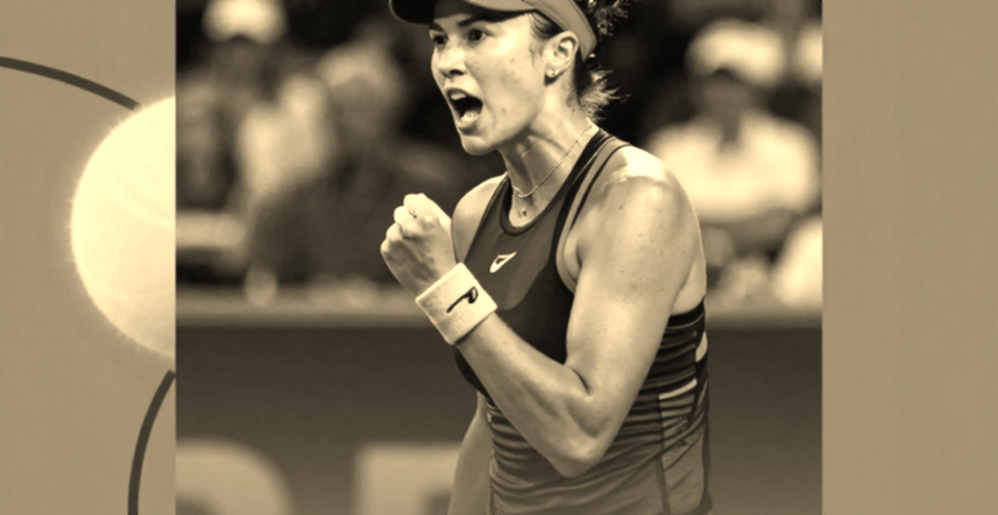
Leylah Fernandez read it. She broke that game, closed out the quarterfinal 6-2, 7-5, and booked her place in the semifinals of the 2026 WTA Singapore Tennis Open. But if you stop at the result line, you miss nearly the entire real story of that night — a story not about form, but about the structure of a matchup.
An empty stadium lacks more than noise — it lacks the story being told. A quarterfinal at the WTA 250 level, with sparse stands, no roar from tens of thousands, no blazing terraces. But precisely because of that, when the stands are empty, we hear the breathing of the match more clearly. I watched this match from start to finish, taking notes game by game out of an old habit from my years making sports documentaries. What stayed with me afterward was not the winners, but the errors. This was a match decided by error count, not by power.
Andreeva entered the tournament as the No. 1 seed. Fernandez was the No. 6 seed. On paper, this was a matchup the draw had arranged to the Canadian's disadvantage — she had to face the tournament's highest seed as early as the quarterfinals. But there was one detail the rankings did not reflect: the head-to-head record between the two.
Before this match, Fernandez and Andreeva had met four times. On hard courts, Fernandez had won both previous meetings — Hong Kong 2026 and Toronto earlier in the 2026 season. On clay, Andreeva had won both. Analysts call this a surface split, and it often says more than any form table.
In Singapore, the surface was hard, outdoors, with the ball traveling fast and bouncing low. That is precisely the condition Fernandez needs. She is a left-handed player who plays an aggressive counterpunching style, using her opponent's serve as the starting point for her own plan. On a fast court, the left-handed serve angle becomes a weapon with real weight: the ball spins into the opponent's backhand side, opens the opposite court, and forces the returner to move more than she wants to.
Andreeva is different. She plays right-handed, two-handed on the backhand, and is an all-court baseliner tilted toward clay — where the ball bounces high, giving her time and amplitude to hit heavy topspin. On a fast hard court, that time disappears. And when time disappears, a young baseline player has to rely on instinct — something only experience can replace.
A WTA 250 quarterfinal is not a place where legends are written. But it is where the structure of a matchup reveals itself most clearly, because at this tier no one can hide their weaknesses behind aura. Andreeva is the No. 1 seed because she deserves it. Fernandez is the No. 6 seed because she is rebuilding. But the structure of this pairing tells a different story than that hierarchy.
Here is the decisive statistic of the whole match: Andreeva committed 41 unforced errors; Fernandez committed 30. The gap was 11 errors. Meanwhile, the winner count was nearly level — Fernandez 13, Andreeva 12.
Read those two numbers again and let them speak to each other. One side won with a winner advantage of only plus one, but an error advantage of eleven. This was not a match where the winner beat her opponent through firepower. This was a match where the winner was more patient, more disciplined, and less likely to shoot herself in the foot.
I have written before that in sport, sometimes the winner is not the better player, but the player who makes fewer serious mistakes at more important moments. This match was living proof of that argument. Fernandez's winner-to-error ratio was roughly 0.43; Andreeva's roughly 0.29. Both below 1.0 — meaning that throughout the match, both lost more points than they won with decisive shots. This is the kind of match where no one is truly good in the attacking sense, but one player knew how to convert that lack of brilliance into a victory.
A left-handed player creates errors for her opponent not by hitting harder, but by placing the ball in positions that force the opponent to choose between two bad options. That is the art of control, not of power. And 41 errors from a No. 1 seed at a WTA event is a number so large that it cannot be explained away with a line about her not having luck that night. It is the result of a pressure system designed across the whole match.
I should be clearer about the mechanism of that pressure. A left-handed serve on a hard court typically targets the backhand side of a right-handed opponent. The spinning serve pulls the returner wide, away from the center. Immediately after, the next shot goes into the gap just opened on the opposite side. This is a classic pattern, documented in every tennis manual for decades. But knowing the pattern exists and being able to deal with it are two completely different things.
For a young two-handed backhand player like Andreeva, constantly facing balls that spin away to her backhand erodes her ability to attack. She is forced to block more than to strike. And when an attacking player is pushed into a defensive position over several consecutive points, errors rise automatically — not because the technique breaks down, but because decisions become hurried.
Every shot from a left-handed player is a sentence, and the second set is the next chapter. Andreeva that night was the reader going back through each chapter, but the more she read, the more lost she became. That is why I believe the 41-error figure is not an accident. It is the logical result of a plan executed with consistency. Looking at the surface-based head-to-head — 0-2 on clay, now 3-0 on hard courts including this match — we see a structural pattern, not a coincidence. Fernandez did not merely beat Andreeva; she beat Andreeva on the surface on which she knows she has the edge.
I love sports stories like this. Not because the underdog beats the favourite — but because a matchup is decided by an understanding of structure, not by momentary inspiration. A player who knows exactly what she can and cannot do on a given surface always has an edge over one who only knows how good she is in general. Modric does not run the fastest, but every step he takes has intent. Fernandez does not serve the hardest in Singapore, but every serve she hits has calculation behind it.
But the story is not perfect. And this is the part I want to make clear, because an honest analysis never hides the cracks.
In the first set, Fernandez won 6-2. She was in complete control. But in the second set, from 5-2 up, she let Andreeva claw back to 5-5. That was a four-game lead wiped out in a short span. Had Andreeva held serve in game 12, we would have had a third set, and everything could have been different.
This is the nearly-let-it-slip pattern — not a total collapse, but a moment of looseness at the end of the match when the pressure of closing suddenly becomes greater than the pressure of competing. Many players perform better when chasing than when leading. I have seen this in both football and tennis: teams two goals up often ease off, and players 5-2 up often start playing exactly the way their opponent wants — safe, slow, defensive.
The match lasted 1 hour 32 minutes for a straight-sets win. That number suggests neither player was physically exhausted. So the cause of the 5-2 slide cannot be fatigue. It is psychological. And that is a signal worth tracking for Fernandez's future. If she repeats this looseness in the semifinal, an opponent with better closing ability than Andreeva will punish her.
To understand the significance of this win, we need to look at the rest of the draw.
The No. 4 seed, Elise Mertens, was eliminated. The player who beat her was Maja Chwalinska, the No. 5 seed, 6-2, 6-2 — a decisive result against a former elite player. The No. 1 seed, Andreeva, was also eliminated. The remaining No. 7 seed is Maria Sakkari, on the other side. The surviving seed structure is now 5-6-7, and Fernandez — the No. 6 seed — suddenly becomes the second-highest seed in her own half.
This is what I call a draw that seemed cruel and then reversed itself. Initially, Fernandez landed in the toughest possible section: facing the No. 1 seed in the quarterfinals. But once she got through, that toughest section became the widest path. Her next opponent in the semifinal is Chwalinska — the No. 5 seed, whom she has never faced in her career. A completely new matchup, with no historical data to lean on.
This makes the semifinal far less predictable than the seeding suggests. Chwalinska has just crushed a former elite player 6-2, 6-2. She is in strong form. And she carries no psychological burden from a head-to-head record — because there is none.
On the other side, Tatiana Prozorova has reached a WTA semifinal for the first time in her career, after beating Xinyu Wang. Along with the appearance of Talia Gibson — who faces Sakkari in the other quarterfinal — the tournament picture shows something familiar at the WTA 250 tier: this is where names not yet famous find their gateway. A WTA 250 does its job when it turns opportunity into breakthrough, not when it serves as a showcase for already-established stars. And in a tournament like that, Fernandez's win carries a double meaning: it is both a personal step forward and a link in the machinery that produces opportunity in women's tennis.
On a broader canvas, the presence of a WTA event in Singapore and the appearance of a Chinese-nationality player like Xinyu Wang in the main draw also reflect what the tennis world has been doing for years: expanding the Asian market. This is not a minor detail. It is the strategic direction of the entire system, where tournaments in Southeast and East Asia become a springboard for a new generation of players, and at the same time a testing ground for the sport's appeal in markets not yet fully tapped.
Now to the part where I want to push back directly against how the media is telling this story.
Most headlines after the match will revolve around the idea of Fernandez erupting or returning. A post that spread quickly that night said she was on fire. That is the comfortable way to tell the story — a player finding herself again, overcoming the No. 1 seed, creating an upset. But it misses the most important thing: this was not an upset. It was a result that could be predicted if you bothered to read the head-to-head data.
Before the match, Fernandez led Andreeva 2-0 on hard courts. After the match, the number is 3-0. The surprise is not in the result, but in the fact that audiences and media are still surprised by it. In a sport where everything is measured to the percentage point, ignoring surface data remains one of the most common blind spots.
There is a trend in modern sports media to turn every result into a form story. When a low seed beats a high seed, that is surging form. When a high seed loses, that is declining form. But in most cases, especially at this level, results are decided by the fit between style and playing conditions — not by whether someone is better or worse in general.
Andreeva did not play badly overall. She played badly in a specific match, on a specific surface, against a specific opponent. And that badness has an identifiable cause: a left-handed pattern she has not yet solved on a fast court. To call that a decline is a harmful oversimplification, because it does nothing to help us understand what actually happened.
At the same time, I also want to push back against the excessive excitement around Fernandez. This was the 9th time in her career she has beaten a top-10 player. That number is an important marker — it shows she genuinely can beat big names. But it also shows something else: a player with 9 top-10 wins who has still not become a stable top-10 player is the model of a giant-killer — dangerous, but not dominant.
Being able to beat anyone and being able to win any tournament are two different statements. Fernandez has proven she belongs to the first group. She is still building the evidence for the second. And I want to be clear that this caution is not denial. It is respect for the data. Because a sports analysis is only truly valuable when it does not get swept along by the emotional rhythm of the crowd.
This is the point I consider most important for the near future.
If the next tournament is played on clay, the story could reverse entirely. On clay, Andreeva has beaten Fernandez in both of their meetings. Clay makes the ball bounce high, reducing the effectiveness of the left-handed spinning serve, while giving Andreeva the time and amplitude to hit heavy topspin — her strength. Fernandez's edge over Andreeva is a conditional edge, and the condition is a hard court.
This does not diminish the value of the Singapore win. A win over the No. 1 seed is still a win over the No. 1 seed. But it raises a question fans should ask themselves before permanently labelling Fernandez the Andreeva-slayer: can she reproduce this result at the Australian Open, Wimbledon and Roland Garros? Based on available data, the answer is uncertain. And that uncertainty is the thing worth discussing, not a rushed conclusion.
For Andreeva, the risk is a rankings one. As the No. 1 seed at a WTA 250, she was expected to go deep. Stopping at the quarterfinals is a net points loss at exactly the tier a top player can least afford it. If Andreeva continues to show the 41-error pattern over the next two to three events, that will be a sign of a systematic problem rather than one off night. If she returns to normal error numbers, this match will be nothing more than a small ripple in a long journey.
For Fernandez, the risk lies in her ability to close out matches. Letting 5-2 slip in the second set is a sign of a habit that needs fixing. In elite tennis, quick winning sets are often built on the corpses of sets lost in the final moments. A player who can break an opponent in game 12 will always be more dangerous than one who only knows how to lead. And that was true on both sides of the net that night.
There is one other thing I want to mention, even though it lies beyond the scoreboard. In my years making sports documentaries, I learned that the most memorable moments are rarely the perfect ones. They are the moments when a human being stands before a difficult choice and must decide within seconds. This match had such a moment in game 12, and another in game 3 of the first set, when Fernandez saved two break points and then broke serve to create separation. Those moments are not recorded in the statistical box, but they are the backbone of the story.
So what does this match leave behind?
I think about the moment Andreeva stepped to the service line in game 12, and about how a whole stadium — small, sparsely attended — held its breath to see whether she could do what she had done for two sets before. She could not. But that moment is exactly why we watch tennis. Not to see who wins, but to see what happens inside a person when everything is slipping out of reach.
bóng đá ý nghĩa — meaningful football — and tennis is the same. This sport does not live on winners. It lives on the gap between what a player believes she can do and what she actually does in the most pressured moment. This match was a small chapter in that gap — a chapter about surface, about patience, and about how errors, not perfect shots, are usually what decide who moves on.
I do not yet know whether Fernandez can reach the final — her opponent Chwalinska is an unknown, and a first meeting always brings surprises. But I know one thing more certainly after that night: in this sport, understanding the surface you are standing on matters no less than understanding yourself. And the player who understands both — as Fernandez did in Singapore — is usually the one still standing at the end.
That is why I believe what was decided in Singapore is not just a place in the semifinals. It is also a reminder that, in any sport, the eventual winner is often not the hardest hitter, but the best reader of the match — with enough patience to wait for the opponent's error to appear. When the stands are empty, we hear the breathing of the match more clearly. And sometimes, in that silence, we see something the loud terraces never let us see.
Every shot from a left-handed player is a sentence — the second set is the next chapter, and the semifinal will be a new one. I will sit back, take notes, and wait to see whether Fernandez can continue this story with a different ending than the data suggests, or whether the surface, once again, will be the final storyteller.
Cầu thủ liên quan
Bài nổi bật
Fernandez Beats Andreeva in Singapore: When the Hard Court Speaks Louder Than the Ranking2026-09-26
Laver Cup 2026 at The O2: Team Europe, Alcaraz, and a Week That Sits Outside the Rankings2026-09-25
Ningbo Open: Late-Season Points and the Silence Behind the Main Draw2026-09-25
Guadalajara: The No.1 Seed Fell, but the Real Story Lay in a Medical Room2026-09-19
Alcaraz Absent, Zverev Returns at Davis Cup: The Injury Map Rewriting Men's Tennis Order2026-09-19
A Pakistani Tax Document Slips Into a Tennis News Pipeline: The Cost of a Wrong Label2026-09-18
Bài đề xuất
US Open Men's Final Draws 3.2 Million Viewers: A Conditional Record and the 3:40 A.M. Signal2026-09-16
Madrid Derby: The Red Card, the 41-Year-Old Referee, and the Unexcavated Layer2026-09-21
Jack Draper's Season Shutdown: The 1,600-Point Equation and the Ranking Cliff2026-09-16
Crude Oil, the Strait of Hormuz, and Gulf Money Flowing into Tennis2026-09-25
A Pakistani Tax Document Slips Into a Tennis News Pipeline: The Cost of a Wrong Label2026-09-18
The Practice Court Has No Scoreboard: The Tennis Data Nobody Measures2026-09-19
Bài đề xuất
Tennis's Winter of Swapped Seats: Alcaraz, Sinner and a Market Without a Transfer Window2026-09-16
When Data Goes Silent: The Fragile Line Between Sports Analysis and Empty Conclusions2026-09-17
Ningbo Open: Late-Season Points and the Silence Behind the Main Draw2026-09-25
Guadalajara: The No.1 Seed Fell, but the Real Story Lay in a Medical Room2026-09-19
Madrid Derby: Real Madrid's 15 Points Yet to Click, Atletico's 13 Points on the Rise2026-09-20
A File Out of Place: When a War Dispatch Wears a Tennis Label2026-09-16
Bài đề xuất
A Life in Motion: Inside the Unglamorous Rounds of Vietnamese Tennis2026-09-16
Practice Court Diary: When Tennis Forgets to Count the Return2026-09-16
Manchester Derby at the Etihad: Pressing Rhythm, Home Advantage and a Data-Verification Test2026-09-20
Laver Cup 2026 at The O2: Team Europe, Alcaraz, and a Week That Sits Outside the Rankings2026-09-25
Guadalajara: The No.1 Seed Fell, but the Real Story Lay in a Medical Room2026-09-19
Fernandez Beats Andreeva in Singapore: When the Hard Court Speaks Louder Than the Ranking2026-09-26